
Pruning
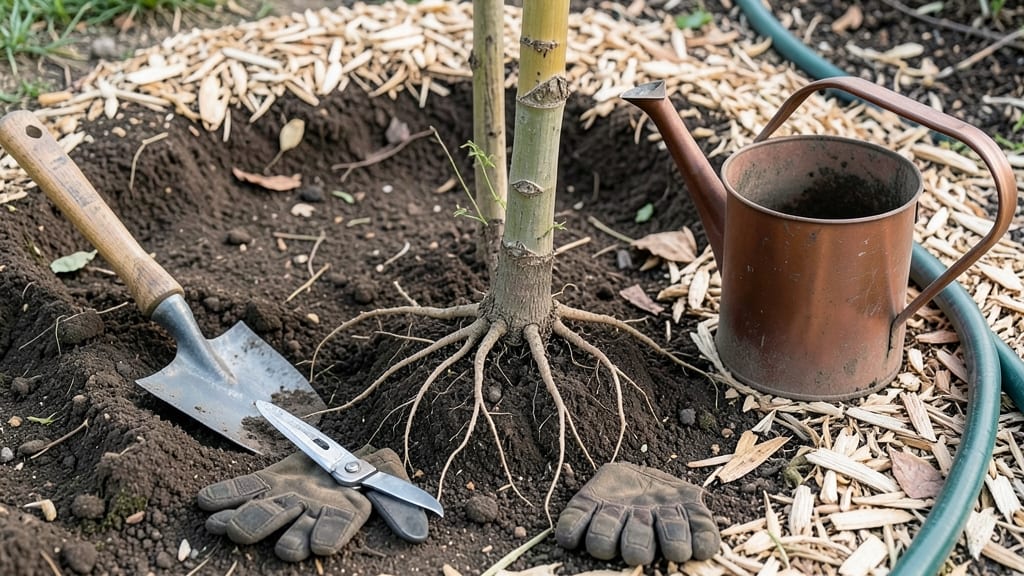
Planting trees in Sonoma County means choosing species that thrive in our dry summers and foggy winters—not just any tree will do. 🌳 I’ve learned the hard way that non-native species often struggle here, but native oaks, manzanitas, and toyon trees not only survive but flourish with minimal fuss.
The key? Matching the right tree to your microclimate—whether you’re in the dry hills, coastal fog belt, or valley floor.
Start with soil prep: Sonoma’s clay-heavy or rocky soils need amending with compost or mulch to help roots establish. Dig a hole twice as wide as the root ball but no deeper—planting too deep suffocates roots.
Water deeply right after planting, then again every 7-10 days for the first year, even if it rains. Drip irrigation works best to avoid fungal issues from overhead watering.
By late fall or early spring, your tree will be sending out new growth—proof it’s settling in. Native species like California sycamore or coast live oak handle our summers better than imported varieties, and they support local wildlife too.
The payoff? A lush, low-maintenance landscape that actually thrives in Sonoma’s climate.
For local sourcing, check out Sonoma Ecology Center or Native Sons Nursery in Santa Rosa—they carry climate-proven trees. Pro tip: Avoid planting in late summer when heat stress is highest. Timing matters as much as the species itself.
📚 In This Guide
- What you need
- Instructions
- Tips and common mistakes
- Wrapping up and next steps
What you need
- ● Native or climate-adapted tree sapling: Choose from species like Quercus agrifolia (coast live oak), Arbutus menziesii (Pacific madrone), or Umbellularia californica (California bay laurel). Ensure it’s 1-3 years old and healthy.
- ● Shovel or trowel: A round-point shovel (for digging) or a hand trowel (for smaller holes).
- ● Compost or well-aged mulch: 3-5 gallons of organic matter (e.g., composted leaves, wood chips, or cow manure).
- ● Native soil or amended soil mix: If your soil is heavy clay (common in Sonoma), mix in 1 part compost to 3 parts native soil.
- ● Watering can or hose with a gentle spray nozzle: For post-planting hydration.
- ○ Stakes (optional but recommended for young trees): 2-3 wooden or metal stakes (4-6 feet tall) + soft garden twine.
- ● Pruning shears: For trimming dead or damaged branches post-planting.
- ● Tree guard or protective barrier: To deter deer or rodents from nibbling on young bark.
- ● Slow-release fertilizer: A balanced, organic fertilizer (e.g., 5-5-5) to boost early growth.
- ● Drip irrigation kit: For efficient watering, especially during Sonoma’s dry summers.
- ● Soil pH tester: To check if your soil needs amendments (ideal pH for most natives: 6.0-7.5).
- ● Gloves and knee pads: For comfort during planting!
How to plant trees in Sonoma County's unique climate
Sonoma County’s Mediterranean climate demands smart tree choices and planting techniques—here’s how to set yours up for long-term success.
🌱 Step 1: Choose the Right Tree for Sonoma’s Microclimates
Sonoma’s varied zones—coastal fog, valley heat, and inland dryness—mean no single tree thrives everywhere. Coastal areas favor drought-tolerant natives like Toyon or Pacific Wax Myrtle, while inland spots shine with Valley Oak or California Sycamore. Check the USDA Zone 8-10 range and your specific microclimate before buying.
I always verify a tree’s water needs against my property’s soil type—clay holds moisture longer than sandy loam. If your yard drains fast, pick Manzanita or Madroño; slow-draining spots suit Redwood or Douglas Fir. Avoid thirsty species like Willow unless you’re committed to supplemental watering.
🪴 Step 2: Dig the Perfect Hole for Sonoma’s Soil
Dig a hole twice as wide as the root ball but no deeper—Sonoma’s native soils compact easily, and planting too deep suffocates roots. Use the excavated soil to create a 6-inch mound in the center of the hole. This prevents root circling and encourages outward growth.
Loosen the root ball’s edges with your hands or a knife if it’s tightly bound. For clay-heavy soils, mix the backfill with 10% compost to improve drainage. Tap the tree gently into place until the top of the root ball sits 1-2 inches above ground level—settling will occur over time.
☀️ Step 3: Water Deeply and Mulch for Sonoma’s Dry Summers
Water immediately after planting, soaking the root zone until 12 inches deep. Sonoma’s summer droughts can kill newly planted trees in weeks if roots aren’t established. Use a soaker hose or drip irrigation to avoid surface runoff, and water twice weekly for the first month, then taper to once weekly once leaves appear.
Apply 3-4 inches of mulch (wood chips or straw) in a 3-foot diameter ring around the base, keeping it 6 inches away from the trunk. This conserves moisture and regulates soil temperature—critical in Sonoma’s heat spikes. Replenish mulch annually to maintain coverage.
✂️ Step 4: Stake Only When Necessary
Skip staking for most native Sonoma trees—they establish strong root systems quickly. Only stake if your tree is over 10 feet tall or in a windy location. Use two flexible stakes tied 12 inches above the graft union (if applicable) with a rubber tree tie to avoid trunk damage.
Remove stakes after 6-12 months to prevent girdling. I’ve seen staked trees develop weak stems that snap in winter storms—better to let roots anchor naturally. Prune only to remove broken branches; native Sonoma trees rarely need shaping in their first year.
⏰ Step 5: Monitor and Adjust for Seasonal Shifts
Check soil moisture monthly by probing 4 inches deep—if dry, water deeply. Sonoma’s winter rains can over-saturate clay soils, so ensure drainage holes are clear. Fertilize only if leaves show yellowing between veins (iron deficiency) or stunted growth, using a low-nitrogen, slow-release fertilizer in early spring.
Watch for pests like aphids or scale insects, common on new plantings. A strong spray of water usually dislodges them—Sonoma’s native trees rarely need chemical intervention. By year two, your tree should handle Sonoma’s climate independently.
Tips & tricks for thriving trees in Sonoma's climate
Sonoma’s unique conditions can make or break your tree’s success—here’s how to give your new planting the best possible start.
Microclimate Matching: I’ve learned the hard way that coastal fog and inland heat demand completely different species. For example, Toyon thrives in the cool, damp coastal areas where morning fog lingers, while Valley Oak needs the hotter, drier inland conditions. Before buying, visit a local nursery and ask which trees they recommend for your specific neighborhood—nursery staff often know the microclimates better than the USDA zone map alone. The difference between a tree that makes it past five years and one that struggles for survival often comes down to this single decision.
Soil Prep Secret: When digging that hole twice as wide as the root ball, take an extra minute to examine the soil you’re removing. If it’s compacted clay, mix in that 10% compost right into the backfill—don’t just add it on top. I’ve seen trees planted in pure clay struggle even with proper watering because roots can’t penetrate the dense soil. For sandy loam, you might need to add a bit more compost (up to 20%) to help retain moisture during those dry summer months. Think of it as creating a custom growing medium tailored to your specific soil type.
Watering Wisdom: That first 12-inch deep watering is non-negotiable, but here’s what nobody tells you: the real magic happens in how you do it. Use a soil probe or long screwdriver to check moisture depth after watering—if it’s not wet all the way down, keep watering in stages until it is. I’ve seen many gardeners assume the water’s soaked in when it’s actually just puddling on top. For the first month, set a timer for those twice-weekly waterings—consistency beats intensity every time in Sonoma’s climate.
Mulch Mastery: The 3-4 inches of mulch creates a microclimate that protects roots from both heat and cold, but placement matters just as much as quantity. Push that mulch ring out to the 3-foot diameter—this creates a proper heat shield during summer while allowing rainwater to reach the root zone. And here’s a pro move: leave that 6-inch gap around the trunk completely clear of mulch. I’ve seen many people smother the base of trees with mulch, which can lead to rot and pest issues. Think of that gap as the tree’s breathing room.
Pro Tips for Tree Planting Sonoma County Ca
- Sonoma’s unique conditions can make or break your tree’s success—here’s how to give your new planting the best possible start.
- Microclimate Matching: I’ve learned the hard way that coastal fog and inland heat demand completely different species.
- Soil Prep Secret: When digging that hole twice as wide as the root ball, take an extra minute to examine the soil you’re removing.
Frequently asked questions
Got questions about tree planting in Sonoma County? You’re not alone! Here are answers to the most common queries to help you grow thriving, climate-resilient trees with confidence.
What’s the best time of year to plant trees in Sonoma County?
For optimal success, plant deciduous trees in early fall (September–October) or late winter (January–February) when the soil is moist but not waterlogged. Evergreens thrive in late fall or early winter to reduce transplant shock. Avoid planting during summer’s heat or winter’s frost—Sonoma’s Mediterranean climate demands timing!
How often should I water newly planted trees in Sonoma’s dry climate?
Water deeply 2–3 times per week for the first month, then taper to once a week (or more in summer). Use drip irrigation or soaker hoses to target roots—avoid overhead watering to prevent fungal issues. Mulch heavily (3–4 inches) to retain moisture. Pro tip: Check soil moisture 2–3 inches deep; if dry, water again!
Are there drought-tolerant tree alternatives for Sonoma’s wildfire-prone areas?
Opt for native or adapted species like coast live oak, toyon, California sycamore, or valley oak. These thrive with minimal water and resist pests/disease. For fire safety, keep trees 10+ feet from structures and prune lower branches. Bonus: Check Sonoma County’s Fire Safe Council for local recommendations.
Why is my newly planted tree wilting or turning yellow?
Common culprits: underwatering, overwatering, or root damage during transplanting. Check soil moisture and adjust watering. Yellow leaves often signal nutrient deficiency—amend soil with compost or a slow-release fertilizer. If leaves curl or drop, it may be heat stress; provide afternoon shade temporarily. Act fast: Trim dead branches to redirect energy!
How close to my home’s foundation can I plant a tree?
Keep trees at least 15–20 feet from foundations to avoid root damage or foundation shifts. Smaller trees (e.g., toyon) can go closer (10–15 feet), but monitor growth. For large oaks or pines, aim for 30+ feet. Safety tip: Consult a local arborist if unsure—Sonoma’s clay soils can complicate root behavior!
Wrapping up and next steps
Planting climate-adapted trees in Sonoma County isn’t just about greening your space—it’s an investment in resilience, beauty, and a healthier future. 🌱 From drought-tolerant natives like toyons to fruit-bearing favorites like figs, the right choices will reward you with minimal effort and maximum impact.
Now’s the perfect time to roll up your sleeves: pick a tree, mark your calendar, and plant before the next rainy season!
- Need inspiration? Browse local nurseries like Sonoma Ecology Center or join a community planting event.
- Ready to go further? Share your progress on social media with #SonomaTrees—let’s grow this movement together!