
Planting
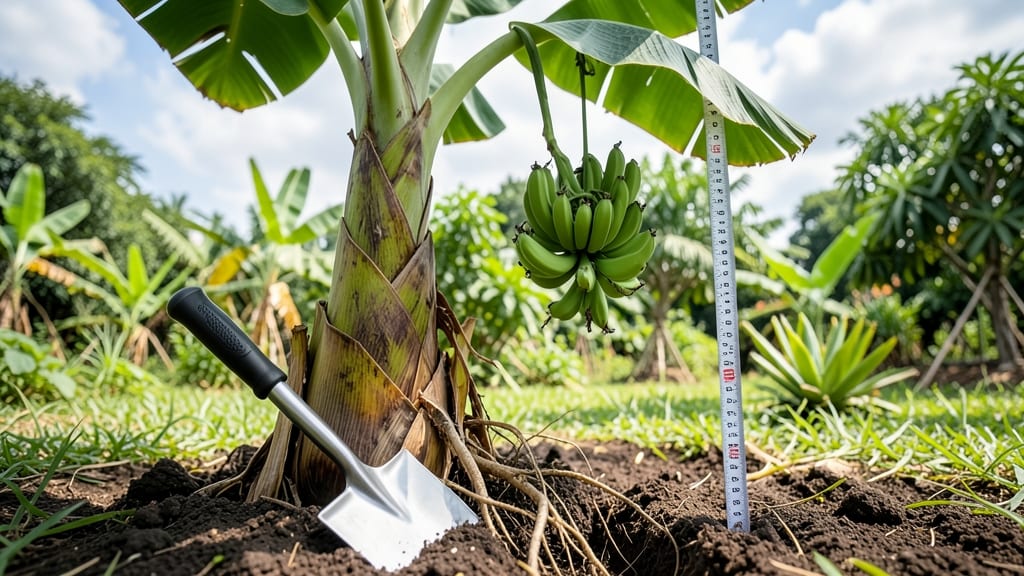
How deep banana tree roots go is something many gardeners underestimate—often extending 3 to 5 feet or more, depending on the variety and soil conditions.
If you're planning to grow banana trees in your garden, understanding their root depth isn't just about space—it's about survival. These tropical giants have surprising underground habits that can make or break your planting strategy.
Most gardeners assume banana trees have shallow roots, but the truth is far more complex. Cavendish varieties, for example, develop extensive lateral roots that spread horizontally, while others like Red Dacca dive deeper for stability.
Poor drainage or compacted soil can force roots to grow even wider, leading to potential issues if spacing isn't accounted for.
In this guide, I’ll break down exactly how deep banana tree roots go by variety, what factors influence their growth, and how to optimize planting for long-term health—so you can avoid common mistakes and set your trees up for success.
Banana tree root depth by variety: what you need to know
When planting banana trees, one of the first questions I ask myself is: how deep do banana tree roots grow? The answer isn’t one-size-fits-all—it varies dramatically by variety. Some banana types develop shallow, widespread roots that spread horizontally, while others sink deep vertically.
Understanding these differences helps me choose the right spot and soil conditions for each type I grow.
Most banana varieties develop a root system that extends 2-3 feet deep but spreads much wider—up to 10-15 feet horizontally in mature trees. However, dwarf varieties like Lady Finger bananas stay shallower, while giant types like Red Dacca can send roots deeper.
This variety-specific depth affects everything from planting distance to watering needs and even container choices.
Here’s the critical insight: Banana roots are highly sensitive to soil compaction and poor drainage. If you plant too close to structures or in heavy clay, roots can suffocate. That’s why I always test soil drainage before planting—even shallow-rooted varieties need well-aerated soil to thrive.
The Cavendish variety, which dominates grocery stores, is a great example of a shallow-rooted banana. Its roots rarely exceed 18 inches deep, making it ideal for container gardening or small urban gardens.
I’ve successfully grown Cavendish in 20-gallon pots for years—just be sure to use a fast-draining mix with perlite or coconut coir.
On the opposite end, the Red Dacca banana has a deep, penetrating root system that can reach 3-4 feet down. This variety thrives in loamy, well-aerated soil and struggles in compacted or rocky ground.
If you’re planting Red Dacca in your garden, I recommend amending the soil with compost and avoiding areas with high water tables.
For Lady Finger bananas, which are popular for their small, sweet fruit, the roots stay shallow but extensive. They spread 5-7 feet wide, so I always space them 8-10 feet apart in the ground.
In containers, a 30-gallon pot works well, but the roots will circle if confined—so I rotate the pot every few months to encourage outward growth.
One common mistake I see is assuming all banana trees have the same root depth. This leads to overcrowding or poor drainage issues. For instance, planting Blue Java (which has 2-3 feet deep roots) too close to a Cavendish can starve both for space.
Always check the variety’s root habits before planting—it’s the difference between a thriving banana grove and a struggling crop.
If you’re growing bananas in cooler climates, root depth becomes even more critical. Shallow-rooted varieties like Ice Cream bananas are more vulnerable to frost damage because their roots can’t insulate against cold.
I’ve learned to mulch heavily (with straw or leaves) and plant near south-facing walls to protect them during winter.
For container growers, understanding root depth helps choose the right pot size. A Cavendish might fit in a 15-gallon container, but a Red Dacca will need 50+ gallons to accommodate its deep roots.
Always leave 2-3 inches of space between the roots and pot edges when transplanting—this prevents root binding, which can strangle growth.
Finally, remember that root depth affects watering strategies. Shallow-rooted varieties need frequent, light watering to keep the topsoil moist, while deep-rooted types benefit from deep, infrequent watering to encourage roots to grow downward.
I use a moisture meter to check soil conditions at the depth of the roots—this ensures I’m not over- or under-watering.
How banana tree roots spread: surface vs. deep systems explained
Banana trees develop a fascinating root system that combines both horizontal spread and vertical depth. While their above-ground growth is dramatic, their roots create an intricate network that determines stability, water access, and nutrient uptake.
Understanding this dual system helps you plan spacing, soil prep, and irrigation strategies that prevent common issues like root competition or waterlogging.
The surface roots of banana trees spread aggressively outward, creating a wide canopy that can extend up to 10-15 feet from the trunk. These roots are shallow, typically staying within the top 12-24 inches of soil.
This horizontal expansion is why banana trees need generous spacing—10-15 feet apart for mature trees—to avoid root entanglement and competition for resources.
⚠️ WARNING: MISJUDGING ROOT SPREAD CAN BE COSTLY
While surface roots dominate the upper soil layer, banana trees also develop deep taproots that penetrate 3-6 feet into the ground. These vertical roots anchor the tree and access moisture from deeper soil layers, which is crucial during drought periods. However, their depth varies by soil type—sandy soils may see roots extending 6+ feet, while clay soils often limit depth to 2-3 feet.
This dual root system explains why banana trees thrive in well-draining, loose soil with a deep mulch layer. The mulch protects surface roots from temperature extremes while retaining moisture for deeper roots.
In containers, ensure pots are at least 24 inches deep and 3 feet wide to accommodate both root types, and use a mix of 60% topsoil, 30% compost, and 10% perlite for optimal drainage.
When planting, focus on the root flare—the area where roots transition from vertical to horizontal. This should sit just above soil level to prevent stem rot while allowing surface roots to spread freely.
If your soil is heavy clay, amend it with organic matter to encourage deeper root penetration and improve aeration for the extensive surface network.
Monitor root health by observing leaf color and growth rate. Yellowing leaves or slowed growth may indicate root-bound conditions or compaction. In such cases, gently loosen soil around the base or consider repotting if growing in containers.
Remember, banana trees are heavy feeders—surface roots absorb most nutrients, so apply balanced fertilizer (6-6-6) every 4-6 weeks during the growing season to support their expansive underground system.