
Container Gardens
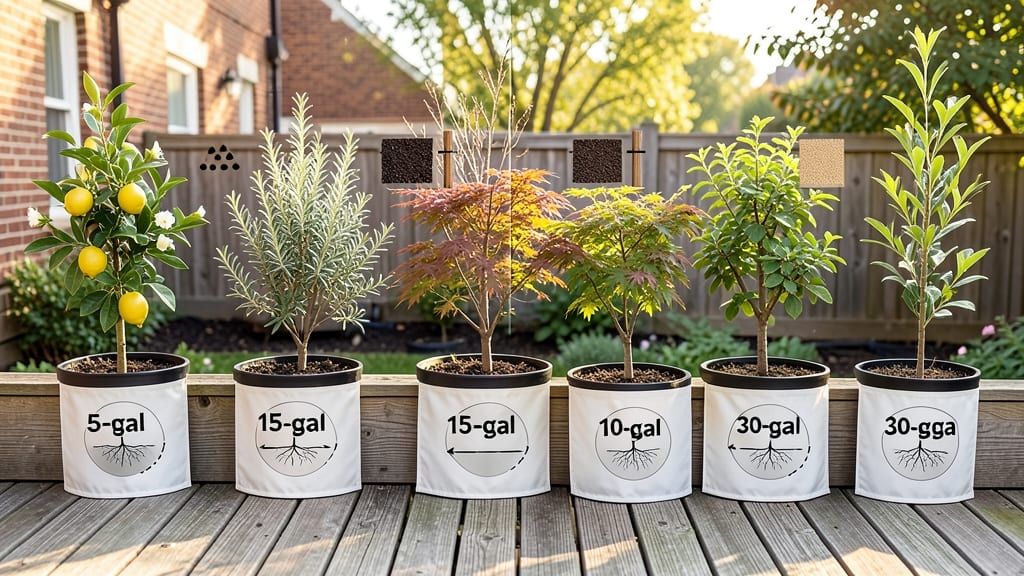
A tree container size chart helps you match the right pot dimensions to each tree variety, from 3-gallon containers for delicate saplings like Japanese maples to 30-gallon pots for robust trees such as crepe myrtles, promoting healthy root expansion and long-term stability.
A tree's container size directly impacts its growth potential. 🌳 The root system needs space to spread horizontally and vertically—too small, and roots circle the pot (a condition called girdling), while oversized containers waste moisture and nutrients.
For instance, a 5-gallon pot works perfectly for young citrus trees, but the same size would stifle a dwarf apple tree's development. I always recommend checking the tree's mature height and spread when selecting a container, as deeper pots with drainage holes are essential for preventing waterlogging.
Material choice also matters: fabric grow bags offer excellent aeration for root systems, while ceramic pots maintain consistent moisture levels for drought-sensitive varieties. Seasonal adjustments are key—repot in early spring before new growth begins, and always use fresh potting mix to avoid compacted soil.
For large trees, consider lightweight containers with handles to make moving easier during seasonal transitions.
💡 In This Article
- How Container Size Affects Tree Root Development
- Selecting the Right Container for 10 Popular Tree Types
How container size affects tree root development
The relationship between a tree's root system and container size follows a precise ratio that determines growth success.
Roots need 2-3 times the pot diameter in width to develop properly, as this space allows lateral roots to spread without circling the container—a condition called girdling that restricts water and nutrient uptake.
For example, a 10-inch diameter pot provides enough room for a young olive tree's roots to expand, while the same size would be too small for a dwarf peach tree with more aggressive root growth.
Depth matters just as much as width, with most trees requiring containers that are at least 12-18 inches deep for mature specimens. Shallow containers force roots to grow upward instead of downward, creating an unstable base.
Fabric grow bags excel here by allowing roots to breathe and expand naturally, while rigid plastic or ceramic pots may require deeper models to accommodate larger varieties.
The science behind this involves root pressure: when roots hit container walls, they exert force against the sides, which can cause the pot to crack or the tree to become top-heavy.
Drainage holes are non-negotiable—they prevent waterlogging, which leads to root rot within 48-72 hours of poor drainage. I've seen firsthand how a 30-gallon ceramic pot without drainage can turn a healthy bay laurel into a sad, wilting mess.
The ideal container has holes at the bottom plus a saucer to catch excess water, which should be emptied after each watering. For trees like Japanese maples, even slight water stress can cause leaf scorch, making proper drainage critical for their survival.
Overpotting is another common mistake that stunts growth. A 30-gallon pot for a dwarf fruit tree may seem like plenty, but the excess soil stays too moist, promoting fungal growth. The rule of thumb is to use a container that's only 20-30% larger than the tree's current root ball.
For example, a 5-gallon sapling should move to a 7-10 gallon pot after 1-2 years, not a 20-gallon monster that will overwhelm it.
Seasonal factors also play a role. In summer, containers dry out faster, so larger pots help maintain moisture levels. A 15-gallon pot for a lemon tree retains water better than a 5-gallon pot, reducing the need for daily watering.
Conversely, in winter, smaller pots can help protect roots from freezing temperatures by allowing for easier movement to sheltered locations. The key is balancing size with the tree's specific needs and your ability to maintain proper care.
Consider these material-specific benefits when choosing:
- Fabric grow bags: Excellent aeration and root expansion; ideal for trees like olive or fig that dislike soggy roots
- Plastic containers: Lightweight and affordable; best for temporary setups or moving trees seasonally
- Ceramic pots: Insulate roots from temperature extremes; perfect for Mediterranean varieties like rosemary or thyme
Understanding these factors transforms container selection from guesswork to a precise science that directly impacts your tree's health and longevity. 🌱