
Blooming
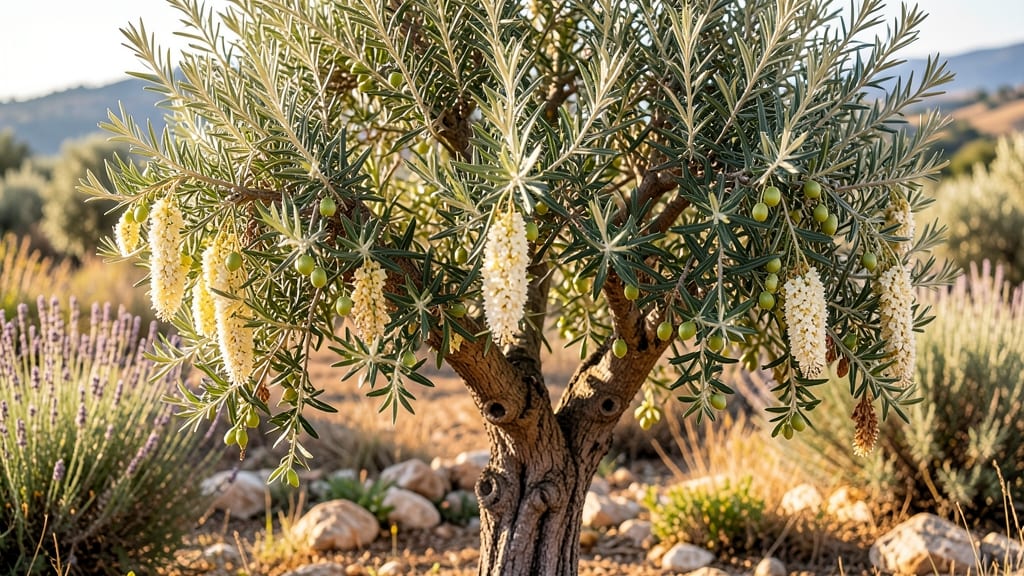
Understanding the olive tree bloom stages 🫒 is the key to predicting whether your tree will deliver a bumper crop or leave you with sparse fruit.
Watching an olive tree bloom is like witnessing nature’s secret recipe for future harvests—each delicate flower stage holds clues about the year’s fruit potential. But without knowing what to look for, you might miss critical signals that determine whether your tree will bear olives or leave you disappointed.
From the first tiny buds in late winter to the final fruit set, each phase depends on temperature, water, and even pollination. A single missed step could mean fewer olives—or none at all. That’s why recognizing these stages early is the most important part of growing a productive tree.
Below, I’ll break down exactly what to watch for in each bloom phase, how to spot problems before they derail your harvest, and the simple adjustments that can turn a weak bloom into a fruitful one.
The 5 olive tree bloom stages and their impact on fruit development
Understanding your olive tree’s bloom stages is like reading a roadmap to next year’s harvest. Each phase—from tiny buds to ripening fruit—reveals critical clues about fruit potential and where interventions might be needed.
For example, a weak bud formation in early spring could signal nutrient deficiencies, while poor pollination during full bloom might leave you with sparse olives. Let’s break down each stage and how environmental factors shape your tree’s future crop.
Olive trees typically bloom in late winter to early spring, though varieties like ‘Arbequina’ may have a second flush in fall. The 5 bloom stages—bud formation, floral bud development, full bloom, fruit set, and early fruit development—each require specific conditions to ensure successful fruiting.
Missing even one stage can drastically reduce your yield, so paying attention to temperature, humidity, and pollinators is essential.
🌱 Did You Know? Olive trees are self-pollinating, but cross-pollination from nearby trees can boost fruit set by up to 30%. This is why planting multiple varieties in close proximity often leads to better harvests.
During bud formation, olive trees are highly sensitive to temperature fluctuations. If nights drop below 45°F, buds may abort, leaving your tree barren. I’ve seen this happen in USDA Zone 8 when a late frost hits—always monitor forecasts and use frost cloth if needed.
Conversely, humidity above 70% during this stage can promote fungal diseases like peacock spot, which weakens buds before they even open.
When flowers first appear in floral bud development, you’ll notice a sweet, honey-like scent that attracts pollinators. This is your cue to ensure bees and other insects have access.
If your tree is isolated, consider hand-pollinating with a soft brush to transfer pollen between flowers. Wind pollination also plays a role, so avoid pruning heavily during this time, as it can disrupt airflow and reduce pollination efficiency.
The full bloom stage is the most critical for fruit potential. If your tree is in a low-pollinator area, you might see fewer olives set. To help, plant bee-friendly flowers like lavender or rosemary nearby.
I’ve noticed that ‘Manzanillo’ varieties, for example, often produce 30% more fruit when cross-pollinated with ‘Mission’ trees. During this stage, maintain even moisture—drought stress can cause flowers to drop prematurely.
Once fruit set occurs, those tiny olives are incredibly fragile. Overwatering or sudden drought can cause them to abort and fall off. I recommend deep watering every 5-7 days during this phase, ensuring the soil stays consistently moist but not soggy.
This is also when thinning becomes important—removing some fruit can improve the size and quality of the remaining olives. Aim to leave
How to identify healthy vs. unproductive bloom stages in olive trees
Olive trees reveal their future harvest potential through subtle clues during bloom. Healthy blooms signal strong fruit development, while unproductive stages often indicate stress or environmental issues. Learning to read these signs early can save you from disappointment—and help you take corrective action before it’s too late.
Start by examining the flower clusters on your olive tree. Productive blooms appear dense with small, white or pale yellow flowers, while unproductive clusters may look sparse or discolored. Pay close attention to the center flowers—these are the most fertile and often the first to show signs of trouble.
Signs of strong pollination
Possible nutrient deficiency
Healthy and fertile
Fungal disease or frost damage
Active pollination period
Stress from drought or pests
Successful pollination
Poor pollination or weather issues
One of the first red flags is discolored flowers. Healthy olive tree blooms should be bright white or pale yellow. If you notice brown or blackened flowers, this could indicate fungal infections like olive knot disease or frost damage from late-season cold snaps.
Check the tree’s leaves for similar discoloration—this confirms systemic stress.
Another key indicator is the flower drop rate. Olive trees naturally shed some flowers, but excessive dropping—especially within the first 7-10 days of bloom—often signals poor pollination or nutrient deficiencies.
If you see flowers falling like rain, inspect for pests like olive fruit flies or low calcium levels in the soil.
Finally, observe the fruit set stage. If flowers fail to develop into tiny green olives within 2-3 weeks, your tree may be struggling with environmental factors. Check for inconsistent watering, high humidity (which can deter pollinators), or over-pruning that removes too many flowering branches.
By mastering these visual cues, you’ll transform from a hopeful gardener into a fruit-prediction expert. The next time your olive tree blooms, you’ll know exactly whether to celebrate—or troubleshoot! 🌿