
Pruning
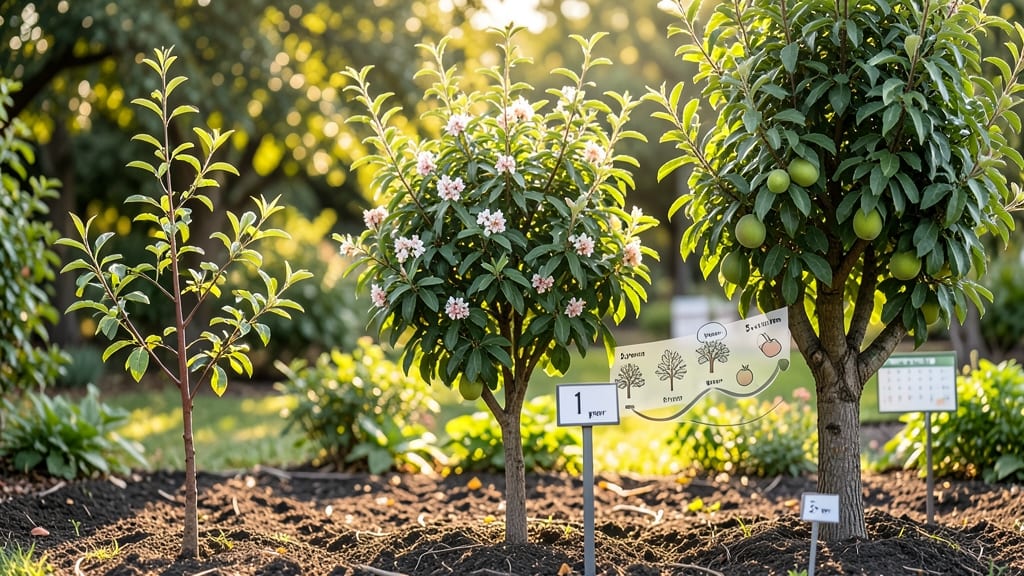
Peach trees usually take 2 to 5 years to bear fruit after planting, with dwarf varieties often producing fruit in just 2–3 years, while standard trees may need 4–5 years for full harvests.
Your patience will pay off when you consider how much peach trees need to establish strong root systems and develop flowering wood. 🌱 The timeline varies because dwarf varieties—like 'Bonanza' or 'Redhaven'—are bred to mature faster, while larger trees need more time to build structural stability.
Climate also plays a huge role: trees in warmer USDA zones (7–9) may fruit earlier than those in cooler areas, where winter chilling hours can delay blooming. I’ve seen home growers rush watering or fertilizing, only to frustrate their trees—consistent care is key to hitting that 2–5 year window.
For the fastest results, choose early-bearing varieties like 'Relenta' (disease-resistant) or 'Elberta' (classic flavor), and plant them in well-draining soil with full sun exposure. These varieties are bred to balance speed with productivity, making them ideal for impatient gardeners.
Just remember: even the best varieties need proper pruning and winter protection to avoid setbacks.
💡 In This Article
- Factors That Speed Up or Delay Peach Tree Fruit Production
- Best Peach Tree Varieties for Fast Fruit Harvests
Factors that speed up or delay peach tree fruit production
The rootstock you choose is the single biggest factor in how quickly your peach tree bears fruit.
Dwarf varieties like 'Bonanza' or 'Redhaven' are grafted onto semi-dwarf rootstocks that mature faster, producing fruit in just 2-3 years because their smaller size allows them to focus energy on fruit production rather than trunk growth.
In contrast, standard trees on vigorous rootstocks like 'Lovell' or 'Halford' take 4-5 years to reach full production because they prioritize developing a strong structural framework first.
This difference is why a 6-foot-tall dwarf tree can yield 50-100 pounds of fruit annually, while a 20-foot standard tree may take 5 years to reach similar productivity.
Climate plays an equally critical role—peach trees need 400-700 hours of winter chilling (temperatures between 32-45°F) to break dormancy and trigger blooming. Trees in USDA zones 5-6 often struggle because they don’t get enough chilling, while zones 7-9 provide ideal conditions for faster fruit production.
I’ve seen 'Elberta' peaches in California’s Central Valley fruit in 2 years, but the same variety in Minnesota might take 5+ years due to insufficient chilling.
Soil quality matters too: peaches thrive in slightly acidic soil (pH 6.0-6.5) with excellent drainage—poor soil forces trees to divert energy to root repair instead of flowering.
Watering habits can either accelerate or delay fruiting. Young trees need deep watering 2-3 times per week during their first year to establish roots, but overwatering causes root rot, which stunts growth.
Conversely, drought stress in summer can reduce next year’s bloom production by 30-50% because the tree prioritizes survival over reproduction.
Sunlight is another game-changer: peach trees require 6-8 hours of direct sunlight daily—shade reduces fruit set by up to 60% because insufficient light weakens the tree’s ability to photosynthesize and store energy for flowering. A tree in partial shade might never reach full production potential.
Pruning mistakes are a common reason for delayed fruiting. Improper cuts—like heading back branches too severely—can remove next year’s flower buds. Peach trees flower on both old wood (2+ years) and new growth, so aggressive pruning in late winter removes potential fruit-bearing wood.
I’ve seen homeowners prune their trees in summer, which stresses the tree and diverts energy away from flowering. The solution? Prune in late winter (before buds swell) using clean, sharp tools to make 3-branch cuts that encourage outward growth and better light penetration.
Pests and diseases also create setbacks. Aphid infestations or fungal infections like brown rot (Monilinia fructicola) can weaken trees, delaying fruiting by 1-2 years as the tree diverts energy to recovery.
Organic growers swear by neem oil sprays in early spring to prevent pests, while conventional methods use copper fungicides to combat brown rot. Even well-cared-for trees need 2-3 years of pest-free growth before they’ll consistently produce heavy crops.
The key is preventative care—monitoring for early signs of stress and acting quickly to protect the tree’s energy reserves.
Finally, don’t underestimate the impact of planting time. Trees planted in early spring (before buds swell) establish roots faster than those planted in fall, which can experience winter stress.
A properly timed planting gives the tree a 1-year head start on root development, meaning it may fruit 6-12 months earlier than a poorly timed planting.
Combine this with the right variety, rootstock, and care, and you’ll hit that 2-3 year fruiting window instead of waiting 5 years for your first harvest.