
Trees
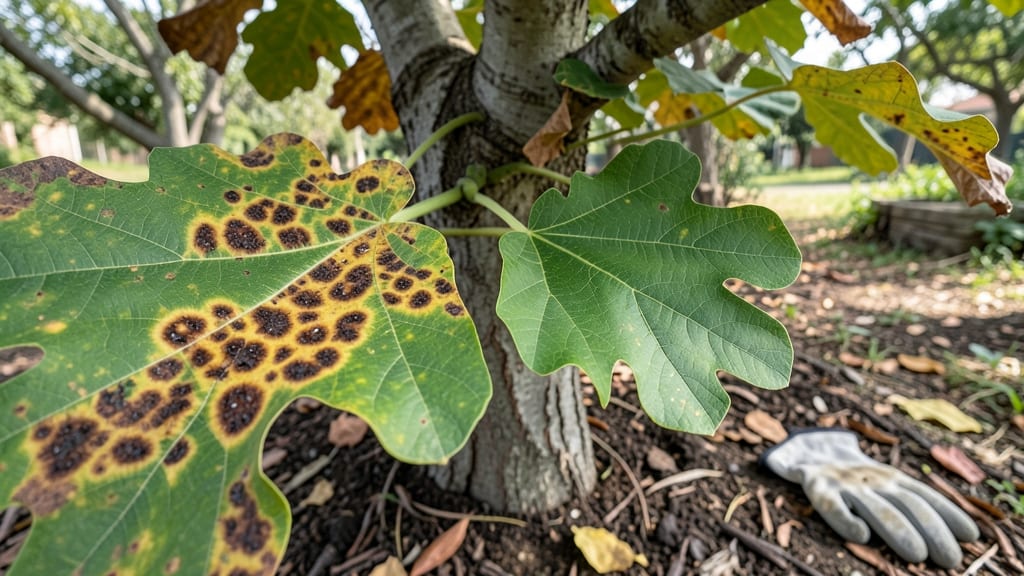
Your fig tree’s leaves turning yellow with brown spots mean one thing: it’s fighting a fungal infection, and the good news is you can fix it. 🌿 I’ve battled this exact issue with my Mission fig, and after a few seasons of trial and error, I’ve pinpointed the most effective organic fixes—no harsh chemicals required.
The culprit is almost always fig leaf spot or rust fungus, thriving in damp, humid conditions. Start by inspecting the undersides of leaves for tiny brown spots with yellow halos—this is your first clue.
Overwatering or poor airflow between branches makes the problem worse, so check your watering schedule and prune any crowded growth.
Once you confirm it’s fungal, the cure is simple: copper fungicide sprays (organic options work best) applied every 7–10 days, paired with pruning infected leaves to stop the spread. Adjust your watering to keep soil moist but not soggy, and add mulch to improve airflow at the base.
With consistent care, your fig tree will bounce back in 4–6 weeks, producing fresh, disease-free leaves—and next season, you’ll catch early signs before they become a full-blown problem. Here’s exactly how to diagnose and treat it step by step.
Understanding the Root Causes
When your fig tree’s leaves start turning yellow with unsightly brown spots, it’s often a sign that something is disrupting its health. These symptoms can stem from a mix of environmental stressors, nutrient deficiencies, or—most commonly—fungal infections.
Below, we break down the key culprits behind this distressing transformation, so you can diagnose the issue accurately and take targeted action.
Fungal diseases are the most frequent offenders when it comes to fig tree leaf discoloration. These pathogens thrive in warm, humid conditions and can spread rapidly if left unchecked. Here’s how they wreak havoc:
🌿 Fig Anthracnose: The Classic Spot Culprit
Anthracnose (Colletotrichum spp.) is a notorious fungal disease that targets fig trees, causing:
- Yellowing leaves with dark brown or black spots that may have a slightly sunken, greasy appearance.
- Premature leaf drop, weakening the tree’s ability to photosynthesize.
- Blackened or rotting figs if the fungus spreads to the fruit.
Why it happens: This fungus overwinters in infected plant debris or soil and germinates when conditions are moist (e.g., after rain or overhead watering). It enters the tree through natural openings like stomata (leaf pores) or wounds. Once inside, it releases toxins that disrupt the leaf’s chlorophyll production, leading to yellowing and necrosis (cell death).
🍃 Rust Fungus: The Orange-Brown Invader
Rust fungi (Puccinia spp. or Phakopsora spp.) create pustules on the underside of leaves that eventually turn brown and crusty, while the upper surface develops yellow-orange spots. These spots can merge, causing large areas of leaf tissue to die.
Why it happens: Rust fungi require two hosts to complete their life cycle (often alternating between fig trees and other plants like grasses). Spores are spread by wind or splashing water. When conditions are humid and temperatures hover between 60–80°F (15–27°C), spores germinate and infect the leaves, triggering the characteristic rusty discoloration.
🍂 Leaf Spot Diseases: The Generalists
Other fungi, like Cercospora or Septoria, cause random brown spots with yellow halos. These spots may have concentric rings or tiny black dots (fungal fruiting bodies).
Why it happens: These fungi favor poor air circulation and excessive moisture on leaves. They often enter through stomata or injured tissue, then multiply rapidly in warm, damp conditions. Unlike rust, they don’t require a secondary host, making them harder to control once established.
Not all leaf issues are fungal—sometimes, your fig tree’s environment is the real villain.
☀️ Sunburn or Heat Stress
If your fig tree is suddenly exposed to intense sunlight (e.g., after pruning nearby shade or moving it), leaves may develop yellow patches with brown, crispy edges.
Why it happens: Fig trees, especially those accustomed to partial shade, can suffer photoxidative damage when exposed to too much UV radiation. The excess light destroys chlorophyll, causing cells to die and turn brown. This is common in hot, dry climates or after sudden changes in light exposure.
💧 Overwatering or Poor Drainage
Yellowing leaves with mushy brown spots (often near the edges) can signal root rot or waterlogged soil.
Why it happens: Fig trees prefer well-draining soil and moderate moisture. Overwatering or compacted soil leads to:
- Oxygen deprivation in roots, triggering anaerobic bacteria and fungi (like Phytophthora).
- Toxin buildup (e.g., ethylene gas) from waterlogged cells, which spreads to leaves.
- Nutrient deficiencies (e.g., iron or manganese), as roots can’t absorb them properly.
🌀 Wind or Physical Damage
Strong winds or hail can tear leaves, creating entry points for fungi or causing brown, scorch-like marks.
Why it happens: Physical trauma disrupts the leaf’s cuticle (protective waxy layer), making it vulnerable to:
- Desiccation (drying out) from wind.
- Fungal/bacterial infections through open wounds.
- Nutrient loss as the tree diverts energy to repair damage.
Sometimes, your fig tree isn’t sick—it’s just hungry.
🔥 Iron or Manganese Deficiency
Yellowing between leaf veins (interveinal chlorosis) with brown spots can indicate a lack of these essential micronutrients.
Why it happens:
- Alkaline soil (high pH >7.0) locks out iron and manganese, even if they’re present.
- Over-fertilization with nitrogen (without balancing micronutrients) starves roots of these trace elements.
- Poor root health (from compaction or disease) reduces the tree’s ability to uptake nutrients.
🌿 Nitrogen Deficiency
Pale yellow leaves with brown tips or edges may signal nitrogen starvation.
Why it happens: Nitrogen is crucial for chlorophyll production. If your fig tree isn’t getting enough (common in sandy or leached soils), leaves turn yellow because:
- The tree recycles nutrients from older leaves first.
- New growth is stunted, leaving mature leaves vulnerable to secondary stress (e.g., fungal infections).
Now that you’ve identified the likely cause, the next step is diagnosing the exact issue and applying the right organic cure. Each of these problems requires a different approach—so let’s tackle them one by one!
Revive Your Fig Tree Naturally
Reviving a fig tree with yellowing leaves and brown spots starts with identifying the root cause—whether it’s fungal blight, nutrient deficiency, or environmental stress. Below are practical, organic solutions tailored to each issue, plus prevention tips to keep your tree thriving.
If brown spots with yellow halos (or black fungal growth) are the culprit, act fast to stop the spread.
✅ Step-by-Step Fix:
- 🔥 Prune Infected Leaves
- Use sterilized pruners (wipe with rubbing alcohol) to remove all spotted leaves and branches. Dispose of them in a sealed bag—do not compost them.
- Trim back to healthy green tissue (about ½ inch above the spot).
- 🍳 Apply Organic Fungicide Spray - Mix 1 tbsp baking soda + 1 tbsp neem oil + 1 tsp dish soap + 1 gallon water in a spray bottle.
Shake well and spray undersides of leaves (where spores hide) and stems. - Reapply every 7–10 days until new growth appears. - Alternative: Use copper fungicide (like Bonide Copper Fungicide) if baking soda isn’t enough.
- 🌡️ Improve Airflow & Reduce Moisture
- Thin out dense foliage to allow sunlight and airflow—fungi love damp, shaded areas.
- Water only at the base (avoid overhead sprinkling) and early in the day so leaves dry quickly.
💡 Prevention Tips:
- Space trees 6–8 feet apart to prevent overcrowding.
- Mulch with straw or wood chips (3–4 inches deep) to deter soil-borne fungi.
- Rotate crops if growing figs in containers—don’t replant in the same soil for 2+ years.
Yellowing leaves with brown edges or veins often signal a lack of key nutrients.
✅ Step-by-Step Fix:
- 📊 Soil Test First
- Grab a DIY soil test kit (or send a sample to a local extension office). Fig trees thrive in slightly acidic to neutral soil (pH 6.0–7.0).
- 💪 Fertilize Organically
- Iron deficiency (yellow between veins)?
- Sprinkle iron sulfate or chelated iron around the root zone, then water deeply.
- Magnesium deficiency (yellow patches with brown edges)?
- Apply Epsom salt (magnesium sulfate)—mix 1 tbsp per gallon of water and spray on leaves.
- General weakness (pale yellow leaves)?
- Use a balanced organic fertilizer (like 5-5-5 or compost tea) in early spring.
- Iron deficiency (yellow between veins)?
- 🌱 Boost Soil Health
- Mix compost or worm castings into the top 6 inches of soil.
- Avoid over-fertilizing—fig trees are low-maintenance and can burn with too much nitrogen.
💡 Prevention Tips:
- Mulch annually with well-aged compost to slowly release nutrients.
- Avoid compacted soil—loosen with a garden fork if the ground feels hard.
- Water deeply but infrequently—figs hate soggy roots.
If leaves yellow only on the sunniest side or feel slimy/mushy, environmental factors may be to blame.
✅ Step-by-Step Fix:
- 🌿 Adjust Watering Habits
- Overwatering? Let the top 2–3 inches of soil dry out between waterings.
- Underwatering? Water slowly at the base until it drains out the bottom (if in a pot).
- 🏜️ Protect from Harsh Sun
- If leaves scorch (crispy brown edges), provide afternoon shade with a light cloth or lattice.
- Newly planted figs? Acclimate them gradually to full sun over 2–3 weeks.
- 🌡️ Check for Root Rot
- Gently dig around the base—if roots smell rotten or are mushy, your tree has root rot.
- Fix: Repot in fresh, well-draining soil (mix potting soil with perlite) and reduce watering.
💡 Prevention Tips:
- Group fig trees with drought-tolerant plants to mimic their natural habitat.
- Use drip irrigation instead of sprinklers to avoid wetting leaves.
- Avoid planting in low-lying areas where water pools.
Tiny pests can weaken fig trees, making them susceptible to disease.
✅ Step-by-Step Fix:
- 🔍 Inspect Leaves
- Look for sticky residue (aphids), fine webbing (spider mites), or white bumps (scale).
- 🍳 Blast Off Pests Naturally - Neem oil spray: Mix 1 tsp neem oil + 1 tsp mild soap + 1 quart water.
Spray every 5–7 days until pests vanish. - Hose off aphids with a strong stream of water (they hate it!). - Release beneficial insects like ladybugs or lacewings (available at garden centers).
- 🌿 Prune Heavily Infested Branches
- Cut off severely damaged growth and dispose of it in a sealed bag.
💡 Prevention Tips:
- Encourage predator insects by planting marigolds or basil nearby.
- Avoid broad-spectrum pesticides—they kill helpful bugs too.
- Check trees weekly during growing season for early signs.
- Keep a garden journal to track what works (e.g., “Applied neem oil on June 10—spots cleared by June 25”).
- Rotate treatments to prevent fungus/pest resistance (e.g., alternate neem oil with copper spray).
- Harvest figs when firm—stressed trees produce fewer fruits, so give it time to recover!
With these targeted fixes, your fig tree should bounce back in 4–8 weeks. Stay patient, and soon you’ll be enjoying lush green leaves and sweet figs again! 🍈✨
Frequently asked questions
Why do fig tree leaves turn yellow with brown spots in hot weather?
Hot weather combined with high humidity creates perfect conditions for fungal diseases like anthracnose or rust fungus. The heat stresses the tree while moisture allows spores to germinate and infect leaves. Check for tiny brown spots with yellow halos—this is your first sign of fungal activity during summer months.
Can I save my fig tree if half the leaves are already brown and spotted?
Yes, but act quickly! Prune all infected leaves immediately and apply an organic fungicide spray (like neem oil or copper solution) to stop the spread. Healthy leaves can still recover if you remove the diseased ones and improve airflow around the tree. With consistent care, new growth should appear in 4-6 weeks.
Will overwatering cause brown spots on fig tree leaves?
Yes, overwatering leads to root rot and fungal infections that manifest as brown spots. Fig trees prefer well-draining soil—water only when the top 2-3 inches are dry, and avoid wetting leaves. If you suspect overwatering, let the soil dry completely between waterings for a few weeks to help recovery.
How often should I spray my fig tree with fungicide?
For active fungal infections, spray every 7-10 days until new growth appears. Once the problem clears, switch to a preventative schedule of every 4-6 weeks during humid seasons. Always spray in the early morning so leaves have time to dry before evening.
Are brown spots on fig leaves always caused by disease?
Not always! While fungal diseases are common, brown spots can also result from nutrient deficiencies (like iron or manganese), sunburn (if suddenly exposed to full sun), or physical damage from wind/hail. Check for other symptoms: yellowing between veins suggests deficiency, while crispy edges indicate sun stress.