
Pruning
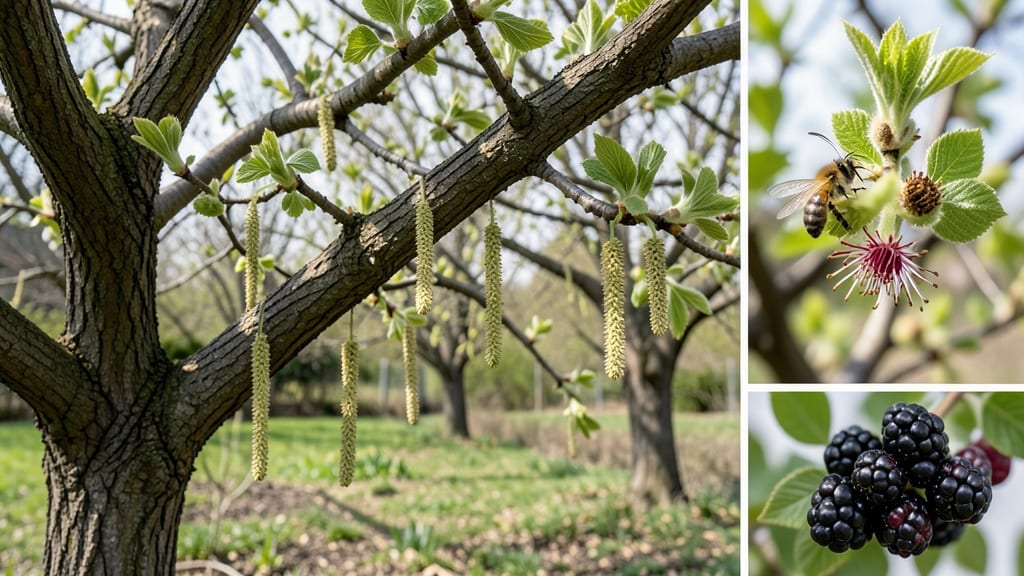
Mulberry tree pollination works through wind and insects like bees, where male flowers release pollen to fertilize female flowers and trigger fruit development. While self-pollination happens frequently, cross-pollination between trees enhances fruit quality and harvest size. Proper pruning and timing are key to maximizing fruit set.
Understanding mulberry tree pollination starts with the flowers themselves—male and female blooms often appear on separate trees or even different branches. 🌸 The male flowers release clouds of pollen that either drift on the breeze or hitch rides on bees, while female flowers catch this pollen to form fruit.
What's fascinating is how environmental factors like temperature and humidity can either boost or hinder this process, sometimes leading to poor fruit set even with plenty of flowers.
For gardeners looking to improve yields, timing matters most. Pruning in late winter encourages vigorous new growth that produces more flowers, while avoiding heavy pruning during the growing season prevents stress that could reduce fruit development.
Planting mulberry trees near bee-friendly flowers like lavender or sunflowers also attracts more pollinators, giving your crop a natural boost.
💡 In This Article
- How Mulberry Tree Flowers Develop Fruit
- Tips to Boost Mulberry Fruit Production
How mulberry tree flowers develop fruit
The mulberry tree's reproductive process begins with its unique flower structure. Male flowers, called catkins, grow in dense clusters and produce copious amounts of pollen—up to 10 million grains per square inch during peak season. Female flowers, smaller and less showy, develop on separate branches or even different trees entirely.
This separation forces cross-pollination, though some varieties can self-pollinate to a limited degree. The pollen grains, measuring just 0.0004 inches in diameter, are light enough to travel up to 100 feet on wind currents, creating a visible golden haze around male trees in spring.
Pollination triggers a fascinating biological sequence: once pollen lands on a receptive female stigma, it germinates within 30-60 minutes, forming a pollen tube that grows down the style to the ovary. This process takes about 24-48 hours under optimal conditions (65-75°F with moderate humidity).
The fertilized ovules then begin developing into berries, with fruit set occurring within 7-10 days. However, temperatures above 85°F or below 50°F can disrupt this process, often causing flowers to drop without fruiting—a phenomenon called "flower abortion."
Humidity plays a critical role too. Mulberry flowers thrive in 40-60% relative humidity; below 30%, pollen grains desiccate and lose viability, while above 70%, excessive moisture can promote fungal growth that damages stigmas.
The tree's native range in temperate climates (like China and Japan) explains why these conditions are ideal—any deviation stresses the plant's reproductive system. For example, in arid regions, gardeners often see 30-50% lower fruit set compared to humid climates.
Here's what's actually happening at the cellular level: once fertilization occurs, the ovary cells begin rapid division, forming the fruit's flesh and seeds. The mulberry's unique berry structure—technically an aggregate fruit—develops from multiple ovaries fused together.
This is why a single "berry" contains 20-50 tiny seeds, each with its own genetic variation. The fruit's vibrant purple color comes from anthocyanins, which also protect the developing seeds from UV damage during the 60-90 day maturation period.
What most gardeners don't realize is how wind direction affects pollination patterns. In orchards, planting male and female trees in alternating rows with 30-foot spacing creates optimal wind channels for pollen dispersal.
Without this planning, you might see 70% fruit set in well-placed trees versus only 30% in randomly arranged ones. The key factor is maintaining consistent airflow—blocked rows create "dead zones" where pollen simply can't reach female flowers.
Consider these environmental factors when assessing your tree's health:
- Temperature: Ideal range is 65-75°F during flowering; extremes cause flower drop
- Humidity: 40-60% is optimal; below 30% reduces pollen viability
- Wind speed: 5-10 mph enhances pollen dispersal; calm conditions limit cross-pollination
- Rainfall: Heavy rain (1 inch/day) can wash away pollen before fertilization
The entire process from pollination to harvest reveals why mulberry trees are both resilient and particular—understanding these biological nuances helps explain why some years yield abundant fruit while others produce disappointingly few berries. 🌿