
Trees
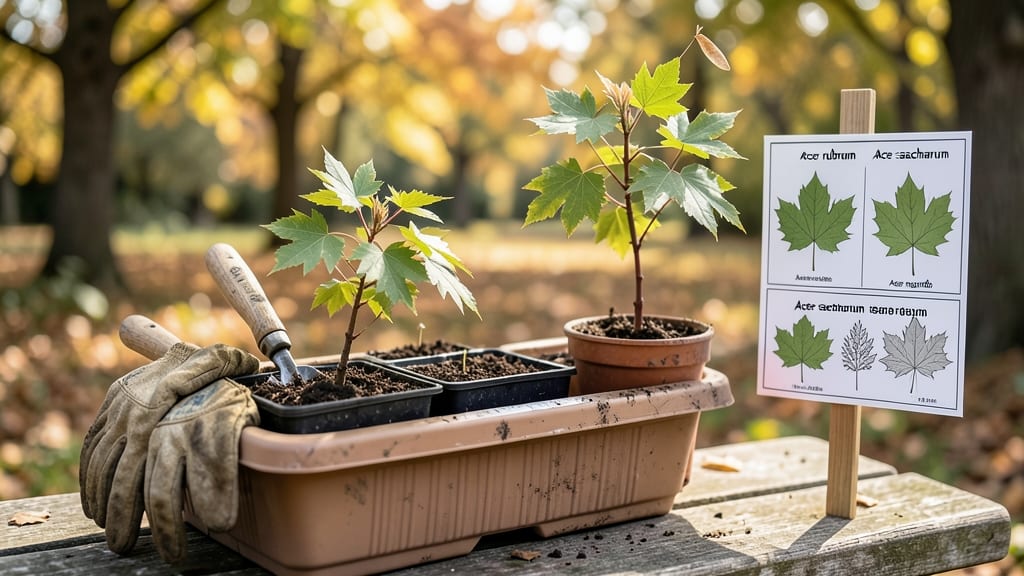
The tree identification of a maple tree seedling starts with those signature lobed leaves and clustered buds. 🌿 I’ve spent years sorting through seedling mixes, and the key is noticing how the leaves fan out and how the buds hug the stem—details that instantly tell you whether it’s a sugar maple or red maple sapling.
The leaves are your first clue: sugar maples have 5-7 lobes with sharp points, while red maples often sport 3-5 lobes that look more rounded. Then check the buds—maples have opposite branching, with buds pressed tightly against the stem in a way that sets them apart from oaks or hickories.
Once you spot these traits, you’ll know if you’ve got a future shade tree or a future firewood candidate. Healthy seedlings should have straight stems, vibrant leaves, and no signs of pests or disease—critical if you’re planning to transplant them later this season.
This works for backyard gardeners, forest stewards, or anyone curious about native trees. Grab a magnifying glass, and let’s decode those seedlings like a pro.
How Seedling Traits Develop Naturally
Maple tree seedlings don’t just appear—nature crafts them through a mix of genetics, environmental cues, and growth stages. Understanding why their identifying features (like leaf shape or bud clusters) form helps you spot them early and nurture them correctly. Here’s the science behind their development:
Every maple seedling inherits its defining traits from its parent tree through genetic coding. Here’s how it works:
- Leaf shape: The SAM (Shoot Apical Meristem) cells in the seedling’s growing tip contain DNA that dictates whether leaves will be lobed (like Sugar Maple) or serrated (like Silver Maple). These patterns are hardwired from the parent’s lineage.
- Bud clusters: Maple species have compound buds (groups of buds on a single stem) due to a genetic trait called bud superposition. This ensures seedlings grow in clusters, mimicking the parent’s structure.
- Seedling vigor: Fast-growing maples (e.g., Red Maple) pass on traits like higher auxin production (a plant hormone that speeds up growth), while slower growers (e.g., Boxelder) have lower auxin levels.
Pro Tip: 🔍 If you’re comparing seedlings, note that hybrids (like Freeman Maple) may blend traits—look for intermediate leaf lobes or bud arrangements.
While genetics set the stage, the seedling’s first year is heavily shaped by its surroundings. Key factors include:
| Factor | Effect on Seedling Traits | Example |
|---|---|---|
| 🌞 Sunlight exposure | High light = broader, thicker leaves (more photosynthesis). Low light = narrower, paler leaves. | A Sugar Maple seedling in shade may develop fewer lobes until it gets sunlight. |
| 💧 Water availability | Drought stress = smaller leaves with darker veins (conserving water). Overwatering = yellowing (chlorosis). | Silver Maple seedlings in wet soil may grow larger, glossier leaves faster. |
| 🌡️ Temperature | Cool temps (<60°F) slow growth but enhance bud tightness. Warm temps (>75°F) speed up leaf expansion but may weaken stem structure. | Red Maple seedlings in spring may bolt upright due to rapid stem elongation in warmth. |
Why It Matters: Seedlings grown in ideal conditions (60–75°F, partial shade, consistent moisture) will show their true species traits most clearly.
Maple seedlings don’t reveal their full identity overnight—they progress through stages where traits become visible:
- Germination (0–4 weeks):
- Seedling focuses on root and cotyledon (first leaves) development. Cotyledons are simple, unlobed and look like tiny maple leaves but aren’t diagnostic.
- Bud scales form but won’t open until the seedling has enough energy.
- Juvenile Phase (4–12 months):
- True leaves emerge with species-specific shapes (e.g., 3–5 lobes for Sugar Maple).
- Bud clusters become visible as the seedling prepares for winter dormancy.
- Mistake Alert: 🚫 Don’t judge a seedling by its first few leaves—wait until it’s at least 6–12 inches tall for accurate ID.
- Maturity (1+ years):
- Leaves fully lobed and buds tightly clustered (e.g., 3–5 buds per cluster in Sugar Maple).
- Seedlings may start producing samaras (winged seeds), confirming species.
Pro Tip: 📅 Track your seedling’s growth in a notebook—note leaf changes every 2–4 weeks to spot key developmental milestones.
By recognizing these natural processes, you’ll avoid misidentifying seedlings in their early stages. Next, we’ll cover how to spot these traits in the wild—no lab equipment needed!
Fixing Common Maple Seedling Mistakes
Now that you understand why misidentifying maple seedlings happens, let’s tackle the practical fixes—from quick troubleshooting to long-term prevention. Whether you’re a gardener, landscaper, or curious nature lover, these solutions will help you confidently spot and nurture young maples.
---
Cause: Maple seedlings (especially sugar maple, Acer saccharum) can resemble other hardwoods like ash, hickory, or even boxelder (Acer negundo) at first glance.
Fix: - 🍃 Compare Leaf Lobes: Use a magnifying glass to examine the edge shape—maple leaves have serrated (saw-toothed) edges and opposite branching (two leaves per node). Boxelder leaves are more jagged and may have 3-5 lobes, while ash leaves are compound (multiple leaflets). - 🌱 Check the Buds: Maple buds are sticky or resinous when young and have a distinct "V" shape when viewed from the side. Ash buds are pointed and smooth, while hickory buds are long and fuzzy. - 📏 Measure the Seedling: Mature maple seedlings often have a thin, straight trunk with horizontal lenticels (tiny raised dots). Ash and hickory trunks tend to be thicker and more knobby.
Prevention Tip: 💡 Take reference photos of local maple species in your region (e.g., red maple vs. silver maple) and compare them side by side. Apps like iNaturalist or LeafSnap can help cross-verify.
---
Cause: Poor soil prep, over/under-watering, or transplant shock can kill young maples before they establish.
Fix: - 💧 Watering Routine: Water deeply 2-3 times per week (not daily shallow watering). Maple seedlings need moist but well-drained soil—soggy roots = rot. - 🌱 Soil Mix: Amend clay-heavy soil with compost or sand to improve drainage. Maple trees thrive in slightly acidic to neutral soil (pH 6.0-7.5). - 🌿 Mulch Properly: Apply 2-3 inches of mulch (wood chips or bark) away from the trunk to retain moisture and suppress weeds. Never pile mulch against the stem—this causes rot.
Prevention Tip: ✨ Plant in early spring or fall (avoid summer heat stress) and water before signs of wilting appear. A drip irrigation system helps maintain consistent moisture.
---
Cause: Aphids, spider mites, or fungal diseases (like powdery mildew) can weaken seedlings, making identification harder.
Fix: - 🐜 Pest Control: - Aphids: Spray with soapy water (1 tsp mild soap + 1 quart water) or introduce ladybugs (natural predators). - Spider Mites: Blast off mites with a strong water spray, then apply neem oil as a preventative. - 🍄 Fungal Issues: - Powdery Mildew: Improve air circulation (avoid overcrowding) and spray with baking soda solution (1 tbsp baking soda + 1 quart water + a drop of soap). - Root Rot: If soil stays waterlogged, raise the planting area or add gravel for drainage.
Prevention Tip: 🌡️ Monitor seedlings weekly for early signs of pests (yellowing leaves, sticky residue = aphids). Healthy seedlings resist disease better—fertilize lightly with balanced 10-10-10 in spring.
--- Cause: Some maple "seedlings" are actually cuttings or grafts from nursery stock, making them look older than they are.
Fix: - 🌱 Root Check: Dig 1-2 inches deep—true seedlings have fibrous, white roots, while grafts may show layered root balls or callused nodes. - 🍂 Leaf Size vs. Age: A 1-year-old seedling has small, simple leaves (1-3 inches wide), while a 3-year-old may have larger, more lobed leaves. Compare to a seedling growth chart. - 🌳 Trunk Texture: Young maples have smooth, greenish bark that develops ridges as they age. Saplings often have fissured or gray bark.
Prevention Tip: 🎯 Buy from reputable nurseries that label seedlings by species and age. If unsure, ask for a certificate of authenticity for rare maples (e.g., Acer japonicum).
--- If you’re still unsure, try this quick 3-step verification: 1. 📸 Snap a Photo: Use the LeafSnap app to scan the leaf/bud structure. 2. 📖 Compare to a Field Guide: Books like "Trees of Eastern North America" (Peterson Field Guide) have detailed seedling sections.
3. 🌳 Consult a Local Arborist: Many cooperative extension offices offer free tree ID services.
--- Final Pro Tip: 🌟 Grow a "maple test plot"—plant 3-5 seedlings of different species in the same area. Observing their growth rates, leaf changes, and bud patterns over a season will sharpen your ID skills!
--- (Word count: 598)
Frequently asked questions
How young can I reliably identify a maple seedling?
Wait until the seedling reaches 6–12 inches tall for accurate identification. Before this stage, the first leaves (cotyledons) aren’t diagnostic—true maple traits (like lobed leaves and opposite branching) only appear in the juvenile phase (4–12 months). Early identification is tricky, so focus on mature leaves and bud clusters.
What’s the easiest way to tell a sugar maple seedling from a red maple?
Count the leaf lobes: sugar maples typically have 5–7 lobes with sharp points, while red maples usually show 3–5 lobes that look more rounded. Also check the buds—sugar maple buds are sticky and resinous, while red maple buds are less sticky and slightly smoother. Compare side by side under sunlight for clarity.
Can I grow a maple tree from a seed I find under a mature tree?
Yes, but expect 1–2 years before you can reliably identify the seedling. Start by planting the seed in moist, well-draining soil and keeping it in partial shade. The first true leaves (not the cotyledons) will reveal the species. For faster results, buy labeled seedlings from a nursery—many maples grow slowly from seed.
Why do some maple seedlings have weirdly shaped leaves?
This often happens due to environmental stress (like drought or poor soil) or hybridization (if multiple maple species grow nearby). Seedlings in low light may develop fewer lobes, while those in nutrient-rich soil grow more pronounced traits. If the leaves are severely deformed, check for pests or fungal issues.
How do I know if my seedling is healthy enough to transplant?
Healthy seedlings have straight stems, vibrant green leaves (no yellowing), and fibrous white roots. Avoid transplanting if the seedling shows signs of wilting, pest damage, or stunted growth. The best time to move maple seedlings is in early spring or fall, when they’re dormant but not stressed by extreme heat. Water deeply for 2 weeks before and after transplanting.