
Pruning
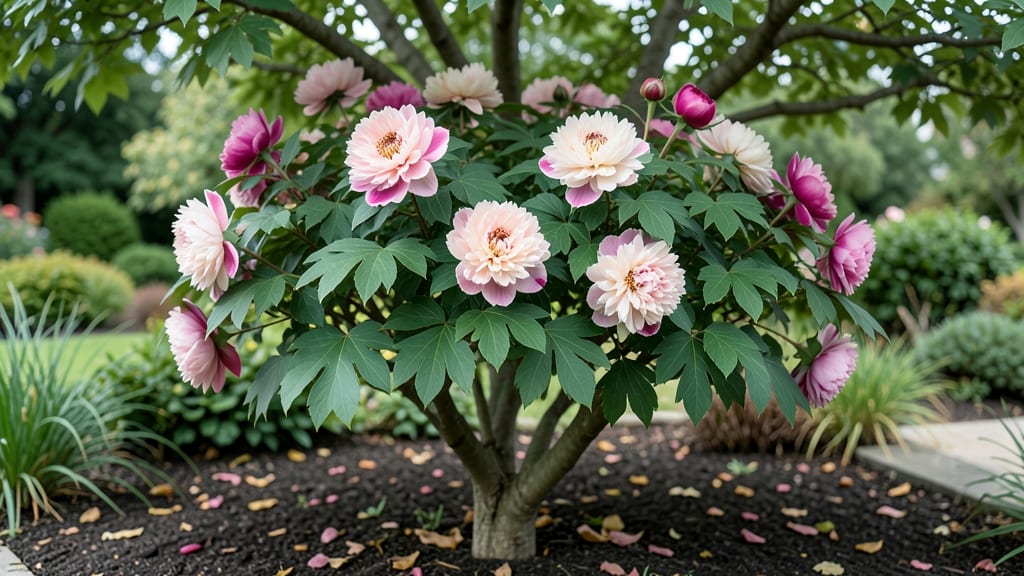
The shape of a tree peony 🌸 leaf tells you more about your plant than you might think—it’s the key to spotting varieties, diagnosing health, and even predicting how it’ll bloom next spring.
If you’ve ever struggled to tell apart tree peony varieties in your garden, their leaves hold the secret—distinct shapes and textures that reveal each plant’s identity at a glance.
From broad, glossy lobes on 'Shishi-gashira' to the delicate serrations of 'Koyo-nishiki', these traits don’t just look pretty—they’re your first clue about what’s thriving (or struggling) in your Zone 6a garden.
In this guide, I’ll break down the must-know leaf traits, how they change with seasons, and why pruning decisions hinge on getting them right—no botanist degree required.
How tree peony leaf shape varies by species and variety
Tree peonies (Paeonia suffruticosa) are as diverse in their foliage as they are in their stunning blooms. The leaf shape serves as a key identifier for distinguishing between species and cultivars, offering gardeners a reliable way to recognize varieties even before the flowers emerge.
Unlike herbaceous peonies, which die back annually, tree peonies retain their leaves year-round, making their foliage a year-long study in botanical beauty.
Understanding these leaf morphology traits helps with everything from variety selection to diagnosing plant health issues. For example, the lobing patterns of 'Shishi-gashira' are far more pronounced than those of 'Koyo-nishiki', while the serration depth can indicate hybrid vigor.
Let’s explore how these differences manifest across popular varieties and what they reveal about each plant’s growth habits.
🌿 Comparison Table: Tree Peony Leaf Morphology by Variety
| Variety | Leaf Shape | Lobing Pattern | Serrations | Leaf Size (in) | Color Gradient |
|---|---|---|---|---|---|
| Shishi-gashira | Deeply lobed | 5-7 lobes, jagged | Coarse, wavy | 6-8 x 4-6 | Dark green, silvery underside |
| Koyo-nishiki | Semi-lobed | 3-5 rounded lobes | Fine, serrated | 5-7 x 3-5 | Bronze-purple spring foliage |
| Maxima | Broadly oval | Slightly notched | Smooth edges | 8-10 x 5-7 | Deep green, glossy |
| Suzaku | Lanceolate | Minimal lobing | Fine serrations | 4-6 x 2-3 | Silver-gray underside |
| Hybrid 'Sarah Bernhardt' | Deeply divided | 7+ lobes, feathery | Double serrated | 7-9 x 5-7 | Blue-green, matte |
The leaf size alone can help differentiate between dwarf varieties like 'Suzaku' and standard shrubs like 'Maxima'. For instance, 'Maxima' boasts some of the largest leaves in the genus, reaching up to 10 inches long, while 'Suzaku' stays compact with slender, lance-shaped leaves.
This variation isn’t just aesthetic—it reflects the plant’s growth energy allocation, with larger leaves often indicating a focus on photosynthesis over rapid height growth.
Hybrid varieties, like the Sarah Bernhardt cultivar, often exhibit intermediate traits between their parent species. Their leaves tend to be more deeply lobed and highly serrated, a trait inherited from both P. lactiflora and P. suffruticosa lineages.
These hybrids also show greater variability in leaf shape even within the same plant, making them fascinating subjects for gardeners who love botanical diversity.
Regional adaptations also play a role in leaf morphology. Tree peonies grown in cooler climates, like those in the Pacific Northwest, often develop thicker, darker leaves as a protective measure against cold stress.
In contrast, varieties cultivated in hot, arid regions may have lighter-colored foliage to reflect excess sunlight and reduce water loss. This adaptation can be subtle but is worth noting when selecting varieties for your specific USDA hardiness zone.
One often-overlooked aspect of tree peony leaves is their ven
Key leaf characteristics that define tree peony types
Tree peony leaves are far more than just green backdrops—they're your first line of identification for distinguishing between cultivars like 'Shishi-gashira' and 'Koyo-nishiki'. Each variety develops unique leaf patterns that evolve dramatically from spring to summer, revealing their true nature when flowers fade.
The color gradients and venation networks act like fingerprints, allowing experienced gardeners to recognize plants even from a distance.
One of the most striking differences appears in spring foliage, where new leaves emerge with distinct bronzing or purpling that fades as they mature. For example, 'Koyo-nishiki' often shows silvery-blue undersides that catch light beautifully, while 'Shishi-gashira' develops deep green lobes with pronounced undulating edges.
These early-season traits are your best clues before flowers even appear.
Pay special attention to the venation patterns—these act like circuit maps for each cultivar. 'Yuetsuki' displays bold parallel veins that create striking geometric patterns, while 'Hikawasemaru' features yellow-green veins that contrast sharply against its lime-green leaves.
In my garden, I've noticed these patterns become even more pronounced after midday sun exposure, making identification easier during peak growing hours.
The seasonal transformation from spring to summer is equally revealing. What starts as bronze or purple foliage in spring often matures into deep glossy green by midsummer, but the leaf architecture remains distinct.
For instance, 'Shishi-gashira' maintains its 3-5 lobed structure even as it darkens, while 'Koyo-nishiki' develops a silvery sheen that persists throughout the season. This progression helps me verify my initial spring identifications later in the year.
For practical application, use these leaf traits to guide pruning decisions. Varieties with thinner leaves like 'Koyo-nishiki' benefit from less aggressive pruning to preserve their delicate structure, while thicker-leaved types like 'Yuetsuki' can handle harder cuts without stress.
I always examine leaves before pruning to ensure I'm working with the right cultivar and maintaining its natural growth habit.
Remember that light conditions can influence leaf appearance—shadier spots may dull colors and reduce venation visibility. To get the most accurate identifications, observe plants in their optimal sunlight conditions (typically full sun for tree peonies).
With practice, you'll develop an eye for these subtle differences that make each cultivar uniquely recognizable.