
How To
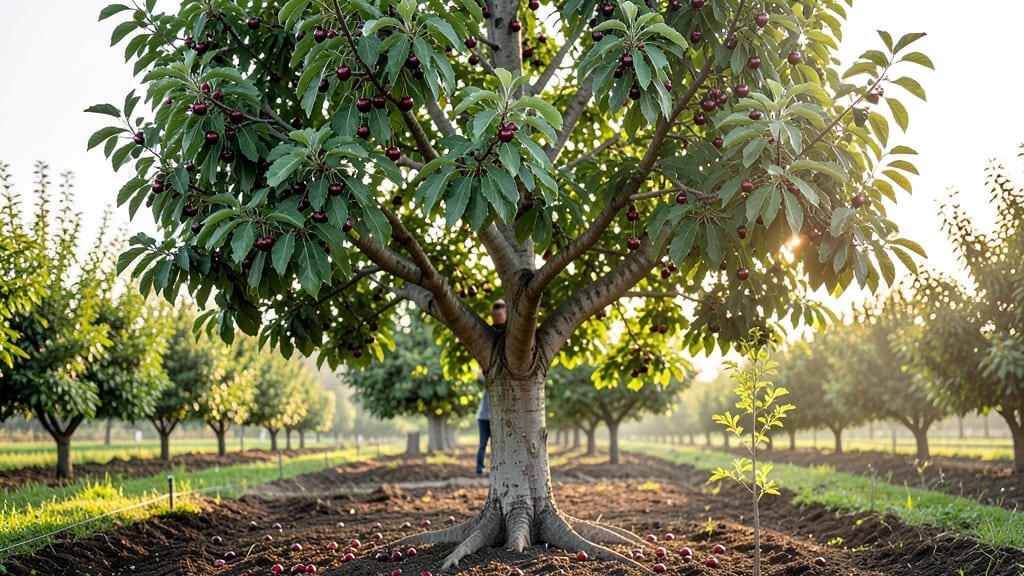
How tall a cherry tree can grow depends entirely on the variety, ranging from a compact 8 feet to a towering 40 feet.
Wondering whether a cherry tree will tower over your backyard or fit neatly in a container? The height of cherry trees varies dramatically by variety—from dwarf varieties perfect for small spaces to towering standard trees that need acres to thrive.
Standard cherry trees like the Stella® or Black Tartarian can reach heights of 25-35 feet, making them stunning centerpieces but requiring plenty of room. On the other hand, dwarf varieties like Compact Stella® stay under 12 feet, ideal for urban gardens or even large containers.
Below, we’ll break down the height differences between dwarf, semi-dwarf, and standard cherry trees, plus tips for managing growth and choosing the right size for your space.


Cherry tree height by variety: dwarf vs standard vs semi-dwarf sizes explained
If you're dreaming of a backyard cherry tree but worried about space, you're not alone. Cherry trees come in three main height categories—dwarf, semi-dwarf, and standard—each with dramatic differences in mature size.
A standard cherry tree can reach 25-35 feet, while a dwarf variety might stay under 10 feet. Choosing the right size depends on your garden layout, sunlight, and even your long-term maintenance goals.
Before selecting a variety, consider your space constraints. A 10-foot dwarf cherry tree fits perfectly in small yards or even large containers, while a 25-foot standard tree needs ample room to grow without crowding your home or other plants.
The key is matching the tree's mature height to your available space and sunlight exposure.
Below, I’ve broken down the most popular cherry tree varieties by height category, including their mature sizes, growth habits, and ideal planting scenarios. This comparison will help you visualize which type fits your garden best.
| Variety | Height Category | Mature Height (ft) | Growth Rate | Best For |
|---|---|---|---|---|
| Stella® | Dwarf | 6-10 ft | Slow to moderate | Containers, small yards |
| Montmorency | Dwarf | 8-12 ft | Moderate | Urban gardens, patios |
| Black Tartarian | Semi-Dwarf | 12-18 ft | Moderate | Medium yards, orchards |
| Bing | Standard | 25-35 ft | Fast | Large properties, orchards |
| Lapins | Standard | 20-30 ft | Moderate | Rural landscapes, parks |
| Rainier | Standard | 20-30 ft | Moderate | Large backyards, commercial orchards |
Dwarf cherry trees, like the Stella® or Montmorency varieties, are ideal for gardeners with limited space. These trees typically mature between 6-12 feet and are perfect for containers, urban gardens, or small patios.
Their compact size makes them easier to maintain and harvest, but they may produce fewer cherries than larger trees.
Semi-dwarf varieties, such as the Black Tartarian, strike a balance with mature heights of 12-18 feet. They’re great for medium-sized yards or orchards where you want a manageable tree without sacrificing fruit production.
These trees often require minimal pruning to control their height while still providing ample shade and harvests.
Standard cherry trees, like the Bing or Rainier, are the tallest, reaching 20-35 feet at maturity. They’re best suited for large properties, rural landscapes, or commercial orchards. While they produce the most fruit, their size means they need more space, sunlight, and ongoing maintenance to stay healthy and productive.
One common misconception is that all cherry trees grow to the same height. In reality, the difference between a dwarf and a standard tree can be 25 feet or more. Another myth is that dwarf trees are less productive—while they may
How to choose the right cherry tree height for your space and climate
Selecting the perfect cherry tree height depends on your garden layout and climate zone. A 25-foot standard tree may dominate your yard, while a 6-foot dwarf variety fits patios or containers. Your sunlight exposure and pollination needs also play critical roles in choosing the right size.
Before planting, measure your space and check your USDA hardiness zone. Southern climates (Zones 7-9) support taller varieties, while colder regions (Zones 3-5) often require dwarf or semi-dwarf types. For example, the 'Stella' tart cherry thrives in Zones 4-8 and stays compact at 10-12 feet.
🌱 Cherry Tree Height Quick Guide
| Type | Mature Height | Best For |
|---|---|---|
| Dwarf | 6-12 ft | Containers, patios, small yards |
| Semi-Dwarf | 12-18 ft | Backyards, urban gardens |
| Standard | 20-35 ft | Large properties, orchards |
✅ Pro Tip: Dwarf varieties like 'Compact Stella' need full sun and well-draining soil for optimal growth.
For container gardening, prioritize dwarf varieties like 'Balaton' (8-10 ft) or 'Black Tartarian' (10-12 ft). Use a 15-gallon pot with drainage holes and balanced fertilizer (10-10-10) every 6 weeks during spring and summer. Place containers in full sun for best fruit production.
Consider pollination needs if growing sweet cherries. Most varieties require cross-pollination, so plant two trees of different varieties within 50 feet of each other. For example, pair 'Stella' (self-pollinating) with 'Lapins' (needs pollinator) for a productive 12-15 ft setup.
In urban gardens, semi-dwarf varieties like 'Montmorency' (12-15 ft) offer a balance between space and yield. Prune annually in late winter to shape the tree and remove dead wood. Avoid heavy pruning, as it can reduce fruit production in sweet cherry varieties.
Finally, account for future growth. A 10-foot tree today may reach 15 feet in 5 years. Leave 8-10 feet of clearance above driveways or walkways to prevent branch interference and ensure safe harvesting. For ornamental cherries, like 'Okame', prioritize height for spring blooms over fruit yield.