
Trees
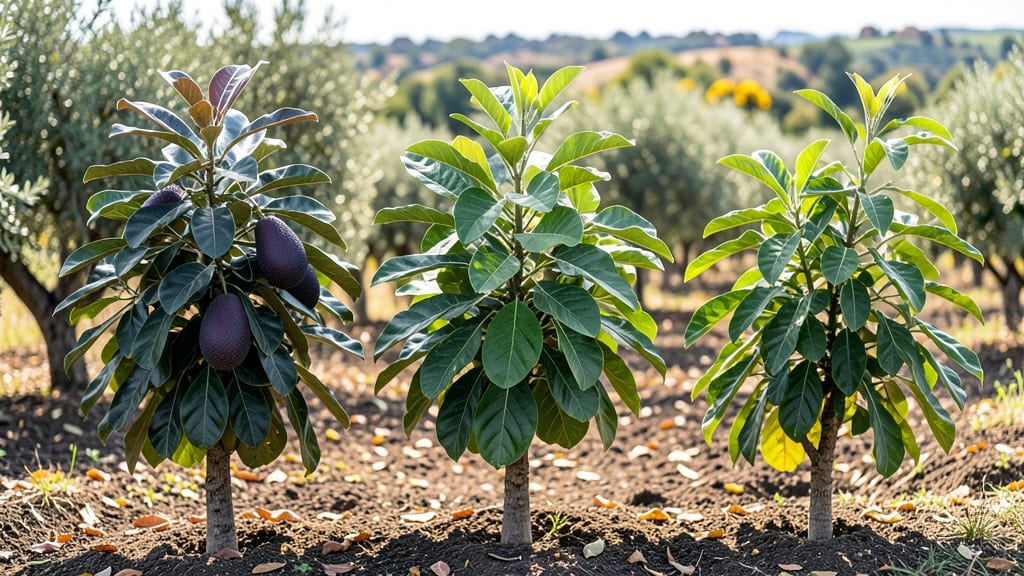
Different types of avocado trees like Hass and Reed are game-changers for small gardens. 🌱 I planted a Hass last spring, and it’s already 4 feet tall—proof that you don’t need acres to grow these tropical delights. The key is picking the right variety for your climate and space, whether you want quick harvests or cold-hardy trees that surprise you every season.
Hass avocados are the crowd favorite for a reason—they’re fast, productive, and their rich, buttery fruit ripens to a deep purple-black. But if your winters dip below 20°F, Reed or Bacon varieties (like the frost-tolerant ‘Lamb Hass’) might be your best bet.
These trees grow upright, making them perfect for containers or tight spaces, while others sprawl like vines if left unchecked.
You’ll love how these trees thrive with just morning sun and well-draining soil—no fancy setups required. Within 2-3 years, you could be harvesting fruit, and the trees keep growing for decades.
The trade-off? Patience for pollination—most varieties need a second tree nearby unless you choose a self-pollinating type like ‘Fuerte’ or ‘Hass’.
For small gardens, dwarf varieties like ‘Wurtz’ or ‘Mexicola’ stay compact but still produce fruit. Just avoid planting near sidewalks—their roots can get aggressive.
Whether you’re in Zone 9 or pushing the limits in Zone 8, the right avocado will reward you with lush foliage and homegrown fruit year after year.
📚 In This Guide
- What you need
- Instructions
- Tips and common mistakes
- Wrapping up and next steps
What you need
- ● Avocado tree seedlings or saplings: 1–3 dwarf varieties (e.g., Mexicola, Wurtz, or Lamb Hass) for small gardens.
- ● 1–2 fast-growing types (e.g., Fuerte or Hass) if space allows.
- ● Growing containers: 5–10 gallon pots (with drainage holes) for seedlings.
- ● 15–20 gallon pots or in-ground planting area (6’ x 6’ minimum) for mature trees.
- ● Potting mix: 1–2 bags of well-draining cactus/succulent mix (or DIY blend: 60% potting soil, 30% perlite, 10% compost).
- ● Fertilizer: Balanced 10-10-10 fertilizer (for seedlings).
- ● Citrus/avocado-specific fertilizer (e.g., 8-3-9) for mature trees.
- ● Tools: Trowel or small shovel.
- ● Pruning shears (sterilized).
- ● Watering can or hose with gentle spray nozzle.
- ○ pH test kit (optional but helpful—avocados thrive at 6.0–7.0).
- ● Mulch: Straw or wood chips to retain moisture and regulate soil temp.
- ● Drip irrigation system: For consistent watering in hot climates.
- ● Support stake: If growing in windy areas (especially for dwarf trees).
- ● Grow lights: For indoor seedlings (12–14 hours of light/day).
- ● Pollination aid: A small brush to hand-pollinate flowers (if growing multiple trees).
Fastest-growing avocado varieties for small gardens
Not all avocados grow at the same speed—some varieties reach harvestable fruit in just 3-5 years, perfect for small spaces. Here’s how to choose the quickest growers and what to expect.
🌱 Step 1: Pick a Fast-Maturing Variety
For the fastest results, focus on these Type A varieties, which thrive in warmer climates: Hass (the gold standard), Fuerte (reliable and productive), and Lamb Hass (a cold-hardier Hass cousin). These mature in 3-5 years from seed, while Type B varieties like Reed or Choquette take longer.
I always start with Hass seeds—they’re widely available and grow aggressively once established. Type A trees also produce fruit year-round in frost-free zones, so you’ll see progress faster than with seasonal varieties. Check your USDA zone: Hass thrives in zones 9-11, while Fuerte handles zones 8-11 with some winter protection.
☀️ Step 2: Choose a Compact Grafted Tree
Seed-grown avocados take 10+ years to bear fruit. For speed, buy a grafted dwarf or semi-dwarf tree (like Mexicola or Topa Topa), which grows 30-50% faster and stays under 10 feet tall. These are pruned to stay small but produce fruit in 2-3 years—ideal for patios or small yards.
Look for trees labeled "dwarf" or "semi-dwarf" at nurseries. They’re pricier but worth it for small gardens. I’ve seen Mexicola trees produce fruit in 2 years with proper care—watch for smooth, glossy leaves and rapid trunk thickening as signs of strong growth.
🪴 Step 3: Plant in Well-Draining Soil
Avocados hate soggy roots, so amend your soil with 50% potting mix and 50% coarse sand or perlite to mimic their native drainage. Use a 15-gallon container for dwarf trees or dig a hole twice as wide as the root ball for in-ground planting. The hole should sit 2 inches deeper than the tree’s root flare (where roots meet trunk).
Water deeply after planting until moisture reaches 12 inches down—you’ll see water pooling at the base before draining. Mulch with 2-3 inches of wood chips to retain moisture and block weeds. Avoid mulching the trunk; keep it 3 inches away to prevent rot.
⏰ Step 4: Provide Year-Round Warmth
Avocados grow best in 70-85°F year-round. In cooler zones, grow them in containers and move them indoors when temps drop below 50°F. Use a grow light or place near a south-facing window for 6+ hours of light daily. You’ll notice slower growth if leaves turn yellow or drop—this is a sign of cold stress.
Fertilize every 3 months with a balanced citrus/avocado fertilizer (10-10-10 ratio). Over-fertilizing burns roots, so follow package rates. Watch for dark green, leathery leaves—a sign your tree is happy and growing fast.
✂️ Step 5: Prune for Shape and Fruit
Prune in late winter (before new growth) to remove dead branches and shape the tree. Cut back overly long branches by ⅓ to encourage bushiness. Avoid heavy pruning—avocados fruit on older wood, so you want to maintain structure. You’ll see new shoots within 2-3 weeks of pruning, signaling healthy regrowth.
Thin fruit when small to prevent overburdening the tree. Leave 1-2 avocados per cluster—this ensures larger, higher-quality fruit. Harvest when the stem easily twists off and the skin turns dark purple/black (for Hass) or green/brown (for Fuerte).
Tips & tricks for fastest-growing avocado trees
Real talk: The difference between waiting a decade for fruit and enjoying avocados in under 3 years comes down to these small details.
Variety Matters: Type A varieties like Hass, Fuerte, and Lamb Hass are your fastest bets for small gardens, delivering fruit in just 3-5 years from seed. But here's what nobody tells you—Type A trees also produce year-round in frost-free zones, so you'll see consistent growth. For cooler climates (zones 8-11), Fuerte handles winter better than Hass, which thrives strictly in zones 9-11.
Grafted Trees Are Game-Changers: Skip seed-grown trees—they take 10+ years to bear fruit. Instead, opt for grafted dwarf or semi-dwarf varieties like Mexicola or Topa Topa. These grow 30-50% faster and produce fruit in just 2-3 years. Pro tip: Look for trees labeled "dwarf" at nurseries—they're pricier but worth it for small spaces. I've seen Mexicola trees in containers produce fruit in just 2 years with proper care.
Soil Drainage is Non-Negotiable: Avocados hate soggy roots, so amend your soil with 50% potting mix and 50% coarse sand or perlite. For container growing, a 15-gallon pot works perfectly for dwarf trees. When planting, dig a hole twice as wide as the root ball and 2 inches deeper than the root flare. Water until moisture reaches 12 inches down—you'll know it's right when you see water pooling at the base before draining.
Temperature Watch: Avocados love 70-85°F year-round. In cooler zones, keep them in containers and move indoors when temps drop below 50°F. Place near a south-facing window for 6+ hours of light daily. Watch for yellowing leaves—they're screaming "I'm too cold!" Don't wait until leaves drop to act.
Pro Tips for Different Avocado Tree Types
- Real talk: The difference between waiting a decade for fruit and enjoying avocados in under 3 years comes down to the...
- Variety Matters: Type A varieties like Hass, Fuerte, and Lamb Hass are your fastest bets for small gardens, deliverin...
- Grafted Trees Are Game-Changers: Skip seed-grown trees—they take 10+ years to bear fruit. Instead, opt for grafted dw...
Frequently asked questions
Got questions about growing avocado trees? You’re not alone! Here are some of the most common queries—plus quick, practical answers to help you pick the perfect variety for your small garden.
Which avocado tree grows the fastest in small spaces?
For speed and space efficiency, Mexican (West Indian) varieties like ‘Lamb Hass’ or ‘Wurtz’ are top picks—they mature in 3–5 years and thrive in containers. Dwarf varieties like ‘Bacon’ also grow well in tight spots, reaching just 10–15 feet tall with proper pruning.
How long does it take for an avocado tree to bear fruit?
Patience is key! Most avocado trees take 3–6 years to bear fruit, depending on the variety and growing conditions. Mexican types fruit faster (2–3 years), while Guatemalan varieties (like Hass) can take up to 6 years. Cold snaps or poor soil can delay fruiting—keep your tree happy with well-draining soil and full sun!
Can I grow an avocado tree indoors, and what type is best?
Dwarf Hass or Mexican varieties adapt well to indoor pots (15–20 gallons). Place them near a sunny window or under grow lights for 6–8 hours/day. Rotate the pot weekly for even growth, and use a moisture meter to avoid overwatering—root rot is a common indoor pitfall. Pro tip: Mist leaves regularly to mimic humidity!
What’s the coldest climate an avocado tree can tolerate?
Most avocado trees hate frost—they thrive in USDA Zones 9–11 (avg. temps 20–30°F). Mexican varieties are the toughest, surviving brief dips to 28°F, while Guatemalan types (like Hass) need above 30°F. For colder zones, grow trees in large containers and move them indoors or to a garage during winter. Pro tip: Mulch heavily to protect roots!
Why isn’t my avocado tree producing fruit, even after years of growth?
Common culprits include lack of pollination (hand-pollinate with a brush), poor soil nutrients (test for nitrogen/phosphorus), or stress from over/under-watering. Avocados also need consistent temperatures—fluctuations can halt flowering. Try pruning lightly to encourage airflow and apply a balanced fertilizer in spring. If issues persist, check for pests like avocado lace bugs or fungal diseases.
Are there avocado trees that don’t require cross-pollination?
Yes! Mexican varieties (Type A flowers) are often self-pollinating, meaning a single tree can produce fruit. Guatemalan types (Type B) usually need another tree for pollination, but some hybrids (like ‘Lamb Hass’) are more forgiving. For guaranteed fruit, plant two compatible varieties nearby—just 6–10 feet apart works!
Wrapping up and next steps
From the fast-growing Hass to the compact Mexican varieties, there’s an avocado tree perfect for every small garden! Whether you prioritize speed, size, or fruit quality, these types make growing your own avocados achievable—even in limited spaces. 🌱
Ready to plant your future harvest? Start by choosing the variety that fits your climate and space, then gather your supplies and get growing. With patience and care, you’ll soon be enjoying homegrown avocados straight from your backyard! 🥑✨