
Pruning
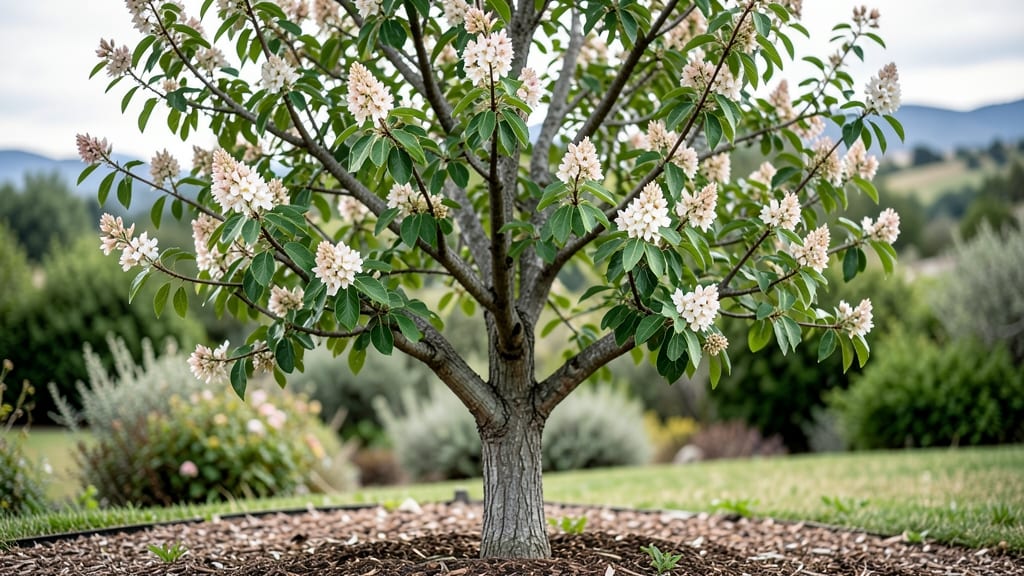
Almond trees grow best in USDA hardiness zones 5-9, with peak performance in zones 6-8 where they experience cold winters and hot, dry summers. Popular varieties like 'Nonpareil' and 'Butte' thrive in these conditions, while 'Fritz' extends their range down to zone 5.
Choosing the right zone for your almond tree depends on more than just temperature—chilling hours (the number of hours below 45°F during winter) are equally critical for proper blooming. 🌳 Trees in zones 6-8 typically get 500-700 hours, while zone 5 varieties like 'Fritz' need fewer (300-400 hours) to avoid bud damage.
Drought tolerance also varies, with Mediterranean climates (like California) being ideal for most varieties.
For zone 7-9 growers, 'Mission' is a top choice due to its high yield and adaptability to warmer climates, while 'Texas' performs well in zones 6-8 with its resistance to late frosts.
If space is limited, consider dwarf varieties like 'Price'—they produce nuts just as well but stay compact, making them perfect for smaller gardens.
💡 In This Article
- Understanding Almond Tree Cold Tolerance and Climate Needs
- Best Almond Tree Varieties by USDA Zone and Growing Conditions
Understanding almond tree cold tolerance and climate needs
Almond trees rely on a process called dormancy to survive winter, where their metabolic activity slows dramatically. This dormancy is triggered by chilling hours—the cumulative time temperatures stay between 32-45°F—which signals the tree to prepare for spring blooming.
For example, varieties like 'Nonpareil' need 500-700 chilling hours to bloom properly, while cold-hardy types like 'Fritz' only require 300-400 hours. Too few chilling hours can delay blooming, while excessive cold (below 10°F) damages buds and reduces yield. 🌡️
The ideal climate for almond trees combines hot, dry summers (with temperatures reaching 90-100°F) and cool, frost-free winters—a pattern found in zones 6-8. In these zones, trees experience just enough cold to break dormancy without suffering frost damage.
Humidity is another critical factor: high moisture levels (common in zones 8-9) can promote fungal diseases like brown rot, while arid conditions (like California's Mediterranean climate) are perfect for almonds. Proper soil drainage is also essential—waterlogged roots in heavy clay soils can suffocate the tree, even in optimal zones.
Zone 5 presents unique challenges due to harsher winters. While 'Fritz' can survive down to -10°F, its nuts may be smaller, and blooming can be inconsistent. Growers in zone 5 often use windbreaks or mulch to insulate roots and protect against late frosts, which can devastate early blooms.
Conversely, zones 7-9 offer longer growing seasons but risk heat stress during pollination (when bees are less active), so irrigation timing becomes critical to maintain tree health. 💧
Drought tolerance is another key factor tied to zone suitability. Almond trees are deeply rooted and evolved in dry climates, making them remarkably resilient to water scarcity once established. However, young trees (3-5 years old) need consistent moisture to develop strong root systems.
In zones 6-8, summer droughts are normal, but supplemental watering during fruit development ensures higher yields. Varieties like 'Butte' are bred for drought resistance, while 'Mission' may need occasional irrigation in zone 9's intense heat.
Late frosts are a silent threat in zones 6-7, where warm winters can trick trees into early blooming—only for a sudden freeze to kill flowers before pollination. This is why growers in these zones often plant cross-pollinating pairs (like 'Nonpareil' and 'Butte') to maximize fruit set.
In contrast, zone 9's mild winters rarely pose frost risks, but the lack of chilling hours can become an issue for non-adapted varieties, leading to poor flowering and low yields. 🌸
Soil composition plays a subtle but vital role in zone adaptability. Almonds prefer well-draining, slightly acidic soils (pH 6.0-7.5)—a condition met naturally in California's Central Valley but requiring amendments in other regions.
For instance, zone 8's Atlantic coastal areas often have sandy, acidic soils that need lime and organic matter to mimic the tree's native Mediterranean environment. This attention to soil health can mean the difference between a thriving orchard and a struggling one, even within the same zone.