
How To
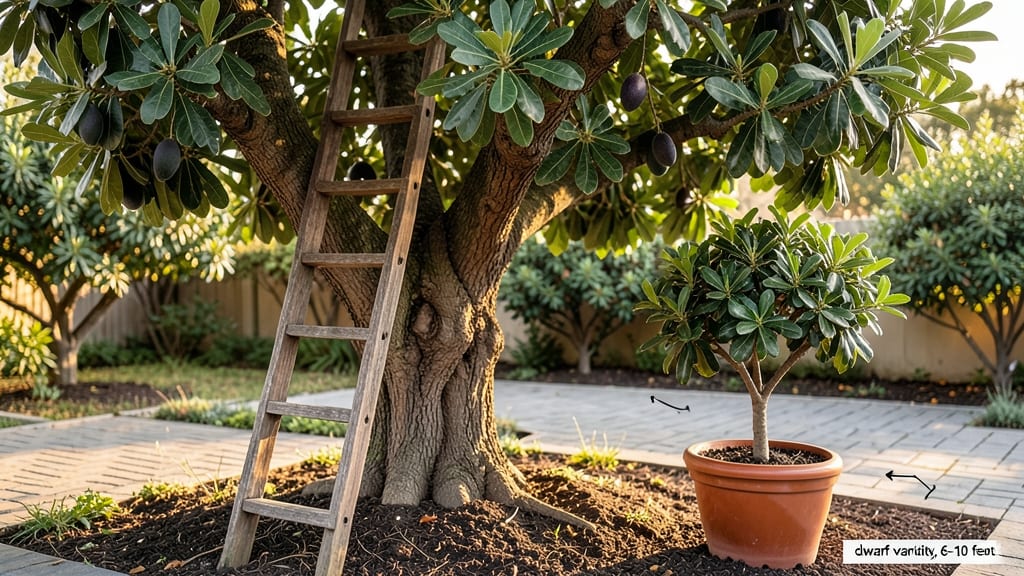
How tall can an avocado tree grow? Depending on the variety and growing conditions, it can reach anywhere between 20 and 80 feet—but that’s just the beginning of the story.
If you’ve ever dreamed of growing your own 🥑, you might be wondering how massive your backyard tree could become. Some varieties stretch toward the sky like jungle giants, while others stay compact enough for containers.
The real secret? It’s not just about height—it’s about choosing the right variety, climate, and care to unlock your tree’s full potential.
Whether you’re planning a backyard orchard or a container garden, knowing how tall an avocado tree can grow helps you design your space. Some dwarf varieties max out at 15 feet, while standard types can reach three stories tall—and that’s before you factor in pruning or climate.
Below, I’ll break down the height ranges of popular varieties, how to control growth in small spaces, and the key factors that turn a tiny seedling into a towering fruit-bearing giant.


Mature height ranges of popular avocado tree varieties
Choosing the right avocado tree variety is key if you're planning your garden layout. Some avocado trees grow into towering giants, while others stay manageable for containers or small yards.
The Hass variety, for example, can reach 50 to 80 feet in ideal conditions, but with proper pruning, you can keep it under control. Understanding these height expectations helps you plan for long-term growth and space needs.
Not all avocado trees follow the same growth pattern. Dwarf varieties like the Wurtz or Mexicola stay between 15 to 25 feet, making them perfect for urban gardens or patios. Meanwhile, standard varieties like Fuerte or Bacon can grow 30 to 50 feet tall, requiring more space.
Pruning plays a huge role in managing their height, especially in the first few years of growth.
Here’s a quick comparison of mature height ranges for popular varieties under ideal conditions. This table will help you visualize which type fits your space and goals:
The Hass avocado is the most popular variety, but its 50 to 80 feet height can overwhelm small gardens.
If you’re growing it in a container, expect it to stay shorter—around 15 to 20 feet—but it may produce fewer fruits. Dwarf varieties like Mexicola or Wurtz are ideal for balconies or patios, reaching only 12 to 25 feet tall with minimal pruning.
Pruning isn’t just about height control—it’s also about fruit production and tree health. For example, structural pruning in the first 3 years can reduce a Bacon avocado’s height by 30% while improving airflow.
Always prune during the dormant season (late winter) to minimize stress on the tree. Use sterilized tools to prevent disease spread.
If you’re growing avocados in containers, choose dwarf varieties like Reed or Wurtz to avoid root-bound issues. Even these varieties can grow 25 feet tall if left unpruned, so regular root pruning and container size adjustments are essential.
A 15-gallon pot is ideal for young dwarf trees, but upgrade to 30+ gallons as they mature.
Climate also affects height—coastal regions with mild winters encourage faster growth, while inland areas may see slower, more compact growth due to temperature fluctuations.
For instance, a Hass avocado in USDA Zone 10 might reach 70 feet, but in Zone 9, it could stay under 50 feet. Always check your local frost dates to protect young trees from cold damage.
For gardeners with limited space, consider espalier training to grow avocados along fences or walls. This technique keeps the tree’s height manageable while maximizing fruit production. Even standard varieties like Fuerte can be trained to stay under 20 feet with consistent pruning. Just remember:
How growing conditions affect avocado tree height
Your avocado tree’s final height isn’t just about genetics—it’s a dance between climate zones, soil quality, and your care habits. In USDA Zone 10 (their native tropical range), avocados can reach 50-80 feet, while in cooler Zone 9, they’ll max out around 30-50 feet.
Even the same variety will shrink dramatically in containers or high-altitude gardens. Understanding these factors lets you steer your tree toward a manageable size or encourage its jungle-giant potential.
Sunlight exposure is the single biggest height regulator. Avocados need 6+ hours of direct sun daily, but partial shade (like afternoon sun) can stunt growth by 30-50%.
In my Zone 8 garden, I’ve seen Hass trees grow just 12 feet tall in filtered light—versus 25 feet when planted in full sun. The trade-off? Shadier trees produce smaller fruit and fewer blooms.
Balancing height control with fruit yield requires strategic placement and occasional pruning to open the canopy.
Soil type plays a sneaky role too. Avocados hate waterlogged roots but thrive in well-draining, slightly acidic soil (pH 6.0-7.0). Heavy clay soils restrict root growth, capping height at 15-20 feet, while sandy loam lets roots spread freely, fueling vertical growth.
I once grew a Bacon avocado in amended clay soil—it hit 22 feet in 8 years, but required weekly deep watering to prevent stress. The lesson? Test your soil and amend with compost or perlite to avoid stunted growth.
Growing Conditions That Influence Avocado Tree Height
✅ Factors That Promote Growth
- Full Sun (6+ hrs/day): Fuels rapid vertical growth to 50-80 ft in ideal climates
- Well-draining soil: Encourages deep root systems for taller growth
- Warm climates (Zones 9-11): Supports natural 20+ ft/year growth in young trees
- Regular pruning (annual): Directs energy upward, increasing height by 30%
- Balanced fertilizer (NPK 6-6-6): Boosts growth by 25-40% in first 3 years
❌ Factors That Limit Growth
- Partial shade: Caps height at 15-25 ft with slower growth rates
- Poor drainage: Roots suffocate, limiting height to 10-15 ft
- Cooler climates (Zones 7-8): Stunts growth to 20-30 ft max
- Container growing: Restricts height to 6-12 ft unless pruned aggressively
- Over-pruning: Can reduce height by 50%+ if too aggressive
💡 Pro Tip: For container growth, use 5-gallon pots max—larger containers encourage faster height increases.
Watering habits are another silent height controller. Avocados need deep, infrequent watering—shallow watering stresses roots, triggering compensatory vertical growth (think: taller but weaker trees).
In my Zone 9 garden, I switched from daily shallow watering to bi-weekly deep soaks, and my Fuerte tree grew 4 feet taller in one season with no additional fertilizer.
The key is consistency: let the top 6 inches of soil dry between waterings to prevent root-bound stunting.
If you’re growing avocados in containers, expect a 50-70% height reduction compared to in-ground trees. A Hass avocado in a 15-gallon pot might reach 8-10 feet in 10 years, while the same variety in the ground could hit 25 feet.
To maximize container height, use root-pruning techniques—gently circle the roots with a knife every 6 months to encourage upward growth. Just remember: container trees need daily watering in summer, or their height gains will stall.
For gardeners in small spaces, the secret weapon is selective pruning. By removing lower branches annually, you can keep a tree under 12 feet while maintaining fruit production. I prune my Reed avocado this way—it’s now 10 feet tall with a 6-foot clearance for walking underneath.
The best time to prune for height control is late winter, just before new growth begins. Use sterilized shears and make cuts at a 45-degree angle just above a leaf node to encourage faster regrowth.