
Pruning
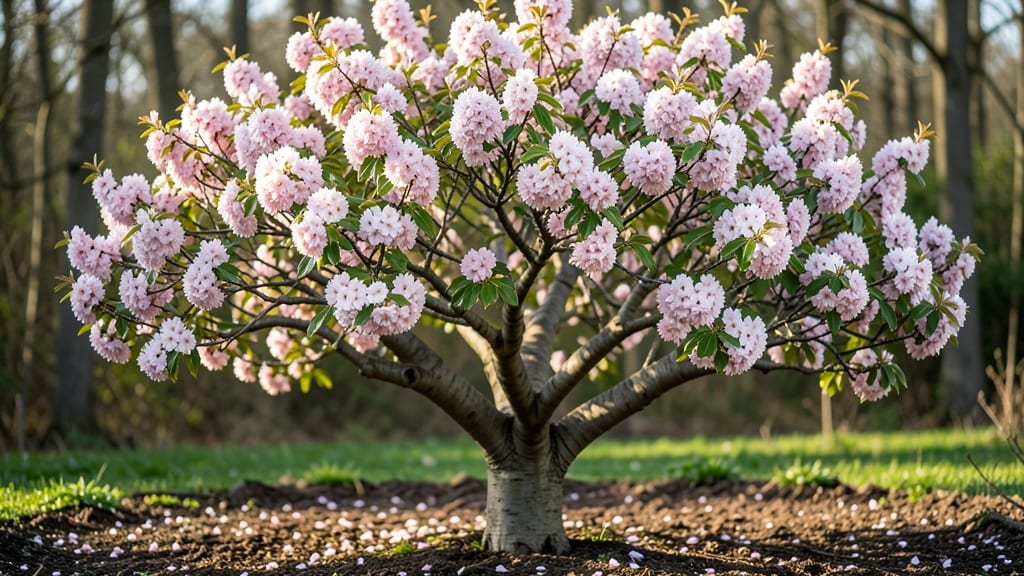
Flowering pear trees (Pyrus calleryana) can grow 30 to 50 feet tall—but their mature size depends entirely on the variety and how you prune them.
I planted mine as a young sapling in my front yard, and within five years, it became the centerpiece of my landscape, its branches heavy with fragrant white blossoms every spring. The key to managing its size lies in understanding your specific variety and growth habits.
Most common varieties like 'Bradford' reach 30 to 40 feet with a spread of 25 to 35 feet, while dwarf cultivars like 'Aristocrat' stay compact at 15 to 20 feet tall. Growth speed varies too—some varieties add 2 to 3 feet per year, while others grow slower.
Soil quality and sunlight exposure play a big role in how quickly they mature, so choosing the right spot matters just as much as selecting the right tree.
With proper pruning, you can shape your tree to fit even small spaces—my neighbor’s ‘Chanticleer’ stays under 25 feet because they prune it annually. The result? A tree that’s still stunning but fits perfectly in their narrow yard.
You’ll end up with a tree that complements your landscape without overwhelming it, all while enjoying those breathtaking spring blooms.
For larger varieties, plan ahead with spacing—20 to 30 feet from structures or other trees gives them room to grow without crowding. If you’re working with limited space, dwarf varieties or aggressive pruning can make all the difference.
The right approach ensures your flowering pear thrives for decades, becoming a lasting focal point in your outdoor space.
📚 In This Guide
- What you need
- Instructions
- Tips and common mistakes
- Wrapping up and next steps
What you need
- ● Flowering pear tree sapling or bare-root tree: Choose a variety suited to your climate (e.g., Pyrus calleryana ‘Bradford’ or ‘Chanticleer’). Size: 4–6 ft tall (standard for mature flowering pear tree size at planting).
- ● Shovel or spade: 1 medium-sized (for digging planting holes).
- ● Pruning shears: 1 pair (bypass pruners, sharp and clean).
- ● Mulch: 2–3 bags (organic, like shredded bark or wood chips).
- ● Slow-release fertilizer: 1 bag (10-10-10 or similar, for young trees).
- ● Watering can or hose: With a gentle spray nozzle.
- ● Loppers: 1 pair (for thicker branches, if pruning mature trees).
- ● Pruning saw: 1 (for large limbs, if needed).
- ● Tree staking kit: 2–3 stakes + ties (for young trees in windy areas).
- ○ Soil test kit: 1 (to check pH/fertility before planting). Tree wound dressing: (Optional, for large pruning cuts).
- ● Gloves: 1 pair (heavy-duty, for protection).
Understanding flowering pear tree size: how variety and growth rate determine mature dimensions
Choosing a flowering pear tree means balancing beauty with space—here's how to match varieties to your landscape.
Identify Fast-Growing vs. Slow-Growing Varieties
Flowering pear trees fall into two broad growth categories: fast growers (12-24 inches annually) and slow growers (6-12 inches annually). The Bradford Pear (Pyrus calleryana 'Bradford') is the most common fast grower, reaching 30-40 feet at maturity with a 25-35 foot spread. These varieties establish quickly but may require early pruning to control height.
Slower-growing selections like Chanticleer Pear (Pyrus calleryana 'Chanticleer') mature at 20-30 feet with a more compact 15-25 foot spread. Dwarf varieties such as Aristocrat Pear top out at 15-20 feet, making them ideal for smaller yards. Always verify a tree's growth rate in your USDA hardiness zone—some varieties grow faster in warmer climates.
Assess Mature Height and Spread Requirements
Measure your available space before planting. A 30-foot tree needs at least 20 feet of clearance from structures, power lines, and sidewalks. Use a tree size chart from your local nursery to visualize how a mature specimen will fill your yard—most flowering pears develop a rounded canopy that spreads nearly as wide as they grow tall.
For urban or suburban settings, prioritize varieties like Cleveland Select Pear (20-25 feet mature height) or Redspire Pear (25-35 feet). If your property has limited height clearance, consider columnar pears (15-25 feet) that grow vertically rather than outward. Always account for root spread, which can extend 2-3 times the canopy width underground.
Plan for Pruning and Structural Development
Young flowering pears develop a central leader (main upward trunk) that should be pruned to encourage a balanced, multi-stemmed form. Fast growers like Bradford Pears benefit from summer pruning to redirect energy into lateral branches, preventing a single dominant trunk that becomes top-heavy. Use clean cuts just outside the branch collar to avoid damaging the tree's natural healing response.
For slow growers, focus on structural pruning in late winter when the tree is dormant. Remove water sprouts (vigorous vertical shoots) and crossing branches to improve airflow and reduce disease risk. A well-pruned flowering pear will have a strong crotch angle (45-60 degrees) between branches, which prevents future breakage during storms.
Consider Underground Space for Root Systems
Flowering pear roots extend 18-24 inches deep and spread 2-3 times the canopy width horizontally. Avoid planting near foundation footings, sewer lines, or driveway edges—root pressure can crack concrete or displace pavement. If your yard has limited soil depth, choose shallow-rooted varieties like Aristocrat Pear or amend the planting hole with organic compost to encourage deeper root growth.
For mature trees, mulch annually with 2-3 inches of wood chips (keep mulch 6 inches away from the trunk) to protect roots from temperature fluctuations. Over-mulching suffocates roots, while insufficient mulch leaves them vulnerable to freeze-thaw cycles in colder climates. Always water deeply once a week during the first growing season to establish a robust root system.
Monitor Growth and Adjust Long-Term Care
Track your tree's height annually with a measuring tape or laser rangefinder to ensure it aligns with your space plan. If a fast grower like Bradford Pear exceeds expectations, crown reduction pruning (removing entire branches back to the trunk) can reset its growth pattern—though this should only be done by a certified arborist to avoid damaging the tree.
Watch for aggressive suckering (shoots growing from the base), which is common in fast-growing varieties. Remove these promptly to redirect the tree's energy into the main canopy. In USDA Zones 5-9, flowering pears typically bloom in early spring, so time pruning to avoid removing next year's flower buds, which form in late summer.
Tips & tricks for perfect flowering pear tree placement
Selecting the right flowering pear variety means understanding how growth rates translate into mature dimensions—and avoiding costly mistakes down the road.
Variety Selection Matters: When comparing fast growers like Bradford Pear (12-24 inches annually) to slower varieties such as Chanticleer (6-12 inches annually), remember that the 30-40 feet mature height of Bradford requires significantly more vertical clearance than Chanticleer's 20-30 feet. For urban settings, columnar pears (15-25 feet) are game-changers—they grow vertically rather than outward, making them ideal for narrow spaces. I always recommend testing a tree's growth rate in your specific USDA zone, as warmer climates can accelerate growth by up to 20%.
Space Planning Beyond Canopy: The 2-3 times canopy width root spread mentioned in Step 4 is often overlooked, yet it's critical for preventing future conflicts. For example, a 25-foot spread Bradford Pear could have roots extending 50-75 feet underground—far beyond its visible canopy. I suggest using a simple string-and-stake method to visualize both the tree's mature height and root zone before planting. Measure your available space twice: once for the tree's height and again for the root spread.
Pruning for Structural Integrity: The 45-60 degree crotch angle mentioned in Step 3 is non-negotiable for storm resistance. Weak branch attachments (less than 45 degrees) are prime candidates for breakage during heavy snow or ice storms. When pruning fast growers like Bradford Pear, I recommend summer pruning to redirect energy into lateral branches—this creates a more balanced structure that resists top-heavy collapse. Always use clean cuts just outside the branch collar to promote proper healing and prevent disease entry points.
Long-Term Growth Tracking: Annual height measurements using a laser rangefinder (or even a simple measuring tape) prevent unpleasant surprises. I track my trees' growth in a garden journal, noting both height and canopy spread. For fast growers, if you notice growth exceeding 24 inches annually, it's time to implement crown reduction pruning—but this should only be done by a certified arborist to avoid permanent damage. Remember that flowering pears in USDA Zones 5-9 typically bloom in early spring, so any late-winter pruning must account for next year's flower buds forming in late summer.
Pro Tips for Flowering Pear Tree Size
- Selecting the right flowering pear variety means understanding how growth rates translate into mature dimensions—and ...
- Variety Selection Matters: When comparing fast growers like Bradford Pear (12-24 inches annually) to slower varieties...
- Space Planning Beyond Canopy: The 2-3 times canopy width root spread mentioned in Step 4 is often overlooked, yet it'...
Frequently asked questions
Got questions about your flowering pear tree’s size, growth, or care? You’re not alone! Here are answers to the most common questions to help you keep your tree thriving and stunning.
How fast does a flowering pear tree grow?
A flowering pear tree typically grows 1 to 2 feet per year under ideal conditions. However, younger trees (under 5 years old) may grow faster—up to 3 feet annually. Growth slows as the tree matures, reaching its full size in 10–20 years, depending on the variety. Patience pays off with those showstopping blooms!
What is the mature size of a flowering pear tree?
The mature size varies by variety, but most flowering pear trees reach 20–30 feet tall and 15–25 feet wide. Dwarf varieties (like ‘Aristocrat’ or ‘Cleveland Select’) stay compact at 15–20 feet tall, perfect for smaller yards. Always check the specific cultivar’s tag for exact expectations!
Can I prune a flowering pear tree to control its size?
Yes! Pruning in late winter or early spring (before buds swell) helps manage height and shape. Remove 1/3 of the oldest branches to encourage new growth, but avoid heavy pruning—it can reduce flowering. Focus on thinning out dense areas and dead/diseased wood to keep your tree healthy and blooming beautifully.
Why isn’t my flowering pear tree blooming as much as others?
Several factors can affect blooms: age (young trees may take 3–5 years to flower fully), sunlight (they need 6+ hours of direct sun daily), or over-pruning. Poor nutrition or pests (like borers) can also stress the tree. Test soil pH (6.0–7.0 is ideal) and fertilize lightly in early spring with a balanced, slow-release fertilizer.
Are there smaller alternatives to full-size flowering pear trees?
Consider these compact options:
- ‘Aristocrat’: 15–20 ft tall, disease-resistant and great for urban spaces.
- ‘Cleveland Select’: 15–20 ft tall, thornless and cold-hardy.
- ‘Pyrus calleryana ‘Chanticleer’’: 20–25 ft tall but narrower, ideal for tight yards.
Wrapping up and next steps
Choosing the right flowering pear tree for your space means balancing beauty with practicality—whether you love the compact charm of a dwarf variety or the bold statement of a standard-sized tree.
With mature heights ranging from 15 to 30+ feet (and faster growth in some), these trees offer year-round interest with minimal fuss. 🌸
Ready to add one to your landscape? Start by selecting a variety that fits your yard’s size and sunlight, then give it the care it needs to thrive. Happy planting—and enjoy those stunning spring blooms! 🌳✨