
Pruning
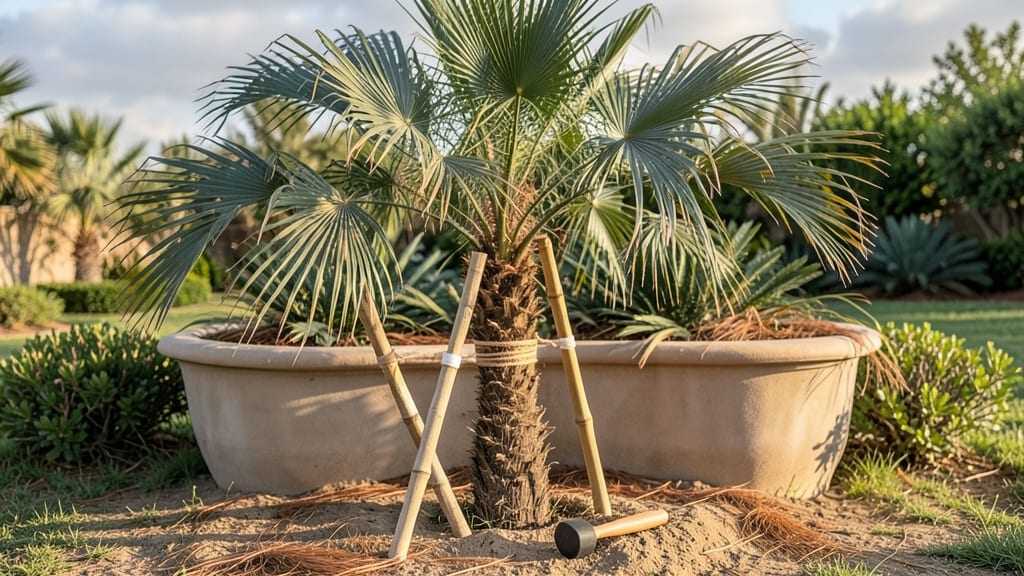
Staking palm trees isn’t just about preventing toppling—it’s about giving young trees the confidence to stand tall before storms test their strength. 🌴 I’ve seen firsthand how a single well-placed stake can mean the difference between a thriving tree and one snapped in half by wind.
The key is timing: stake when the tree is young but sturdy enough to support its own weight, usually within the first year after planting.
You’ll need basic supplies: bamboo stakes (at least 6 feet tall), soft tree ties (not wire—it cuts), and a mallet for gentle driving. The stakes should go deep—about 2 feet into the ground—and angled slightly outward to match the tree’s natural lean.
Too tight, and you stunt growth; too loose, and the tree sways like a drunk sailor. The goal is support, not a straightjacket.
By the time your palm reaches 5-6 feet, it’ll likely outgrow the stakes naturally. That’s when you remove them gradually—first loosening the ties, then checking for stability before full removal.
The reward? A tree that’s grown strong enough to handle wind, rain, and even the occasional hurricane without flinching. No more worrying about your investment becoming kindling.
Here’s the secret: stake too early, and you create a crutch; stake too late, and you’re playing catch-up. Watch for the first signs of lean or wobble—those are your cues. With the right approach, your palm won’t just survive storms; it’ll thrive in them.
📚 In This Guide
- What you need
- Instructions
- Tips and common mistakes
- Wrapping up and next steps
What you need
- ● Stakes: 3–4 wooden or metal stakes per tree (2–3 inches in diameter, 4–6 feet tall). Opt for cedar or pressure-treated wood to resist rot.
- ● Ties: 6–8 soft tree ties per tree (1–2 inches wide, made of fabric or rubber—not wire!). Avoid plastic ties that can girdle the trunk.
- ● Staples or U-bolts: 4–6 per tree to secure ties to stakes (galvanized or stainless steel for longevity).
- ● Measuring tape: 1 (to ensure stakes are placed at the right angle).
- ● Shovel or post-hole digger: 1 (for digging holes 6–12 inches deep).
- ● Hammer or mallet: 1 (for driving stakes into the ground).
- ● Pruning shears: 1 (to trim stakes to the correct height if needed).
- ● Concrete or gravel: Small bags to anchor stakes (mixes with water to create a sturdy base).
- ● Tree guard or wrap: Protective covering for the trunk where ties contact (prevents abrasion).
- ● Level: 1 (to ensure stakes are perfectly vertical—no wobbly trees!).
- ● Work gloves: 1 pair (because splinters and dirt happen).
Step-by-Step palm tree staking: secure your young trees before storms
Here’s how to properly stake young palms so they stand strong through wind and weather.
🪴 Step 1: Choose the Right Stakes and Tie Materials
Use 3/4-inch to 1-inch diameter fiberglass or bamboo stakes for each palm—one per side of the trunk, angled slightly outward. Avoid metal stakes, which can damage roots as the tree grows. For ties, opt for wide, soft garden webbing (never wire or thin twine), as it won’t cut into the trunk as it thickens.
Measure each stake to 1.5 times the height of the palm’s trunk—this ensures stability without restricting growth. For a 4-foot palm, use 6-foot stakes. Drive the stakes 6-8 inches deep into the soil at a 15-degree angle away from the trunk. This creates a natural triangle of support that mimics how palms sway in the wind.
✂️ Step 2: Position and Secure the Stakes
Place the first stake on the windward side (the direction storms typically come from in your area). Push it into the soil until it’s firm, then repeat on the opposite side. The stakes should form a V-shape around the trunk, not a straight line—this distributes pressure evenly.
Wrap the garden webbing diagonally around the trunk and stake, starting 4-6 inches above the soil line. Crisscross the webbing like an "X" at each stake, pulling it snug but not tight—you should be able to slide one finger between the webbing and the trunk. This prevents constriction as the palm grows. Repeat the wrap every 12-18 inches up the trunk until you reach half the palm’s height.
🌿 Step 3: Adjust and Monitor Over Time
Check the stakes every 2-3 weeks for the first 3 months, then monthly afterward. If the webbing loosens, tighten it slightly—never over-tighten, as this can girdle the trunk. Watch for leaning or rubbing between the trunk and webbing; if you see friction marks, loosen the ties immediately.
Remove stakes after 12-18 months, or when the palm’s trunk is thick enough to sway slightly in wind without bending. To remove, cut the webbing with scissors and pull the stakes straight out to avoid damaging roots. If storms hit before then, recheck ties after high winds—loose stakes can fail when palms sway.
☀️ Step 4: Prepare for Storm Season
Before hurricane or windstorm season, reinforce stakes by adding a third stake on the downwind side if your area gets extreme winds. Bury this one 8-10 inches deep and angle it to create a triangle of support. Also, water the palm deeply 24 hours before a storm—moist soil holds stakes better than dry, compacted dirt.
After a storm, inspect the stakes and webbing for fraying or damage. Replace any broken webbing immediately, even if the stakes still stand. If a stake pops out, rebury it at the same angle and retighten the webbing. Palms recover from temporary support, but a snapped stake can leave them vulnerable to permanent leaning.
Tips & tricks for palm tree staking success
Here’s what I’ve learned from years of staking palms—these small details make all the difference between a tree that survives storms and one that snaps.
Stake Placement Precision: The 15-degree angle mentioned in Step 1 is critical—this mimics how palms naturally sway in wind. Use a small level or protractor to ensure consistency, especially if you're staking multiple trees. I’ve seen stakes driven straight down actually increase leverage during storms by creating a fulcrum effect. For extra stability, bury the lower 4 inches of each stake in a shallow trench filled with gravel instead of loose soil—this prevents sinking during heavy rain.
Webbing Technique: When wrapping the garden webbing in Step 2, I like to start with a loose loop around the trunk first, then pull it snug as I crisscross to the stakes. This prevents the webbing from digging into the trunk as it tightens over time. Pro tip: Use a small piece of foam pipe insulation between the webbing and trunk at each wrap point—it creates a cushion that lasts through multiple storm seasons.
Storm Season Prep: The 24-hour deep watering before storms in Step 4 is non-negotiable, but here’s the extra step nobody mentions: Add a handful of slow-release fertilizer granules to the water. The extra nutrients help the palm recover faster from wind stress. For coastal areas with salt spray, flush the soil around the base with fresh water afterward to prevent salt buildup that weakens roots.
Monitoring Shortcuts: Instead of waiting for the full 3-month check schedule in Step 3, I’ve found that palms with properly installed stakes show visible signs of stress before damage occurs. Look for these red flags: Yellowing fronds on the windward side, or a slight "S" curve in the trunk when viewed from above. These mean the stakes are either too loose or improperly angled—time to adjust before a storm hits.
Pro Tips for Palm Tree Staking
- Here’s what I’ve learned from years of staking palms—these small details make all the difference between a tree that ...
- Stake Placement Precision: The 15-degree angle mentioned in Step 1 is critical—this mimics how palms naturally sway i...
- Webbing Technique: When wrapping the garden webbing in Step 2, I like to start with a loose loop around the trunk fir...
Frequently asked questions
Got questions about palm tree staking? You’re not alone—this process can feel tricky, especially when you’re working to protect your investment. Below, we’ve answered the most common questions to help you stake like a pro and keep your palm trees standing strong.
When is the best time to stake a palm tree?
The ideal time to stake a palm tree is immediately after planting—before its roots fully establish (usually within the first 6–12 months). Staking too late can stunt root growth, while staking too early (like right after transplanting) may not provide enough support. If your tree is already mature, staking is rarely needed unless storm damage is a risk.
How long should a palm tree stay staked?
Most palm trees should stay staked for 6–12 months, depending on species and growing conditions. Once the root system stabilizes (check by gently tugging the tree—if it doesn’t wobble, it’s ready!), remove the stakes gradually to avoid shocking the tree. Over-staking can weaken the trunk over time, so don’t leave them on longer than necessary.
What happens if I don’t stake my palm tree?
Without staking, young palm trees are vulnerable to toppling in wind or storms, especially if planted in loose or sloped soil. Unstaked trees may lean permanently, develop weak trunks, or even uproot entirely. While some species (like wind-resistant palms) tolerate it better, staking is a simple insurance policy for peace of mind—and your tree’s longevity.
Can I use alternatives to traditional wooden stakes?
If you’re looking for low-maintenance options, consider:
- Fiberglass or metal stakes: Lighter and rust-resistant, but pricier.
- Bamboo or palm frond stakes: Eco-friendly and biodegradable (great for temporary support).
- Tree ties or soft fabric straps: Gentle on the trunk and adjustable as the tree grows.
My staked palm tree is leaning—what should I do?
If your tree leans after staking, it’s often a sign of uneven support or soil settling. First, check that stakes are planted at a 45-degree angle and tied loosely (you should fit a finger between the trunk and strap). If the lean persists, dig a shallow trench around the base to redistribute soil weight or add support stakes on the opposite side. Never force the trunk back—this can snap it!
Wrapping up and next steps
Staking your palm trees isn’t just about survival—it’s about giving them the strong foundation they need to thrive, especially when storms roll in. 🌴 With the right materials, proper technique, and a little patience, you’ll help your young trees grow tall and resilient.
Now that you’re armed with the know-how, there’s no time like the present—grab your tools and get staking!
Ready to take it further? Check out our guide on pruning young palms to keep them healthy and storm-ready year-round!