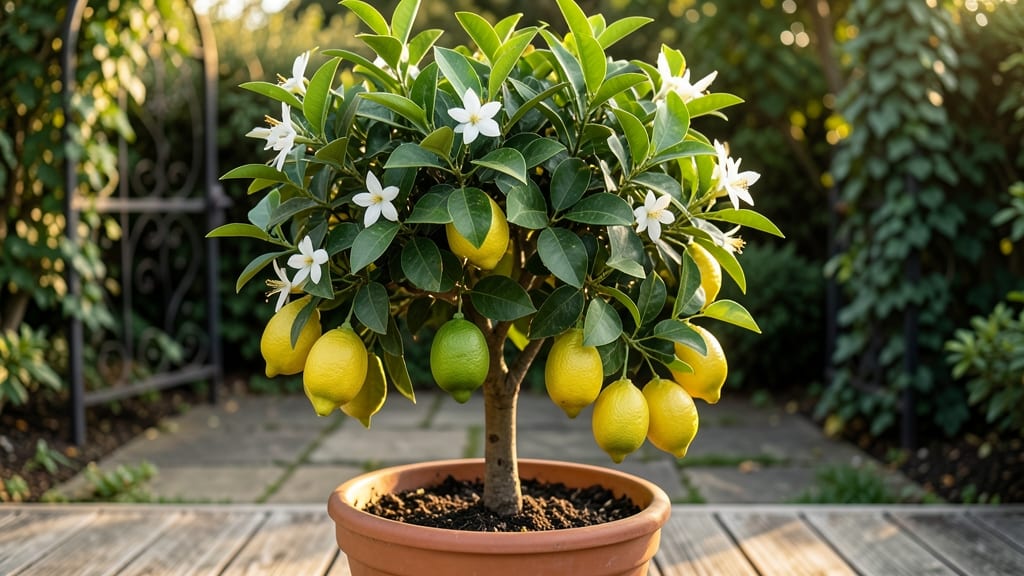
A dwarf lemon tree size can stay under 8 feet tall—but only if you pick the right variety and give it the care it needs to stay compact 🍋.
Dreaming of fresh lemons but short on space? Dwarf lemon trees offer the perfect solution, packing bold citrus flavor into manageable sizes. But not all varieties grow the same way, and knowing their mature heights can make the difference between a thriving patio centerpiece and a frustrated gardener.
Some dwarf types, like the Meyer lemon, max out around 6 feet, while others stretch closer to 8 feet without proper pruning. The key is understanding how each variety grows, how sunlight and soil affect their size, and when to trim to keep them in check.
In this guide, I’ll break down everything you need to know—from variety-specific heights and growth rates to pruning tips and container-growing hacks—to help you grow a dwarf lemon tree that fits your space and your harvest goals.
Dwarf
6-8 ft
Container friendly
Semi-Dwarf
10-12 ft
Most popular
Standard
15-25 ft
Full orchard size
Dwarf lemon tree size comparison: mature heights by popular variety
Choosing a dwarf lemon tree means trading standard citrus giants for manageable, patio-friendly plants—but not all dwarf varieties stay small. Some grow just 3 feet tall, while others reach 8 feet with proper care.
The key is understanding each variety’s mature height, spread, and growth rate to pick the perfect fit for your space. Below, I’ve compared 8 popular dwarf varieties, including their ideal containers, pruning needs, and how they stack up against everyday objects for perspective.
For example, a Meyer lemon tree (the most common dwarf) typically tops out at 6–8 feet but can be kept smaller with pruning. Meanwhile, the Ponderosa lemon grows wider than tall, making it ideal for espalier training against fences.
Understanding these differences helps you avoid overcrowding or underutilizing your space. Let’s break down the specifics so you can visualize which variety will thrive in your garden or container setup.
| Variety |
Mature Height (ft) |
Spread (ft) |
Growth Rate |
Ideal Container (gal) |
Size Comparison |
| Meyer Lemon |
6–8 ft |
4–6 ft |
Moderate (1–2 ft/year) |
15–30 gal |
Taller than a standard kitchen counter (3.5 ft) |
| Improved Meyer Lemon |
5–7 ft |
3–5 ft |
Moderate (1 ft/year) |
10–25 gal |
Similar to a tall floor lamp (6 ft) |
| Ponderosa Lemon |
6–10 ft |
8–12 ft (wide!) |
Slow (6–12 in/year) |
30–50 gal |
Wider than a king-size bed (6 ft wide) |
| Eureka Dwarf |
8–10 ft |
5–7 ft |
Fast (2 ft/year) |
25–50 gal |
Taller than a dresser (7 ft) |
| Lisbon Lemon |
4–6 ft |
3–5 ft |
Slow (6 in/year) |
10–20 gal |
About the height of a child’s reach (5 ft) |
| Four Seasons Lemon |
5–7 ft |
4–6 ft |
Moderate (1 ft/year) |
15–30 gal |
Taller than a microwave (4 ft) |
| Variegated Lemon |
3–5 ft |
2–4 ft |
Slow (4–6 in/year) |
5–15 gal |
Smaller than a dining chair (3.5 ft) |
| Femminello St. Teresa |
6–8 ft |
5–7 ft |
Moderate (
How to control dwarf lemon tree size through pruning and training
Keeping your dwarf lemon tree at an ideal size isn't just about aesthetics—it's about maximizing fruit production and ensuring your tree stays healthy. Without proper pruning and training, even dwarf varieties can become leggy or overgrown, crowding out sunlight and air circulation.
The key is understanding when and how to prune based on your specific variety, as some like Meyer lemons grow faster than others like Improved Meyer.
I’ve found that combining seasonal pruning with training techniques like espalier can transform a wild, unruly tree into a neatly shaped, high-yielding plant.
For example, a 3-foot Meyer lemon tree in a container can easily double in size if left unchecked, but with the right approach, you can maintain that perfect patio-friendly height while boosting lemon production. Let’s break down the steps to keep your dwarf lemon tree in check.
Step 1: Prune for Shape in Late Winter
Timing is everything. Prune your dwarf lemon tree in late winter or early spring, just before new growth begins. This is when the tree is dormant, making it less stressful. Use clean, sharp pruners to remove any dead, diseased, or crossing branches. Aim to open up the center of the tree to improve airflow and sunlight penetration.
Step 2: Train with Espalier for Vertical Growth
If space is limited, espalier is your best friend. This technique involves tying branches to a trellis, wall, or fence to grow them horizontally or vertically. Start by selecting 3-4 main branches and gently bend them into your desired shape. Secure them with soft ties or plant clips. This not only saves space but also creates a stunning visual display while keeping the tree compact.
Step 3: Pinch Back Leggy Stems in Summer
Leggy stems are a common issue, especially if your tree isn’t getting enough sunlight. In summer, pinch back the tips of new growth to encourage bushier growth and thicker stems. Focus on the top third of the tree to maintain a balanced shape. Avoid cutting more than 25% of the foliage at once to prevent stressing the plant.
Step 4: Light Prune After Harvest
After your tree produces fruit, give it a light pruning to remove any spent branches or those that are overcrowded. This helps redirect the tree’s energy toward new growth and next year’s fruit. Avoid heavy pruning at this stage, as the tree is already putting energy into recovery after bearing fruit.
Step 5: Adjust for Variety-Specific Needs
Not all dwarf lemons respond the same way. For example, Meyer lemons grow more vigorously and may need more frequent pruning to stay in check, while Improved Meyer varieties might require a lighter touch. Observe your tree’s growth habits and adjust your pruning schedule accordingly. If you notice excessive growth in one direction, prune back slightly to encourage balanced development.
One of the biggest mistakes I see is over-pruning in a single session. This can shock the tree and reduce its ability to produce fruit. Instead, think of pruning as an ongoing conversation with your tree—small adjustments throughout the year will keep it healthy and productive.
For example, if you notice a branch growing toward the center of the tree, remove it immediately to avoid shading other parts of the plant.
Finally, don’t forget to sanitize your pruning tools between cuts to prevent the spread of disease. A quick wipe with rubbing alcohol or a bleach solution goes a long way in keeping your dwarf lemon tree thriving.
With these steps, you’ll have a perfectly sized, fruit-laden lemon tree that’s the envy of your neighborhood—without taking over your garden or patio! 🍋
★★★★★5.0(1 review)
|