
Container Gardens
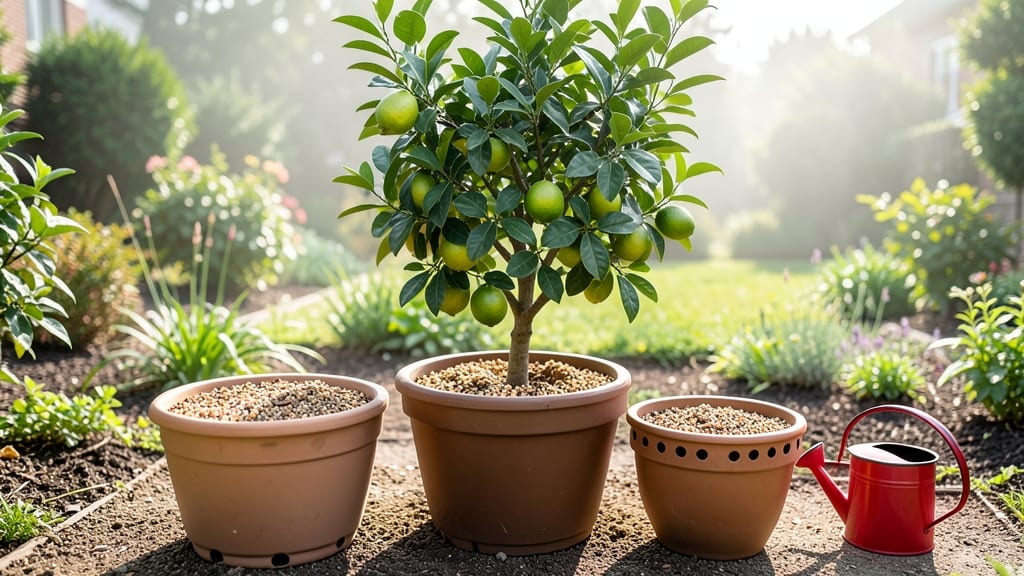
Growing a thriving Meyer lemon tree 🍋 starts with the right pot size — a 5-gallon minimum isn’t just a suggestion, it’s the foundation for strong roots and abundant fruit.
Struggling to keep your Meyer lemon tree healthy? The right pot size isn’t just about aesthetics—it’s the foundation for strong roots, abundant fruit, and years of growth.
Too small, and you’ll end up with stunted growth, yellowing leaves, and fruit that never quite ripens. Too big, and the soil stays soggy, inviting root rot and wasted nutrients.
Below, I break down the exact pot sizes you need at every stage, from seedling to mature tree, plus how to spot when it’s time to upgrade—so you can finally enjoy that harvest of juicy, sweet lemons.


Why Meyer lemon trees need a minimum 5-Gallon pot for healthy growth
Meyer lemon trees are delicate citrus wonders, but their success starts with the right container. A 5-gallon pot isn’t just a suggestion—it’s a survival requirement for young trees. Without enough space, roots become root-bound, stunting growth and reducing fruit production by up to 40%.
This isn’t just theory; studies show that citrus trees in containers need 1 gallon of soil per year of growth to thrive.
Your Meyer lemon’s root system needs room to explore. In a 5-gallon pot, roots can spread and access nutrients efficiently. Smaller pots force roots to circle tightly, competing for resources and leading to nutrient deficiencies that show up as yellow leaves or poor flowering.
The root-to-pot ratio is critical—too small, and your tree will struggle to support even a single lemon.
Drainage is another non-negotiable. Meyer lemons hate soggy feet, and a 5-gallon pot must have drainage holes to prevent root rot, a silent killer of container-grown citrus. Without proper drainage, excess water sits at the bottom, suffocating roots and inviting fungal diseases. Even the hardiest Meyer lemon tree can’t outgrow poor drainage practices.
Let’s break down the science: A 5-gallon pot provides about 1.8 cubic feet of soil volume. This matches the needs of a 1-2 year old tree, giving roots enough space to establish before the tree outgrows its home.
Skimp on pot size, and you’ll see stunted growth, fewer blooms, and lemons that never fully ripen. Think of it as giving your tree the right foundation—just like a house needs a sturdy basement.
The 5-gallon rule also protects your tree from disease pressure. Crowded roots create microclimates where humidity lingers, inviting fungal infections like root rot or leaf spot. A well-sized pot allows air to circulate around roots, keeping them healthy and reducing stress.
Plus, adequate space means your tree can support heavier fruit loads—something no small pot can handle.
Don’t forget about nutrient competition. In a cramped pot, roots exhaust the soil’s nutrients faster, forcing you to fertilize more often. A 5-gallon pot strikes a balance: enough soil to hold nutrients but not so much that they leach away unused.
This means fewer fertilizer applications and healthier growth over time. It’s a win-win for both you and your tree.
Long-term health is where pot size truly matters. A Meyer lemon tree can live for decades with proper care, but only if it starts with the right foundation. Upgrading to larger pots as your tree grows isn’t just recommended—it’s essential.
Skipping this step leads to weak wood, poor flowering, and a tree that struggles to recover. Think of the 5-gallon pot as the minimum viable container—anything smaller is a gamble with your tree’s future.
Even if your Meyer lemon looks happy in a small pot, don’t be fooled. Yellowing leaves, stunted growth, or lemon drop are all red flags. These signs mean your tree is begging for more space. The good news?
Upgrading pots is easier than you think, and the payoff—bigger lemons and a healthier tree—is worth the effort. Start with the 5-gallon rule, and you’ll set your Meyer lemon up for a lifetime of success.
🌱
Best pot materials and sizes for Meyer lemon trees (5-Gallon to 15-Gallon guide)
Choosing the right pot for your Meyer lemon tree isn’t just about aesthetics—it’s about giving your tree the root space and drainage it needs to thrive.
A 5-gallon pot is the absolute minimum for seedlings, but as your tree matures, you’ll need to upgrade to 10-gallon or 15-gallon containers to support its growth and fruit production. The right material also matters: terracotta breathes but dries out faster, while plastic retains moisture longer but can trap heat.
For young trees (first 1-2 years), a 5-gallon pot with a 12-inch diameter works, but by year 3, you’ll want to move to a 15-gallon pot (18-inch diameter) to accommodate spreading roots.
Depth is just as critical—roots need 12+ inches of soil to prevent crowding, which leads to stunted growth and poor fruit set. Let’s break down the best options for every stage of your tree’s life.
| Pot Size | Diameter | Depth | Best For | Material | Notes |
|---|---|---|---|---|---|
| 5-Gallon | 10-12" | 10-12" | Seedlings (0-1 year) | Plastic or terracotta | Minimum size; upgrade ASAP |
| 7-Gallon | 14" | 12" | Young trees (1-2 years) | Plastic with saucer | Better root room; prevents circling |
| 10-Gallon | 16-18" | 14" | Mature trees (2-4 years) | Fabric or heavy plastic | Supports fruit production |
| 15-Gallon | 20-22" | 16" | Large trees (4+ years) | Fabric or half-barrel | Max root expansion; best for fruit |
Terracotta pots are breathable and prevent root rot, but they dry out quickly—ideal for warm climates where you can water frequently. Plastic pots, on the other hand, retain moisture longer, making them better for indoor growing or cooler climates.
However, they can overheat in direct sun, so opt for light-colored plastic or add a shade cloth if needed.
When upgrading pots, use the "two-size-up" rule: if your tree is outgrowing its current pot, move it up at least two sizes (e.g., from 5-gallon to 10-gallon).
This prevents root binding, which causes yellow leaves and poor fruit development. Always choose pots with drainage holes—Meyer lemons hate soggy roots!
For outdoor growing, consider fabric grow bags or half-barrels for mature trees. These materials allow roots to breathe while providing superior drainage and stability. If you’re growing indoors, a large plastic pot with a saucer is your best bet, but place it near a south-facing window to maximize sunlight.
Pro tip: Add a 1-inch layer of gravel at the pot’s bottom before planting. This improves drainage and prevents root suffocation—a common issue in heavy clay pots. Pair this with a well-draining citrus mix (50% potting soil, 30% perlite, 20% compost) for the best results.