
Plants
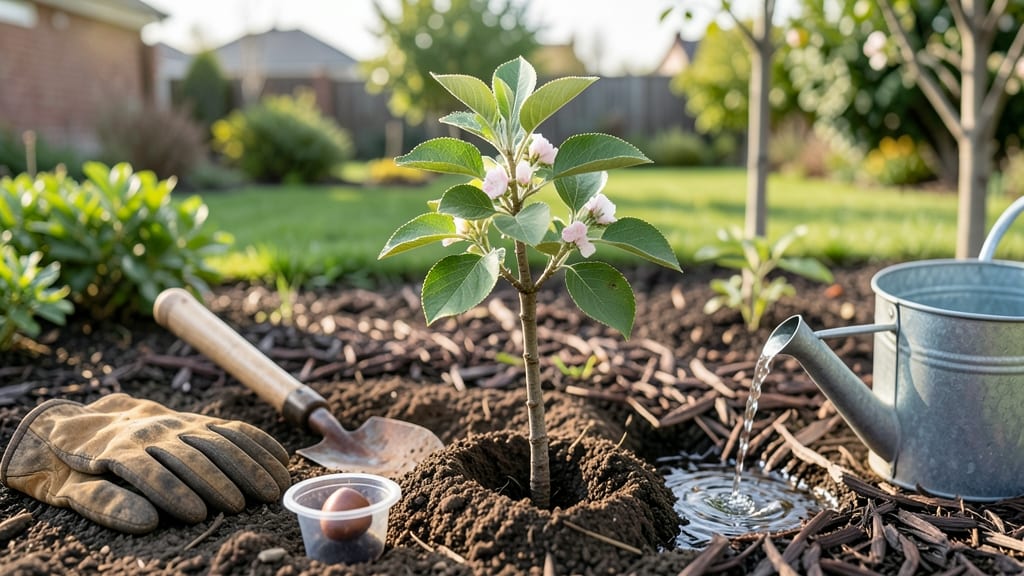
You can plant an apple tree from an apple, but success depends on seed selection and proper care: only heirloom varieties reliably sprout, and the resulting tree may produce fruit different from the parent. Germination rates hover under 5%, requiring cold treatment (stratification) and months of patience.
Growing an apple tree from seed is more of an experiment than a guaranteed outcome. 🌱 The key challenge lies in genetic inconsistency—most commercial apple seeds won't produce fruit identical to the parent, and some may even yield completely different varieties.
Even with proper stratification (a cold treatment process), success depends on factors like seed freshness and growing conditions. I've found that heirloom apples from organic sources yield the best results, though it can take 5-10 years before any fruit appears.
For those willing to try, the process begins with extracting seeds, cleaning them thoroughly, and subjecting them to 6-8 weeks of cold moisture to break dormancy. Planting depth and soil drainage become critical factors once germination occurs.
While the journey is unpredictable, the reward of nurturing a tree from seed can be deeply satisfying for patient gardeners.
💡 In This Article
- Apple Seed Germination Science: Why Most Seeds Fail
- Step-by-Step Guide to Growing an Apple Tree from Seed
Apple seed germination science: why most seeds fail
The primary reason most apple seeds fail to grow into fruit-bearing trees lies in a biological quirk called polyembryony. Unlike many plants, apple seeds often contain multiple embryos—sometimes as many as four—each with the potential to develop into a distinct genetic line.
This means even if one seed sprouts, the resulting tree may produce fruit that looks nothing like the parent apple. 🌱 Commercial apple varieties (like those from grocery stores) are typically hybridized for uniformity, making their seeds unreliable for consistent fruit production.
Another critical factor is the dormancy requirement of apple seeds. Freshly extracted seeds enter a state of dormancy to survive harsh conditions, requiring a process called stratification to break this dormancy. This involves exposing seeds to 40-45°F temperatures and consistent moisture for 6-8 weeks.
Without this cold treatment, seeds may either fail to germinate or produce weak, stunted seedlings. The science here mirrors how wild apple trees evolved to survive winter—seeds only germinate when conditions are safe for growth.
Seed selection plays a pivotal role in success rates. Heirloom apple varieties, especially those from organic sources, have a higher chance of producing true-to-type fruit because they're less genetically modified.
For example, seeds from a Granny Smith apple might yield a tree that bears fruit resembling the parent, while seeds from a Fuji (a commercial hybrid) could produce completely different apples. This genetic variability is why professional orchards use grafting rather than seeds—it guarantees consistent fruit quality.
The germination process itself is delicate. Once stratified, seeds need well-draining soil and 60-70°F temperatures to sprout. The seedling's first leaves (called cotyledons) emerge after 2-4 weeks, but true leaves—indicating healthy growth—may take 6-8 weeks.
At this stage, many gardeners overlook the need for consistent moisture and proper sunlight, leading to seedling death. Even with ideal conditions, only about 1-3% of seeds successfully grow into mature trees capable of fruiting.
What most people don't realize is how the apple's seed coat acts as a natural barrier. The hard, woody exterior protects the embryo but also slows water absorption, which is why stratification is non-negotiable. Imagine trying to hydrate a seed wrapped in plastic—it's the same principle.
The cold treatment softens the seed coat, allowing water to penetrate and kickstart metabolic activity. 💫 This is why seeds planted immediately after extraction rarely germinate, even if they appear viable.
For those who succeed, the journey to fruiting can take 5-10 years, during which the tree must develop a strong root system and canopy. The first apples produced may not be edible due to the tree's immaturity, and the flavor can vary wildly from the parent fruit.
This unpredictability is part of the allure for gardeners who enjoy the thrill of experimentation, but it's why professional fruit growers rely on grafting instead.