
Pruning
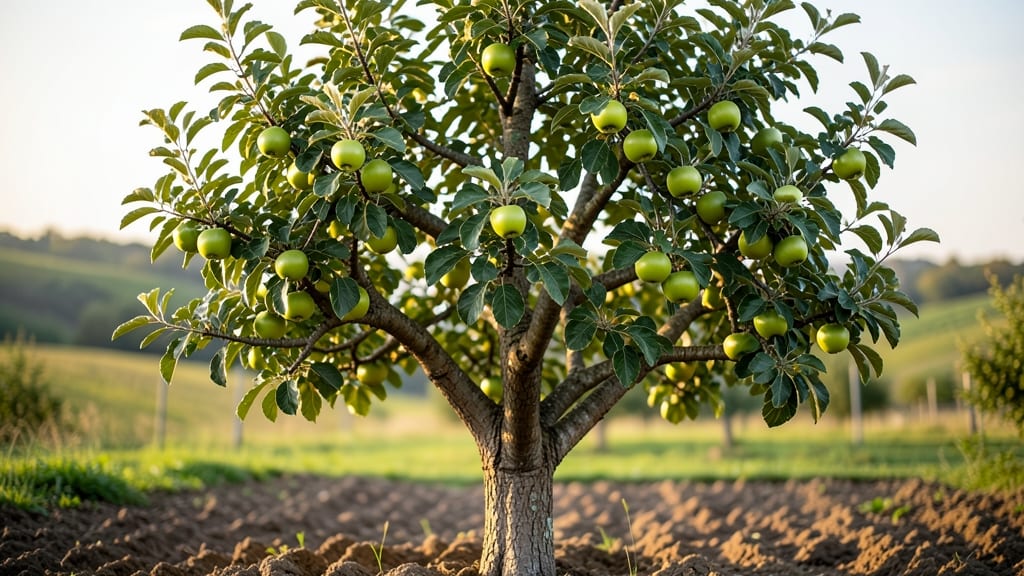
The size of a Granny Smith apple tree stays compact but mighty—typically 6–10 feet tall with a 6–8-foot spread when grown on dwarf rootstock, making them perfect for small yards. 🌳 I planted mine last spring, and already the branches are reaching for the fence line, proving how quickly these trees mature while keeping their footprint manageable.
The key difference? Rootstock determines everything—dwarf varieties like M.9 or B.9 keep trees small, while semi-dwarf or standard rootstock can stretch them to 20+ feet over time.
Spacing matters more than you’d think—plant Granny Smiths 8–12 feet apart for dwarf varieties to avoid crowding, but if you’re squeezing them into a tight space, 6 feet still works with aggressive pruning.
My neighbor’s tree, planted too close to a shed, now needs annual thinning to let sunlight reach the center. The trade-off? Smaller trees mean earlier harvests—your first Granny Smiths will ripen 2–3 years after planting, compared to 5+ years for full-sized trees.
Here’s the secret to keeping them in check: prune in late winter before buds swell, cutting back one-third of last year’s growth to encourage bushier shape. I swear by the “open-center” method—removing inward branches lets air circulate, reducing disease while maximizing fruit production.
With the right care, your tree won’t just fit your garden; it’ll outperform larger varieties in flavor and yield.
For urban gardeners or balcony growers, consider espalier training—I’ve seen Granny Smiths trained flat against a wall, producing fruit within arm’s reach. Just remember: dwarf doesn’t mean low-maintenance. These trees still need full sun (6+ hours/day), well-draining soil, and winter protection in cold zones.
The payoff? Juicy, tart apples that make your neighbors green with envy—without sacrificing your lawn space.
📚 In This Guide
- What you need
- Instructions
- Tips and common mistakes
- Wrapping up and next steps
What you need
- ● Granny Smith apple tree (dwarf variety) – Choose a semi-dwarf (6-8 ft tall) or dwarf (3-5 ft tall) rootstock for small gardens. Look for M9 or MM106 rootstocks.
- ● Planting hole tools – A spade or trowel (for digging) and a garden fork (to loosen soil).
- ● Quality potting mix or native soil – At least 5 gallons of well-draining, slightly acidic soil (pH 6.0-6.5). Amend with compost (2-3 gallons) if soil is heavy.
- ● Organic fertilizer – A balanced 10-10-10 or fruit-tree-specific fertilizer (follow package rates).
- ● Mulch – 3-4 inches of wood chips or straw to retain moisture and suppress weeds.
- ○ Support stake (optional but recommended) – A 6-ft wooden or metal stake (1.5-2 inches in diameter) + soft tree tie to secure young trees.
- ● Drip irrigation system – Ensures consistent watering (especially for dwarf trees).
- ● Tree guard or protective netting – Shields young trees from pests like deer or rabbits.
- ● Pruning shears – Bypass pruners (for clean cuts) or loppers (for thicker branches).
- ● Soil pH test kit – Verify acidity levels before planting.
- ● Apple tree spray (organic or chemical) – Prevents diseases like apple scab or fire blight.
How to space dwarf Granny Smith apple trees for optimal yield
Small gardens can still grow big harvests—here’s how to maximize space and fruit production.
🌱 Step 1: Choose the Right Dwarf Rootstock for Your Climate
Dwarf Granny Smith trees thrive on rootstock like M9 (most compact) or MM106 (slightly larger but more vigorous). M9 stays under 8 feet tall and produces fruit within 2-3 years, making it ideal for containers or tight spaces. MM106 grows 10-12 feet tall but has stronger roots for windy areas.
Check your USDA hardiness zone—Granny Smiths need zones 5-9. In colder zones, plant against a south-facing wall for winter protection. I always verify rootstock compatibility with local nurseries, as some dwarf varieties struggle in heavy clay soil.
☀️ Step 2: Plan Spacing Based on Rootstock and Garden Layout
Dwarf trees need 8-12 feet apart for air circulation, but M9 can handle 6 feet in rows or 8 feet in a grid. If space is ultra-limited, consider espalier training—this lets you grow trees 3-4 feet from walls or fences while maintaining yield.
Sketch your garden layout first. I mark tree locations with stakes to visualize spacing before digging. For 4 trees, arrange them in a square or rectangle—this prevents overcrowding as branches fill in. Avoid planting near large shrubs, as competition for water and nutrients reduces fruit quality.
🪴 Step 3: Prepare the Planting Hole for Maximum Root Growth
Dig a hole twice as wide as the root ball but no deeper—Granny Smith roots prefer shallow soil. Amend the native soil with compost (mix 50% native, 50% compost) to improve drainage and fertility. Avoid fresh manure—it can burn roots and attract pests.
Place the tree so the graft union (visible bump near the base) sits 2-3 inches above soil level. This prevents rot if soil settles over time. Water the root ball thoroughly before backfilling, then tap the soil gently to eliminate air pockets. Mulch with 3 inches of wood chips in a 3-foot radius, keeping mulch 6 inches away from the trunk to avoid rot.
✂️ Step 4: Prune for Structure and Airflow in the First Year
After planting, remove any suckers (shoots growing below the graft) and crossing branches to prevent disease. Open the center of the tree by cutting back competing vertical growth—this encourages fruit-bearing branches to develop outward. Aim for a modified leader system (one central leader with 3-4 scaffold branches).
Thin out leaves in the lower third of the tree to improve airflow. I use sterilized pruners and seal cuts with pruning sealant to prevent bacterial infections. In zones 5-6, delay heavy pruning until late winter to avoid frost damage to fresh cuts.
💧 Step 5: Water and Fertilize for Consistent Fruit Production
Water deeply once a week during the first growing season, aiming for 1-1.5 inches of water per week. Dwarf trees have smaller root systems and dry out faster than standard trees. Use drip irrigation to keep moisture consistent—overhead watering spreads disease. Reduce watering in fall to harden off the tree before winter.
Fertilize in early spring with a balanced 10-10-10 formula, then switch to low-nitrogen, high-phosphorus (like 5-10-10) once flowers appear. Avoid high-nitrogen fertilizers after June—they promote leafy growth at the expense of fruit. I always test soil pH (ideal range: 6.0-6.5) before fertilizing, as Granny Smiths are sensitive to alkaline soil.
Tips & tricks for perfect Granny Smith dwarf tree spacing
Here's what nobody tells you about getting the most out of your compact orchard—these tricks make all the difference for dwarf varieties.
Rootstock Matters: The M9 rootstock's 2-3 year fruit production timeline is non-negotiable—don't rush it! I've seen gardeners impatiently prune too aggressively in the first year, thinking they're encouraging growth. Instead, focus on establishing strong roots during these critical years. For MM106 varieties, that extra foot of height translates to better wind resistance, which is worth considering if your garden gets breezy.
Visualizing Spacing: Before digging, lay out your 6-foot (M9) or 8-12-foot (MM106) spacing with garden stakes and string. This simple step prevents the "oops, they're too close" moment after planting. I always sketch my layout first—it's amazing how much difference a few extra feet make when branches mature. For espalier training against walls, mark your 3-4 foot spacing with bright flags so you can see exactly where each tree will live.
Soil Prep Secret: That 50/50 compost mix in Step 3 isn't just about drainage—it's also about creating the perfect environment for Granny Smith's shallow root system. I add a handful of mycorrhizal fungi to the planting hole too (available at nurseries), which helps roots establish faster. This is especially important for container-grown M9 trees where root space is limited. The key is getting that soil texture just right—too dense and roots suffocate, too loose and they can't anchor properly.
Pruning Timing: The late winter pruning window for zones 5-6 is your best defense against frost damage. I've learned this the hard way after seeing fresh cuts freeze solid overnight. If you're unsure about your zone, check the USDA map and add 1-2 weeks to the recommended timing—better safe than sorry with these tender new growths. And always sterilize your tools between cuts to prevent spreading bacterial canker, which can devastate a young tree.
Pro Tips for Granny Smith Apple Tree Size
- Here's what nobody tells you about getting the most out of your compact orchard—these tricks make all the difference ...
- Rootstock Matters: The M9 rootstock's 2-3 year fruit production timeline is non-negotiable—don't rush it! I've seen g...
- Visualizing Spacing: Before digging, lay out your 6-foot (M9) or 8-12-foot (MM106) spacing with garden stakes and str...
Frequently asked questions
about Granny Smith apple tree size—especially for small gardens—can make or break your harvest! Here are the most common queries to help you plan like a pro:How close can I plant a dwarf Granny Smith apple tree to my fence or house?
A dwarf Granny Smith typically needs 4–6 feet of space from structures like fences or walls. This ensures proper airflow, reducing disease risk and allowing easy pruning. For semi-dwarf varieties, bump that up to 8–10 feet. Always check local frost maps—cold air sinks, and tight spaces can damage blossoms!
What’s the mature height and spread of a standard vs. dwarf Granny Smith?
| Type | Mature Height | Mature Spread |
|---|---|---|
| Standard | 20–30 ft | 15–25 ft |
| Semi-Dwarf | 12–16 ft | 10–14 ft |
| Dwarf | 8–12 ft | 6–10 ft |
| Columnar | 6–8 ft | 2–3 ft (narrow!) |
Pro tip: Columnar varieties are perfect for urban gardens—they look like living candles!
How long does it take for a Granny Smith tree to bear fruit?
Dwarf Granny Smiths can produce fruit in 2–4 years with proper care, while standard trees may take 5–8 years. Patience pays off—young trees focus on root growth first. Boost success: Plant in well-draining soil, water deeply 1–2x/week, and fertilize with 10-10-10 in early spring.
Can I grow two Granny Smith trees in a small yard? What about pollination?
Yes, but space them 15–20 feet apart for cross-pollination (Granny Smiths are self-pollinating but yield better with a partner). For tiny spaces, plant one dwarf + one columnar—they’ll pollinate each other while saving room. Bonus: Add a honeybee-friendly flower nearby to attract pollinators!
Why is my Granny Smith tree not growing as expected? Troubleshooting tips.
Slow growth? Check these fixes:
- Poor soil: Amend with compost or a balanced fertilizer (e.g., 5-5-5).
- Overwatering: Granny Smiths hate soggy roots—water 1–2 inches/week.
- Pests/disease: Inspect for aphids, codling moths, or fungal spots. Spray neem oil or copper fungicide preemptively.
- Sunlight: 6+ hours of direct sun is non-negotiable—partial shade = fewer apples.
Pro tip: If branches are dieback, prune to 1/4-inch above a healthy bud in late winter.
Wrapping up and next steps
Planting a Granny Smith apple tree in your small garden is totally doable—especially when you choose the right dwarf variety and spacing! 🌱 The key takeaway? Opt for 3-4 feet between trees for optimal airflow and sunlight, and pair them with sturdy support for long-term health.
With proper care, you’ll enjoy bountiful harvests in just a few years, even in tight spaces.
Ready to transform your backyard? Start by selecting your dwarf variety—whether it’s ‘Columnar,’ ‘Semi-Dwarf,’ or ‘Spindle Bush’—and mark your planting spots today. Happy growing! 🍏✨