
Pruning
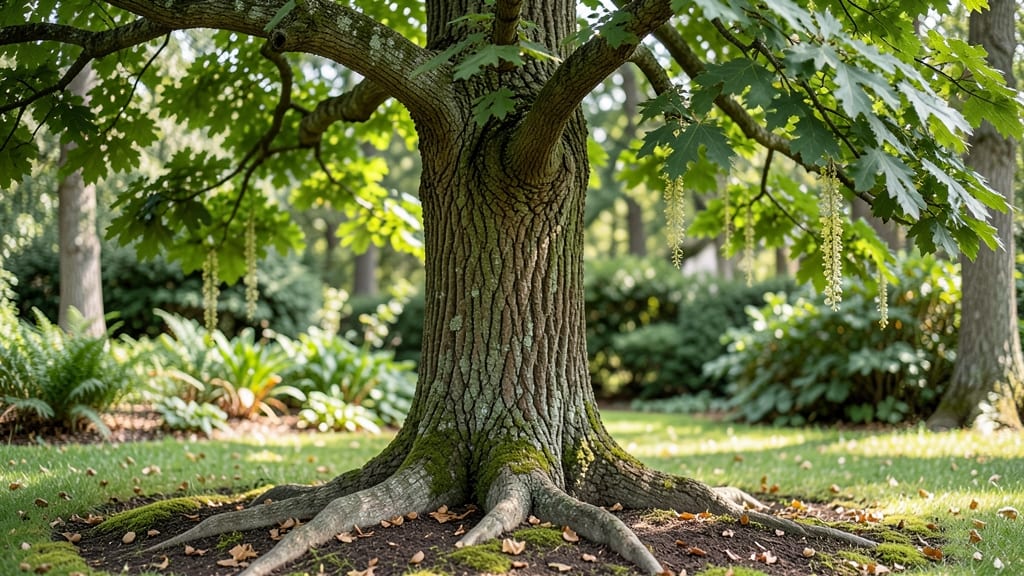
That mystery tree in your yard might be more valuable—or dangerous—than you think. 🌳 I’ve stared at my own backyard shade tree for years, wondering if it was a maple, oak, or something else entirely, until I finally cracked the code using just three visual clues: leaf shape, bark texture, and branch pattern.
Start by examining the leaves—are they lobed like an oak, serrated like a birch, or smooth-edged like a magnolia? Then check the bark: rough and furrowed (oak), smooth and gray (birch), or scaly (pine).
Seasonal changes matter too: some trees drop leaves in fall, others hold onto them, and a few even bloom in winter. My neighbor’s "weird" tree turned out to be a rare ginkgo, and now we’re both obsessed with its fan-shaped leaves.
Once you narrow it down, you’ll know whether it needs pruning, mulching, or just admiration. The right ID also reveals if it’s a fire hazard, attracts pests, or produces edible fruit.
For example, a young silver maple needs pruning to prevent weak branches, while a mature oak just needs space to thrive. If you’re still stuck, snap a photo and use apps like LeafSnap or iNaturalist.
For high-value or large trees, a local arborist can confirm with a quick visit—better safe than sorry when it comes to your yard’s biggest plants.
How Trees End Up Unrecognized
Ever stood in your yard, staring at a towering tree, only to scratch your head and wonder, "What on earth is this thing?" 🌳🤔 The mystery isn’t just about aesthetics—it’s rooted in biology, geography, and even human behavior.
If you’re struggling to identify the trees in your yard, the reasons likely fall into a few key categories. Let’s break down why your green neighbors might be keeping their secrets—and how to uncover them.
Trees don’t grow in a vacuum—they’re shaped by the climate, soil, and ecosystem they thrive in. If you’re trying to identify a tree that doesn’t match your expectations, ask yourself:
- Is this tree native to your region? Native trees adapt to local soil, rainfall, and temperature, which can drastically alter their appearance. For example, a Southern Live Oak in Florida will look different from one in Texas due to varying moisture and heat levels.
- Did someone plant it intentionally? Non-native trees—like Ginkgo biloba or Japanese Maple—are often planted for their ornamental value. These species may lack familiar features (e.g., acorns, pinecones) that help with identification.
- What’s the microclimate like? Trees near bodies of water, urban heat islands, or shaded areas may develop unique traits. A Red Maple in full sun might have brighter leaves than one growing in dense forest shade.
Actionable tip: Check local plant databases (like iNaturalist or your state’s agricultural extension service) to see what species are common in your area. If your tree is an outlier, it might be a deliberate choice!
Trees aren’t static—they change as they age, and their features can shift dramatically depending on the season. Here’s how:
| Life Stage | How It Affects Identification | Example |
|---|---|---|
| Sapling (Young Tree) | Leaves, bark, and shape may resemble a different species than the mature tree. Young Oak trees can look like Hickory until their acorns appear. | A 5-year-old White Pine might have softer needles than an older, more rigid specimen. |
| Mature Tree | Full size reveals distinct features: bark texture, branch patterns, and seed pods. A Sycamore’s peeling bark is unmistakable once it’s fully grown. | An adult Tulip Poplar has large, heart-shaped leaves, while a young one might resemble a Linden. |
| Seasonal Changes | Fall colors, winter dormancy, or spring blooms can mask a tree’s true identity. A Sweetgum in summer looks nothing like its spiky gumball fruit in autumn. | Evergreens like Pine or Spruce stay green year-round, while Dogwood trees shed leaves in winter but bloom spectacularly in spring. |
Actionable tip: Observe your tree across all four seasons. Note: 🔹 Leaf shape and arrangement (alternate vs. opposite) 🔹 Bark texture (smooth, scaly, fissured) 🔹 Fruit/seeds (acorns, pinecones, samaras) Take photos in different seasons to compare with field guides.
If your tree has been pruned, fertilized, or stressed by human activity, its natural features might be obscured. Common ways people unintentionally (or intentionally) change a tree’s identity:
- Aggressive pruning: Removing large branches can make a Willow look like a Poplar or turn a Maple into a top-heavy mess. Over-pruning can also stunt growth, making a tree appear younger than it is.
- Fertilizer or soil amendments: Too much nitrogen can make leaves darker and larger, while poor soil drainage might stress roots, altering leaf color. A Birch with yellowing leaves might be mistaken for a sick Ash.
- Disease or pests: Dutch elm disease can kill branches, making an Elm look like a Hornbeam. Spider mites or aphids can distort leaves, making identification tricky.
- Grafting or hybridizing: Some ornamental trees (like Crabapple hybrids) are grafted to combine traits, resulting in a tree that doesn’t match any "pure" species in field guides.
Actionable tip: Look for natural features beyond the pruned shape: 🔹 Bark: Is it peeling, ridged, or smooth? (e.g., Sycamore vs. Birch) 🔹 Bud shapes: Are they pointed, rounded, or scaly? (Use a magnifying glass!) 🔹 Root structure: Some trees (like Willows) have aggressive roots, while others (like Oaks) have deep taproots.
Not all identification resources are created equal. Here’s why you might be stuck:
- Overlap in features: Many trees share similar leaves (e.g., Ash vs. Fraxinus species) or bark (e.g., Beech vs. Oak). A guide focusing only on leaves might miss the bark’s role in ID.
- Regional biases: A guide for the Pacific Northwest won’t help you ID a Longleaf Pine in Georgia. Even apps like LeafSnap rely on regional databases.
- Hybrids and cultivars: Trees like London Plane (a Sycamore-Plane hybrid) don’t fit neatly into standard categories. Nurseries often sell "improved" versions with altered traits.
- Poor-quality images: Some online guides use blurry or out-of-focus photos, making it hard to spot key details like leaf veins or bud scales.
Actionable tip: Cross-reference multiple sources: 🔹 Use USDA’s Silvics Manual for scientific details. 🔹 Check local arboretum databases for regional species. 🔹 Post photos on r/whatsthisplant for crowdsourced help.
💡 Pro Tip: If all else fails, collect a sample! A small twig with leaves and buds (in winter) or a fallen fruit can be sent to a local master gardener program or university extension office for expert ID. Just be sure to
Identify and Act on Your Yard Tree
Now that you’ve narrowed down the mystery tree in your yard, it’s time to take action—whether you’re pruning for safety, enhancing curb appeal, or simply learning more about your green neighbor. Here’s how to solve common yard tree challenges with practical, step-by-step solutions.
Problem: You suspect you have a maple, oak, or pine, but you’re not sure. Fix:
- 🔍 Collect Clues: Snap clear photos of the leaves, bark, and overall shape from different angles. Use your phone’s camera or a magnifying app like LeafSnap or PictureThis for instant ID help.
- 📖 Compare with Guides: Cross-reference your findings with local field guides (e.g., Audubon Society’s Trees of North America) or online databases like the USDA Plant Database.
- 🌿 Check for Unique Traits: Note if the tree has:
- Samaras (helicopter seeds = maple)
- Lobed leaves (oak)
- Needles in clusters (pine)
- Peeling bark (birch or sycamore)
- 📞 Consult an Expert: If stumped, reach out to your local cooperative extension office or a certified arborist for a free or low-cost ID.
✨ Prevention Tip: Bookmark a tree ID app on your phone for future reference—no more guessing games!
Problem: Dead branches, weak limbs, or disease threaten your property. Fix:
- 👨🍳 Assess the Risk: Look for:
- Hollow trunks (sign of rot)
- Mushrooms at the base (fungal decay)
- Cracks or splits in major branches
- Leaning excessively (root issues)
- 🔪 Prune Like a Pro:
- Remove dead/dying branches first—cut 1/4 inch above a healthy bud at a 45° angle.
- Thin the canopy to improve airflow (reduces disease).
- Never remove more than 25% of the canopy in one session to avoid stressing the tree.
- 🚨 Call a Pro for:
- Trees near power lines (electrocution risk).
- Large or mature trees (DIY pruning can cause damage).
- Diseased trees (e.g., oak wilt, Dutch elm disease).
💡 Pro Tip: Schedule regular inspections (spring and fall) to catch hazards early. A well-maintained tree can last decades longer!
Problem: Your tree looks wild, drops debris, or blocks sunlight. Fix:
- 🎯 Set Clear Goals:
- Shape it (e.g., round for a formal look, natural for a wild garden).
- Reduce height (never "top" a tree—it causes weak regrowth).
- Open the canopy to let light reach your lawn.
- 🍳 Use the Right Tools:
- Hand pruners for small branches (<1 inch).
- Loppers for medium branches (1–3 inches).
- Pole saw for high branches (safely!).
- 🌡️ Time It Right:
- Late winter/early spring (before new growth).
- Avoid pruning in fall (stresses trees before winter).
🎯 Prevention Tip: Prune young trees while they’re small—shaping them early saves time and effort later.
Problem: Your tree is non-native, aggressive, or harmful (e.g., Bradford pear, tree of heaven, or Russian olive). Fix:
- 🔍 Confirm the Species: Some invasives mimic natives—double-check with a local ecologist or invasive species database.
- 🌱 Remove It Safely:
- Small trees: Cut the trunk 6–12 inches from the ground, then apply horticultural vinegar or copper nail to the stump to prevent regrowth.
- Large trees: Hire a licensed arborist to grind the stump and dispose of it properly (burning is illegal in many areas).
- 🌿 Replace with Natives:
- Plant native alternatives (e.g., serviceberry instead of Bradford pear, black cherry instead of Russian olive).
✨ Prevention Tip: Research before planting! Check your state’s invasive species list before adding any new trees.
| Issue | Quick Fix | When to Call a Pro |
|---|---|---|
| Unidentified tree | Use apps/guides, consult experts | If you suspect a rare or toxic species |
| Dead/dying branches | Prune 6+ inches from trunk | If branches are >3 inches thick |
| Disease (mushrooms, ooze) | Remove infected parts, sterilize tools | If fungus spreads or tree is large |
| Overgrown canopy | Thin out 10–20% of branches | For trees >50 ft tall |
| Invasive species | Cut stump, apply herbicide | For trees with deep root systems |
Final Thought: Whether you’re a DIY pruner or a tree enthusiast, knowing your yard’s species lets you care for it better. Start small—grab those pruners, snap a few photos, and turn your mystery tree into a well-loved (and safe) part of your landscape! 🌿🔥
Frequently asked questions
What are the easiest ways to identify a tree in my yard?
Start with three key features: leaves (shape, edges, veins), bark (texture, color, patterns), and branch structure. For example, a maple has lobed leaves and helicopter seeds, while pine needles grow in clusters. Use free apps like LeafSnap or PictureThis to compare your findings with thousands of species.
Can I identify a tree by its bark alone?
Bark is one of the most reliable clues. Smooth gray bark suggests birch, while deep fissures indicate oak. Sycamore has mottled, peeling bark, and pine often has scaly or flaky textures. Just avoid relying solely on bark—cross-check with leaves or fruit for accuracy.
What should I do if my tree doesn't match any online guides?
If your tree defies identification, collect a small twig with leaves/buds (or fallen fruit) and send it to your local cooperative extension office. They’ll confirm the species for free. For rare finds, post photos on r/whatsthisplant or iNaturalist—experts often chime in within hours!
How do seasonal changes affect tree identification?
Seasonal traits are game-changers! In winter, evergreens (like pine) stay green, while deciduous trees (like maple) drop leaves. Spring blooms (e.g., dogwood) or fall colors (e.g., sweetgum) can reveal hidden clues. Take photos in all four seasons to build a complete picture.
Is it safe to prune my tree myself, or should I hire a pro?
DIY pruning works for small trees (under 30 feet) and healthy branches. Use sharp tools and cut 1/4 inch above a bud at a 45° angle. For large trees, near power lines, or diseased specimens, call a certified arborist—they’ll spot hazards you might miss.