
Pruning
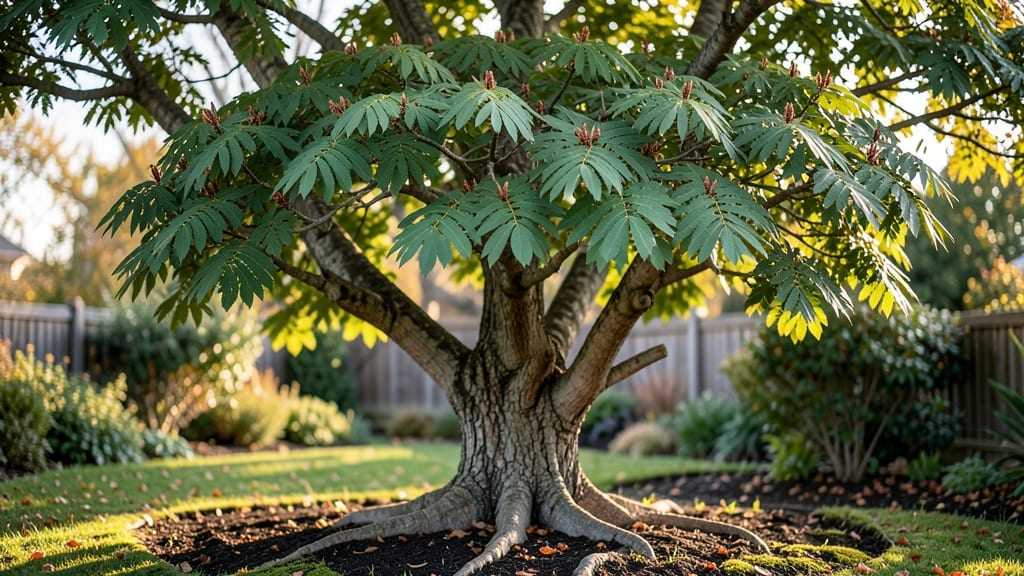
Winter pruning transforms the Tree of Heaven from a wild tangle into a neat, manageable tree. 🌿 I’ve pruned mine every February for five years, and the difference in spring growth is shocking—no more tangled limbs or seed pods everywhere.
The key is timing: prune after the worst cold snaps but before new buds swell, usually in late winter when the tree’s dormant but pests are still inactive.
You’ll need sharp bypass pruners, loppers for thicker branches, and a ladder if your tree’s over 15 feet tall. The goal is to remove dead, crossing, or diseased branches first, then thin out the canopy by 20-30% to improve airflow.
This invasive tree grows aggressively, so aggressive pruning keeps it in check while preventing those infamous seed pods from littering your yard.
What you’ll end up with is a tree that looks intentionally sculpted, not wild. The fresh cuts heal faster in winter, and you avoid the messy sap flow of summer pruning.
Plus, you’ll notice fewer pests like spider mites—winter is their weak season, and pruning at this time disrupts their life cycle before they even wake up.
Works for both small urban trees and larger landscape specimens. The same principles apply whether you’re dealing with a single specimen or a row of trees—just scale up your tools. Here’s how to do it without turning your yard into a seed bomb factory.
📚 In This Guide
- What you need
- Instructions
- Tips and common mistakes
- Wrapping up and next steps
What you need
- ● Pruning shears – Bypass pruners (for clean cuts on small branches, 1-2 inch diameter).
- ● Loppers – For medium branches (2-4 inch diameter), long-handled for safety.
- ● Pruning saw – For thick branches (4+ inch diameter), sharp and sterilized.
- ● Gloves – Heavy-duty, cut-resistant (Tree of Heaven has sharp thorns!).
- ● Disposable pruning bags – 2-3 large bags (for debris removal).
- ● Rubbing alcohol (70%+) – Small bottle (to sterilize tools between cuts).
- ○ Pruning sealant – Optional but helpful for large cuts (1 small tube).
- ● Ladder or step stool – Sturdy and tall enough to reach upper branches safely.
- ● Safety glasses – 1 pair (to protect from debris).
- ● Timing: Prune on a dry, frost-free winter day (ideal temp: 40–60°F).
- ● Weather check: Avoid pruning if rain or snow is forecasted within 24 hours.
- ● Tool prep: Sharpen blades and sterilize tools before starting.
- ● Safety first: Wear closed-toe shoes and avoid working alone if the tree is large.
Instructions: pruning tree of heaven in winter for healthier growth
Winter’s the perfect time to shape your tree of heaven—here’s how to do it right.
✂️ Step 1: Time Your Pruning for Dormancy
Prune your tree of heaven in late winter or early spring, just before new growth begins. This is when the tree is dormant but not yet active, making it less stressful for the plant. Look for bare branches and no buds—that’s your cue. Avoid pruning in fall, as new growth could be damaged by frost.
I like to prune on a dry, calm day when temperatures are above 40°F. Cold or windy conditions can stress the tree, so choose a mild afternoon. If you’re unsure when dormancy ends, wait until you see swollen buds on the branches—prune just before they open.
✂️ Step 2: Remove Dead, Diseased, or Weak Branches First
Start by cutting out any branches that are dead, diseased, or crossing. Dead branches are easy to spot—they’re brown, brittle, and won’t snap when bent. Diseased branches may have blackened spots, mold, or unusual growths. Use clean, sharp pruners to make a 1/4-inch cut just above a outward-facing bud or branch collar.
If a branch is rubbing against another, remove the weaker one to prevent bark damage. I always step back after each cut to check the tree’s shape—this helps me see what still needs attention. Never leave stubs; a clean cut promotes faster healing and reduces the risk of infection.
✂️ Step 3: Thin the Canopy for Better Airflow
Tree of heaven can get dense, so thinning the canopy improves airflow and sunlight penetration. Focus on removing 20-30% of the smallest, inner branches first. These branches often grow inward and block light from reaching the center. Look for branches that are thinner than a pencil—these are ideal candidates for removal.
Use your pruners to cut at a 45-degree angle just outside the branch collar. Avoid cutting too close to the trunk, as this can damage the tree’s bark. After thinning, step back and check for even light distribution—you should see sunlight reaching the inner branches. This step prevents future overcrowding and keeps the tree healthy.
✂️ Step 4: Shape the Tree for Balance and Structure
Now’s the time to shape the tree into your desired form. Start with the main branches—these should be spaced evenly around the trunk. Remove any branches that grow straight up or downward, as these can create weak points. Aim for a natural, open shape with branches spreading outward.
If your tree of heaven has become too tall, you can lightly prune the top to encourage bushier growth. Never remove more than 25% of the tree’s foliage in one season, though, as this can stress it. After shaping, give the tree a final once-over to ensure all cuts are clean and the structure looks balanced.
✂️ Step 5: Clean Up and Apply Wound Sealant (Optional)
After pruning, collect all the cuttings and dispose of them properly—tree of heaven can spread aggressively from root suckers, so don’t compost the clippings. Wipe down your pruners with rubbing alcohol to prevent the spread of disease. If you notice any large cuts, you can apply a wound sealant to protect the tree, but smaller cuts will heal on their own.
Water the base of the tree deeply after pruning to help it recover. Avoid fertilizing right away, as new growth could be vulnerable to frost. Keep an eye on the tree in the coming weeks—healthy new growth in spring will confirm you’ve done the job right.
Tips & tricks for pruning tree of heaven in winter
Winter pruning transforms your tree of heaven—here's how to avoid common mistakes and get pro-level results every time.
Timing is Everything: The 40°F minimum temperature isn't just a suggestion—it's critical. Cold weather stresses trees, and pruning below this can shock the system. I've seen trees recover beautifully when pruned at 45°F, but anything colder risks stunted growth. If you're in doubt, wait until you see those swollen buds—prune just before they open for perfect timing.
Tool Prep Makes All the Difference: Your pruners should be sharper than a chef's knife. Dull blades tear bark and create jagged cuts that invite disease. Before you start, test your tools on a small branch—if it crushes instead of cuts cleanly, sharpen or replace them. I keep a small file in my toolkit for quick touch-ups between sessions. Remember, clean tools mean healthy trees!
Visual Cues Over Guesswork: When thinning that 20-30% of inner branches, look for sunlight streaming through gaps in the canopy. That's your target! I train myself to step back every 5-10 cuts to check for even light distribution. You'll notice how the tree's natural shape starts to emerge as you remove those pencil-thin branches blocking the center.
Post-Pruning Recovery Boost: That deep watering after pruning isn't just symbolic—it's essential. The tree needs moisture to heal its wounds. I like to water in the late afternoon when temperatures are still above 40°F, giving roots time to absorb before evening cools down. Avoid fertilizing immediately, as new growth could be vulnerable to frost damage in early spring.
Pro Tips for Tree Of Heaven Winter
- Winter pruning transforms your tree of heaven—here's how to avoid common mistakes and get pro-level results every time.
- Timing is Everything: The 40°F minimum temperature isn't just a suggestion—it's critical.
- Tool Prep Makes All the Difference: Your pruners should be sharper than a chef's knife.
Frequently asked questions
about the Tree of Heaven in winter pruning—here’s what you need to know before grabbing those shears!When is the best time to prune a Tree of Heaven in winter?
The ideal window is late winter (February–early March) while the tree is still dormant but before new growth begins. Pruning too early can expose fresh cuts to harsh winds, while waiting too long may encourage early budding. Pro tip: Aim for a day above freezing to avoid stressing the tree!
Can I prune a Tree of Heaven in freezing temperatures?
Pruning in freezing temps (below 20°F/-7°C) can damage the tree’s bark and make cuts heal poorly. Wait for a mild winter day (above 32°F/0°C) to minimize shock. If you must prune in cold weather, use sharp tools and avoid heavy cuts to reduce stress.
Will pruning a Tree of Heaven in winter kill it?
No—when done correctly, winter pruning promotes healthier growth. However, avoid over-pruning (never remove more than 25% of the canopy in one season). Focus on removing dead, diseased, or crossing branches first. Pro tip: Thin the crown to improve airflow and sunlight penetration!
Are there alternatives to winter pruning for Tree of Heaven?
Yes! Light maintenance pruning can be done in early spring (April) to shape the tree, but winter is best for major structural work. If you miss winter, prioritize removing deadwood first, then shape in spring. Just avoid heavy pruning after mid-summer to prevent weak growth.
Why does my Tree of Heaven have brown branches in winter?
Brown branches are often normal in winter dormancy, but check for signs of disease (fungus, cankers) or pests (like scale insects). If branches are brittle and snap easily, they may be dead—remove them promptly. Pro tip: Sterilize pruners with rubbing alcohol between cuts to prevent spreading pathogens!
Wrapping up and next steps
The Tree of Heaven can remain a stunning winter landscape feature with the right pruning techniques! By mastering the art of selective trimming, you’ll encourage healthy growth, prevent invasive spread, and keep its unique charm year-round.
Start small—even a single branch makes a difference—and soon, your winter garden will shine with effortless elegance.
Ready to transform your outdoor space? Grab your pruners and give this resilient tree a fresh start—your future winter scenery will thank you! 🌿✨