
Pruning
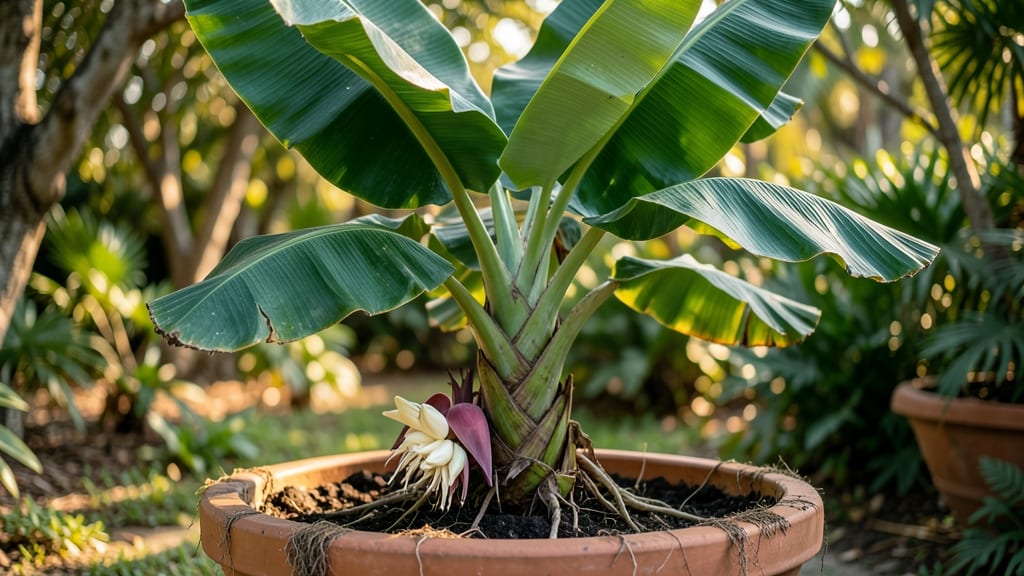
A banana tree is called a Musa plant, belonging to the genus Musa in the family Musaceae. Though often mistaken for a tree, it’s actually a large herbaceous flowering plant with a pseudostem, not a true woody stem.
A banana plant is scientifically classified under the Musa genus, which includes over 70 species. 🌱 The confusion with "tree" comes from its massive pseudostem—a tightly packed cluster of leaf sheaths that mimics a trunk but lacks true wood.
This structure allows the plant to grow tall (up to 25 feet) while remaining herbaceous at its core. Many popular varieties like Cavendish and Plantain fall under this genus, each with unique growth patterns and fruit characteristics.
What's fascinating is how these plants reproduce: each "tree" produces a single harvest before dying, but sends up new shoots from its base. This cycle explains why banana groves always look like they're in different stages of growth.
For gardeners, identifying a Musa plant involves looking for these pseudostems, large leaves, and the distinctive flower spike that emerges from the center.
💡 In This Article
- Botanical Classification of the Musa Genus
- Growing and Identifying Banana Plants in Gardens
Botanical classification of the Musa genus
The Musa genus represents a fascinating case in plant biology where form deceives. Unlike true trees—such as oaks or maples—banana plants lack a single woody stem.
Instead, their iconic "trunk" is actually a pseudostem, a tightly compressed bundle of leaf sheaths and vascular tissue that grows continuously from the base. This structure allows the plant to reach heights of 15-25 feet while remaining herbaceous, a trait shared with other large monocots like palms.
The pseudostem's composition explains why banana plants feel soft and fibrous when cut—it's not wood but a dense network of overlapping leaf bases. Musa acuminata (wild bananas) and Musa balbisiana (plantains) are the two primary species that form most cultivated varieties through hybridization.
These species differ in chromosome number (diploid vs. triploid), which directly impacts fruit size, seed content, and growth habits. For example, Cavendish bananas (the most common grocery store variety) are triploid, meaning they're sterile and must be propagated vegetatively from suckers.
What makes the Musa genus unique is its monocarpic nature—each plant produces a single flower spike (the "heart") after 9-12 months of growth, then dies. This explains why banana "groves" always appear in different growth stages.
The flower spike itself is a marvel of botanical engineering: it emerges from the center of the pseudostem and can grow 3-6 feet long, eventually developing into a cluster of 50-150 individual bananas. 🌿
Evolutionarily, the Musa genus belongs to the Musaceae family, which also includes the rare Ensete genus (false banana). While both share similar leaf structures, Ensete plants have true rhizomes rather than pseudostems.
This distinction helps botanists classify these plants correctly—something critical for conservation efforts, as many wild Musa species face habitat loss. The genus's center of diversity is Southeast Asia, where over 70% of wild species originate, providing genetic material for disease-resistant cultivars.
For those curious about taxonomy, the scientific name Musa × paradisiaca refers to the edible banana, a hybrid between Musa acuminata and Musa balbisiana. The "×" symbol indicates it's a hybrid, not a naturally occurring species.
This hybrid vigor explains why cultivated bananas thrive in tropical climates worldwide, adapting to diverse soil types and rainfall patterns. The pseudostem's ability to store water and nutrients also makes Musa plants remarkably resilient during droughts.
Understanding these botanical details helps explain why banana plants behave differently from trees. For instance, their lack of true wood means they can't regenerate from cut trunks like trees—once the pseudostem is damaged, the plant is often beyond saving.
This is why gardeners must protect young shoots and use proper pruning techniques to maintain healthy growth. The Musa genus truly challenges our everyday assumptions about what constitutes a "tree." 🌱