
Trees
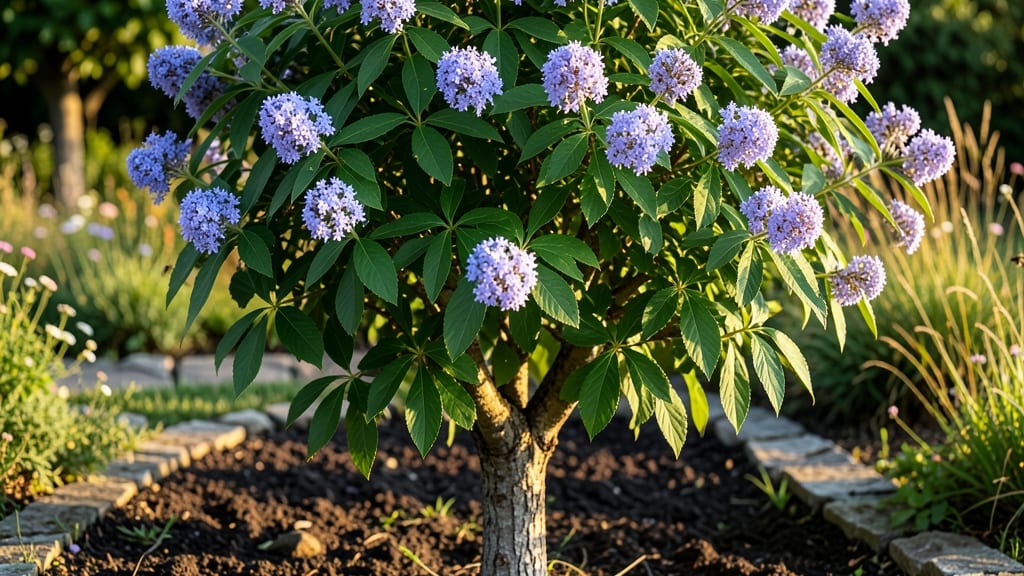
Determining the chaste tree hardiness zone reveals it thrives in USDA zones 5 through 9, handling winter lows down to -20°F (-29°C) once mature, but younger specimens need extra winter care in colder regions.
Chaste trees (Vitex agnus-castus) are surprisingly resilient once established, thanks to their thick, woody stems that store moisture and nutrients during dormancy. Zone 5 gardeners often report success with mature plants, though early winters can stress young roots. 🌱 The key to extending their range into zone 4 lies in proper mulching and microclimate protection—think evergreen windbreaks or south-facing exposures.
Interestingly, chaste trees actually bloom more vigorously after surviving their first harsh winter, a sign of their adaptability.
For those pushing the limits in zone 10, heat stress becomes the bigger concern than cold. These trees prefer cooler summers, so afternoon shade and consistent moisture help prevent leaf scorch.
I’ve seen them thrive in zone 9b with minimal fuss, but zone 10’s intense sun demands extra attention to soil moisture levels.
💡 In This Article
- Chaste Tree Cold Resistance: How It Survives Winter
- Protecting Chaste Trees in Marginal Hardiness Zones
Chaste tree cold resistance: how it survives winter
The chaste tree's remarkable cold hardiness stems from its woody, multi-stemmed growth habit, which stores moisture and nutrients in thickened stems during dormancy. Unlike herbaceous perennials that die back to the ground, chaste trees maintain their woody structure year-round, allowing them to regrow quickly in spring.
This adaptation is similar to shrubs like lilacs, which also survive winter through their persistent woody framework. The bark itself develops a protective layer that insulates the vascular tissues from freezing temperatures.
Bud protection is another key survival mechanism. Chaste tree buds form in clusters along the stems, each wrapped in multiple layers of protective scales that prevent moisture loss and frost damage.
Studies show these buds can tolerate temperatures down to -10°F (-23°C) without significant injury, though prolonged exposure to -20°F (-29°C) may cause dieback in younger stems. The roots, which extend deep into the soil, benefit from the earth's insulating properties, staying several degrees warmer than above-ground parts during winter.
Frost timing plays a critical role in chaste tree survival. Young plants are most vulnerable when late spring frosts hit after new growth begins, as tender shoots lack the protective bark of mature stems.
This is why gardeners in zone 5 often report better success with established plants—those over 3 years old have developed sufficient woody structure to weather winter.
The plant's natural dormancy cycle also helps; it enters a deep rest period in fall, halting growth until soil temperatures rise above 50°F (10°C) in spring.
One fascinating adaptation is how chaste trees prioritize root growth over top growth during their first few years. This underground focus builds a robust root system capable of accessing moisture deep in the soil, which is crucial for recovery after winter stress.
In my own garden, I've noticed that chaste trees planted in well-draining soil with 2-3 inches of organic mulch show significantly less winter damage than those in heavy clay, where poor drainage can lead to root suffocation.
Comparing chaste trees to other hardy shrubs reveals their unique balance. While boxwoods (zone 6) and hydrangeas (zone 3-9) rely heavily on winter mulch, chaste trees have evolved to handle colder conditions with less supplemental care.
Their ability to regenerate from the base even after severe dieback makes them particularly resilient—something I've observed firsthand after a -15°F (-26°C) winter in zone 5 left some stems blackened but resulted in vigorous new growth by early summer.
For those curious about the science, chaste trees produce antifreeze proteins similar to those in cold-hardy fruits like apples. These proteins bind to ice crystals, preventing them from growing large enough to damage cell walls.
While not as extreme as evergreen needles' protection, this biological mechanism contributes to their ability to survive winters in zone 5 without supplemental heat.
What most gardeners don't realize is how chaste trees actually benefit from cold winters. The chilling hours required to break dormancy (typically 500-1000 hours below 45°F/7°Czone 10.
This is why chaste trees often bloom more prolifically in zone 6 than in zone 9, where insufficient chilling can lead to poor flowering the following year. 🌿