
Companion Plants
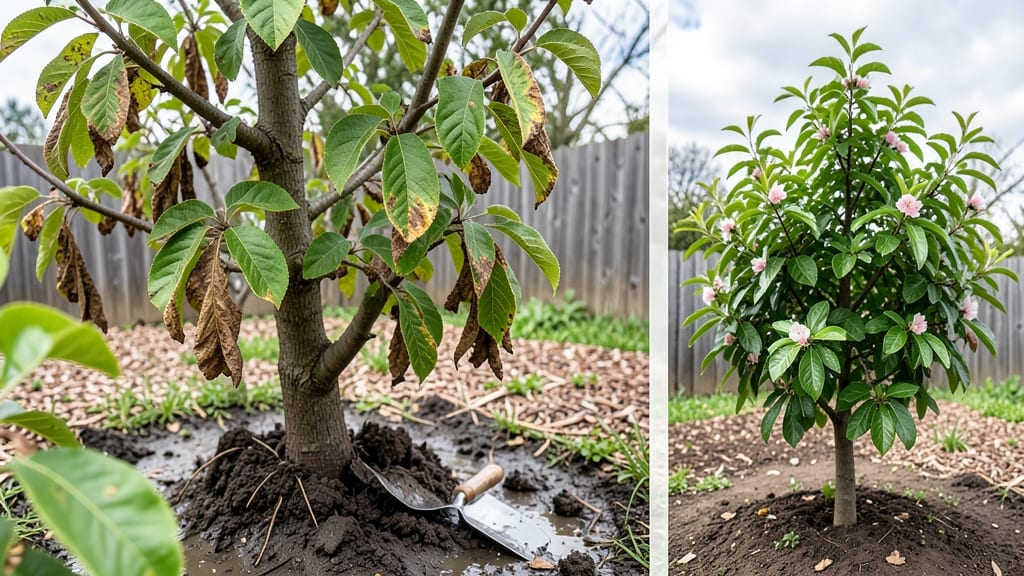
An overwatered peach tree looks like it’s drowning in its own roots—yellowing leaves, drooping branches, and a sad, soggy mess beneath the surface. 🌱 I’ve seen it happen after weeks of heavy rain or when well-meaning gardeners can’t resist watering "just in case."
The leaves turn a sickly yellow, then brown at the edges, while the bark stays damp even days after watering.
Dig down an inch or two, and you’ll find the real problem: mushy, grayish roots that smell foul. Unlike underwatered trees (which have dry, brittle roots), overwatered ones suffocate under saturated soil.
Fungal growth like powdery mildew or root rot often follows, turning the soil into a breeding ground for disease.
Here’s the good news: recovery is possible. Start by adjusting your watering schedule—peach trees need 1-1.5 inches of water per week, but they hate soggy feet. Improve drainage with organic matter like compost or sand, and prune any dead branches to help the tree focus on healthy growth.
With better care, your peach tree can bounce back in a few weeks—just don’t let it get waterlogged again. The key is balance: firm soil that holds moisture but never stays soggy. Your tree (and its fruit) will thank you!
Root Causes Of Overwatering
Overwatering your peach tree isn’t just a gardening mistake—it’s a silent threat that can suffocate its roots and leave your tree gasping for air. Understanding the why behind this issue is the first step to fixing it.
Let’s dig into the science and common scenarios that lead to soggy soil and stressed trees.
Peach trees thrive in well-draining soil, but when water pools around their roots, it creates a waterlogged zone that cuts off oxygen. Here’s how it happens:
- Clay-heavy soil holds water like a sponge, preventing excess moisture from draining away. If your soil is dense or compacted, water sits near the roots instead of seeping deeper. - Lack of slope or grading around the tree means water pools at the base after rain or irrigation.
Even a slight tilt in the landscape can redirect water toward the trunk. - Improper planting depth—burying the graft union too deep or planting in a hole without backfill amendments traps water against the roots.
💡 Pro Tip: Test your soil’s drainage by digging a 12-inch hole near the tree, filling it with water, and timing how long it takes to drain. If it takes more than 6 hours, your soil is too compacted.
You might think "more water = happier tree," but peach trees are drought-tolerant once established—and excessive irrigation is a leading cause of root rot.
- Automatic sprinklers or drip systems running on timers without soil moisture checks can drown roots, especially in hot climates where evaporation is high.
- Watering at the wrong times—like late in the day when roots can’t dry out—promotes fungal growth and suffocates aeration.
- Ignoring weather conditions: Watering during heavy rain or after a downpour doubles the moisture, turning the soil into a swamp.
⚠️ Warning Sign: If you’re watering more than 2–3 times per week (unless it’s extreme heat), you’re likely overdoing it.
Mulch is a gardener’s best friend—when used correctly. Too much or the wrong type can trap moisture against the trunk.
- Piling mulch too close to the trunk (within 6 inches) creates a moisture barrier that suffocates roots and invites rot.
- Using organic mulch (like wood chips) without aeration breaks down into a water-retaining mat over time.
- Skipping mulch removal after rain lets water pool against the base, especially in low-lying areas.
🔥 Fix It: Keep mulch 3–4 inches deep and 6+ inches away from the trunk. Use inorganic mulch (like gravel) in problem areas.
Roots need both water and oxygen—but when their access is restricted, they drown.
- Compacted soil from foot traffic, machinery, or poor cultivation crushes soil particles, reducing pore space for air and water flow.
- Weeds or grass growing too close compete for moisture and block root expansion, forcing roots to grow in waterlogged conditions.
- Improper aeration—especially in lawns—means roots can’t "breathe," leading to anaerobic (oxygen-deprived) soil.
🌡️ Soil Test Alert: If you poke the soil near the tree and it smells like rotting eggs (a sign of hydrogen sulfide from anaerobic conditions), your roots are drowning.
Sometimes, Mother Nature plays a role in overwatering—even if you’re not directly at fault.
- Heavy, prolonged rainfalls (especially in spring or fall) can saturate the soil for weeks, giving roots no chance to dry out.
- High humidity + poor airflow in dense plantings or shaded areas slows evaporation, keeping soil moist longer than ideal.
- Frozen or waterlogged winters prevent excess moisture from draining, leaving roots in a soggy state until spring.
✨ Solution: If your area gets consistent heavy rain, plant peach trees on mounds or raised beds to improve drainage naturally.
The biggest mistake? Waiting too long to act. Overwatering doesn’t happen overnight, but by the time you see yellowing leaves or mushy roots, it’s often too late.
- Wilting despite wet soil (a classic sign of root suffocation).
- Fungal growth (mushrooms, mold, or white fluffy patches at the base).
- Peeling or cracked bark from internal rot spreading upward.
🎯 Prevention Tip: Check soil moisture 1–2 inches below the surface before watering. If it’s still damp, wait. Use a moisture meter for accuracy.
Final Note: Overwatering is often a mix of well-meaning habits + environmental factors. The good news? Once you identify the root cause (literally), fixing it is straightforward—drainage, smarter watering, and soil checks can save your peach tree before it’s too late.
Revive Your Peach Tree Now
An overwatered peach tree can feel like a rescue mission, but with the right steps, you can nurse it back to health. The key is acting fast—before root rot or fungal diseases take hold. Below, we’ll match common signs of overwatering to targeted fixes, plus prevention tips to keep your tree thriving. Let’s get started!
If your peach tree’s leaves are yellowing, drooping, or turning mushy, the roots are likely suffocating in soggy soil. Here’s how to drain the excess water and restore balance:
🔥 Step 1: Pause Watering Immediately
- Stop adding water until the top 2–3 inches of soil feel dry (test with your finger).
- Pro Tip: 💡 If the ground is still soggy after 24 hours, you’ve got a bigger issue—proceed to Step 2.
🍳 Step 2: Improve Soil Aeration
- Gently loosen the top 6–12 inches of soil around the tree’s drip line (use a fork or trowel).
- Mix in coarse sand, perlite, or compost to break up compacted soil and boost drainage.
- Warning: ⚠️ Avoid heavy clay soil amendments—stick to organic matter like composted bark or coconut coir.
👨🍳 Step 3: Create a Well-Draining Base
- Build a slight mound of amended soil around the tree’s base (like a shallow volcano shape).
This helps water flow away from the trunk. - If your yard has poor drainage overall, consider planting the tree on a raised bed next time.
🌡️ Prevention for Next Season
- Test your soil (a simple moisture meter works) before watering—peach trees prefer soil that’s moist but not soggy.
- Mulch properly: Use 2–3 inches of organic mulch (like wood chips) but keep it 6 inches away from the trunk to prevent rot.
If you spot black, mushy roots or a foul odor when digging, root rot may have set in. Act fast—this is a silent killer for peach trees.
⏰ Step 1: Trim the Damage
- Carefully dig around the tree (focus on the root ball) and cut away any black, mushy roots with sterilized pruners.
- Healthy roots are firm and white/tan—discard the rest.
🔪 Step 2: Disinfect the Area
- Sprinkle copper fungicide or a mix of 1 part hydrogen peroxide (3%) to 10 parts water over the roots and surrounding soil to kill fungi.
- Pro Tip: ✨ For severe cases, repot the tree in fresh, sterile potting mix (if it’s young) or plant it in a new location with amended soil.
🌱 Step 3: Adjust Watering Habits
- Water deeply but infrequently—aim for 1–1.5 inches per week (including rainfall), split into 2–3 sessions.
- Use drip irrigation or soaker hoses to deliver water directly to the roots, avoiding leaf wetness (which fuels disease).
🎯 Prevention Tips
- Avoid overhead watering—stick to drip systems or water at the base.
- Plant peach trees in well-draining soil (sandy loam is ideal).
If your yard is clay-heavy, raise the planting bed. - Monitor drainage after heavy rains—if water pools for more than 6 hours, you need to improve soil structure.
Sometimes overwatering weakens the tree’s structure, leading to droopy branches or bark issues. Here’s how to support recovery:
💪 Step 1: Prune for Airflow
- Remove any dead, crossing, or crowded branches to improve airflow and reduce stress.
- Warning: ⚠️ Never prune more than 25% of the tree’s canopy at once—this can shock it further.
🥗 Step 2: Fertilize Lightly
- Overwatered trees often lack nutrients. Apply a balanced, slow-release fertilizer (like 10-10-10) in early spring.
- Pro Tip: 📊 Skip nitrogen-heavy fertilizers—they encourage leafy growth but weaken roots in waterlogged soil.
🍎 Step 3: Support the Tree Physically
- If branches are too heavy or weak, stake them temporarily with soft ties to prevent breakage.
- Avoid heavy pruning until the tree shows new growth (signs of recovery).
🌿 Prevention for Long-Term Health
- Water in the morning so leaves dry quickly, reducing fungal risks.
- Avoid compacting soil around the tree—keep foot traffic away from the root zone.
- Mulch annually to maintain soil moisture balance without suffocating roots.
With these fixes, your peach tree should bounce back within 4–8 weeks, depending on the damage. Stay patient, adjust your watering habits, and soon you’ll be enjoying juicy peaches instead of a soggy sad tree! 🍑💦
Frequently asked questions
How can I tell if my peach tree is overwatered vs. underwatered?
Overwatered peach trees show yellowing leaves that stay droopy even when soil is wet, while underwatered trees have crispy brown edges and dry soil. Check the roots: overwatered roots are mushy and gray, while underwatered roots are dry and brittle. A simple finger test in the soil helps—if it’s still damp after 24 hours, you’re overwatering.
Can overwatering kill my peach tree?
Yes, chronic overwatering can be fatal by causing root rot or fungal diseases. If left unchecked for weeks, the tree’s roots suffocate, cutting off nutrients. The good news? With proper drainage fixes and pruning damaged roots, many trees recover within 4-8 weeks. Act fast if you see black, mushy roots or a foul smell!
Why does my peach tree have yellow leaves but still feels wet?
This classic sign means your tree is drowning—excess water blocks oxygen, causing leaves to yellow while soil stays soggy. Unlike nutrient deficiencies (which affect older leaves first), overwatering yellows leaves uniformly. Dig down: if roots are gray/mushy, you’ve got a waterlogging problem. Pause watering immediately and improve drainage.
How often should I water a peach tree to avoid overwatering?
Peach trees need 1-1.5 inches of water weekly (rain counts!), but deep watering 2-3 times per week is better than daily shallow watering. Use your finger to check soil moisture—if the top 2-3 inches are dry, it’s time to water. Morning watering prevents fungal growth from overnight dampness.
What’s the fastest way to fix an overwatered peach tree?
Stop watering immediately, then loosen compacted soil around the roots with a fork and mix in compost or perlite to improve drainage. For severe cases, create a slight mound of amended soil around the base to redirect water away. Monitor recovery by checking new leaf growth—healthy trees should show improvement in 2-4 weeks.