
Companion Plants
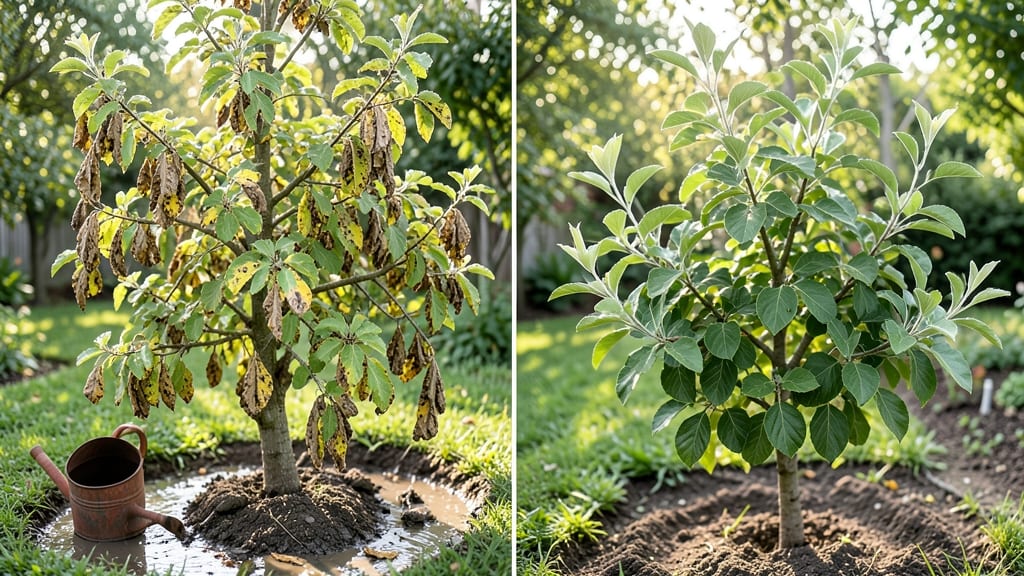
An overwatered apple tree looks like a sad, soggy mess—yellowing leaves, wilting branches, and roots that smell like rot when you dig too deep. 🌳 I’ve seen it happen after weeks of heavy rain or when well-meaning gardeners keep the hose running just a little too long.
The first sign? Leaves that turn yellow or brown at the edges, even when the soil feels damp to the touch.
Peel back the bark near the trunk, and you might find mushrooms sprouting from the base—a dead giveaway that your tree’s roots are drowning. The soil around the roots stays clumpy and smells foul, not fresh like healthy earth.
Worse, the tree stops growing, with new shoots weak and sparse, while old branches droop under the weight of waterlogged limbs.
Fixing it starts with stopping the water—let the soil dry out completely before watering again. Improve drainage by adding compost or sand to heavy clay soil, and prune back any dead or fungal-covered branches. Within weeks, you’ll see new green growth as the roots recover their breath.
Don’t wait until the tree is gasping for air—check soil moisture every week during spring rains or summer heat. A simple finger test (stick your hand in the soil) can save your apple tree before the damage becomes permanent.
Root Causes of Overwatering
Overwatering an apple tree isn’t just about giving it too much H₂O—it’s a cascade of environmental and horticultural factors that disrupt the tree’s natural balance. Understanding these causes helps you adjust care before the damage becomes irreversible. Let’s dig into the science behind why this happens.
Apple trees thrive in well-draining soil, but when the ground holds water like a sponge, roots suffocate. Here’s why this happens:
- Clay-Heavy Soil: Clay particles pack tightly, blocking oxygen and trapping moisture.
Even after rain, water pools around roots instead of draining away. - Compacted Subsoil: Foot traffic, machinery, or natural compression can create a hardpan layer beneath the surface, preventing excess water from escaping. - Low Organic Matter: Soil rich in compost or decomposed plant material (like leaf mold) holds air pockets that help roots breathe.
Without it, water sits stagnant.
Actionable Fix: Test your soil’s drainage by digging a 12-inch hole, filling it with water, and timing how long it takes to drain. If it’s slower than 4–6 hours, amend with sand, perlite, or compost to improve aeration.
Even with good soil, human error can lead to overwatering. Common pitfalls include:
- Inconsistent Watering Schedules: Apple trees need 1–1.5 inches of water per week (including rain), but many gardeners water on a rigid schedule without checking soil moisture. - Automatic Sprinklers: These can deliver too much water too quickly, especially if left running overnight or during rain.
Overhead watering also promotes fungal diseases like apple scab. - Shallow Root Zones: Young trees often develop roots in the top 6–12 inches of soil. Watering lightly but frequently keeps these roots waterlogged instead of encouraging deeper root growth.
Actionable Fix: Use a moisture meter or the "finger test"—stick your finger 2–3 inches into the soil. If it’s damp, wait before watering. For mature trees, deep watering (6–12 inches down) every 7–10 days is better than daily shallow soaks.
Not all overwatering comes from the hose. Mother Nature plays a role too:
- High Humidity + Poor Airflow: Apple trees in shady, enclosed spaces (like against a fence or in a dense orchard) struggle to dry out.
Humid air slows evaporation, keeping roots damp longer. - Rainfall Overload: In wet climates or during monsoon seasons, soil can stay saturated for weeks.
If the tree’s root zone isn’t elevated or mulched properly, roots rot. - Frost or Cold Soil: Cold temperatures slow root activity and microbial breakdown of excess water, leading to anaerobic conditions (no oxygen) that harm roots.
Actionable Fix: Improve airflow by pruning nearby trees/shrubs and using raised beds or mounds for young trees. In rainy seasons, install French drains or swales to redirect excess water away from the root zone.
Mulch is a gardener’s best friend—unless it’s applied incorrectly. Thick layers or the wrong materials can smother roots and trap moisture:
- Too Much Mulch: A 3–4 inch layer is ideal; anything thicker suffocates roots and blocks oxygen.
- Impermeable Mulches: Plastic sheeting or dense wood chips (like untreated lumber) prevent water from evaporating and can lead to root rot.
- Mulch Piled Against the Trunk: This creates a moisture barrier at the base, encouraging fungal growth.
Actionable Fix: Use organic mulch (straw, wood chips, or shredded leaves) and keep it 2–3 inches away from the trunk. Replenish annually to maintain loose, breathable coverage.
Sometimes, overwatering is a symptom, not the cause. Hidden issues like pests or pathogens can disrupt a tree’s ability to manage moisture:
- Root-Knot Nematodes: These microscopic worms block water and nutrient uptake, making roots more susceptible to rot when overwatered.
- Phytophthora or Pythium Fungi: Thriving in waterlogged soil, these pathogens attack roots, creating lesions that prevent proper water absorption.
- Bacterial Soft Rot: Caused by Erwinia bacteria, this turns roots mushy and black, often triggered by chronic wet conditions.
Actionable Fix: If you suspect pests/disease, test soil samples or consult a local extension service. Resistant apple varieties (like ‘Liberty’ or ‘Enterprise’) and copper-based fungicides can help prevent fungal spread.
Location matters more than you think. Planting an apple tree in the wrong place sets it up for failure:
- Low-Lying Areas: Trees planted in depressions or valleys collect runoff, leading to permanent waterlogging.
- Impermeable Surfaces Nearby: Driveways, patios, or compacted soil can redirect water straight to the roots.
- Shallow Planting: Burying the graft union too deep or planting in containers without drainage holes traps excess water.
Actionable Fix: Choose slightly elevated sites with a 5–10% slope to encourage drainage. If repotting, use fast-draining mixes (e.g., 60% soil, 30% perlite, 10% compost).
Reviving Your Apple Tree: Step-by-Step Fixes
Overwatering can turn your thriving apple tree into a soggy, struggling plant—but don’t panic! With the right approach, you can nurse it back to health. Below, we’ll match common overwatering symptoms to practical fixes, plus tips to keep your tree happy long-term.
Cause: Soggy roots from poor drainage or excessive watering suffocate the tree, leading to nutrient uptake issues and leaf discoloration.
Fix:
- 🔥 Stop watering immediately—let the soil dry out completely before watering again.
- ✨ Improve drainage: Amend the soil with compost, perlite, or coarse sand (mix 20% amendment into the top 6–12 inches of soil). For container-grown trees, ensure pots have drainage holes and use a well-draining potting mix.
- 👨🍳 Dig a test hole: If the soil feels like a damp sponge 4+ inches down, you’ve got drainage issues. Raise the tree’s planting bed or install French drains if needed.
Prevention:
- 💡 Water deeply but infrequently: Apple trees prefer 1–1.5 inches of water per week (including rain). Use a soaker hose or drip irrigation to deliver water slowly at the base.
- 🌡️ Monitor soil moisture: Stick your finger 2–3 inches into the soil—if it’s damp, wait. If it’s bone-dry, water thoroughly.
Cause: Overwatering leads to root rot, where roots suffocate and can’t absorb water—even if the soil is wet, the tree can’t drink.
Fix:
- 🍳 Prune affected roots (if severe):
- Gently dig around the outer edges of the root ball (6–12 inches from the trunk).
- Snip off mushy, black, or foul-smelling roots with sterilized pruners (rubbing alcohol works).
- Replant with fresh, well-draining soil and avoid watering for 3–5 days to let roots recover.
- 🔪 Aerate compacted soil: Use a garden fork to loosen soil around the root zone (avoid damaging roots).
Prevention:
- ⏰ Mulch correctly: Apply 2–4 inches of organic mulch (wood chips, straw) 3 inches away from the trunk to retain moisture without smothering roots.
- 🌧️ Avoid waterlogging: If your yard floods after rain, consider planting on a slight mound or installing swales to divert water.
Cause: Overwatering stresses the tree, diverting energy from growth and fruiting to survival. Compacted or waterlogged soil also limits oxygen access.
Fix:
- 🥘 Boost root oxygen: Mix compost or aged manure into the top 12 inches of soil to improve structure.
- 🌱 Deep water less often: Instead of shallow, frequent watering, water deeply 2–3 times per week (adjust for climate). Use a moisture meter for accuracy.
- 💪 Fertilize strategically: Overwatered trees often lack nutrients. Apply a balanced fertilizer (10-10-10) in early spring and late summer, but avoid high-nitrogen fertilizers if root rot is suspected.
Prevention:
- 🎯 Choose the right spot: Apple trees need well-draining soil and full sun (6+ hours/day). Test your soil’s drainage with the "percolation test" (dig a hole, fill with water, time how long it drains—ideal: 4–6 hours).
Cause: Excess moisture creates the perfect breeding ground for fungal diseases like powdery mildew or root rot.
Fix:
- 🔪 Remove infected parts: Prune yellowed, spotted, or moldy leaves and dispose of them in the trash (not compost).
- 🌡️ Apply fungicide: Use a copper-based fungicide or neem oil spray (follow label instructions). For severe cases, systemic fungicides (like Myclobutanil) may be needed.
- 🌿 Improve air circulation: Thin out dense branches to reduce humidity around the tree.
Prevention:
- 💡 Space trees properly: Apple trees need 15–20 feet between specimens for airflow.
- 🌧️ Water in the morning to allow foliage to dry before nighttime humidity sets in.
If your tree is severely overwatered, follow this 30-day recovery timeline:
| Week | Action | Goal |
|---|---|---|
| 1 | Stop watering, prune rotten roots | Let soil dry; reduce stress |
| 2 | Aerate soil, add compost | Improve drainage and nutrients |
| 3 | Fertilize lightly (low nitrogen) | Boost recovery without overloading |
| 4 | Monitor & adjust watering | Re-establish healthy moisture levels |
- 🌡️ Know your tree’s needs: Young apple trees need more frequent watering; mature trees (5+ years) are drought-tolerant.
- 🔍 Use a rain gauge: Track rainfall to avoid overwatering during wet spells.
- 🍎 Prune strategically: Remove suckers (shoot-like growths) to redirect energy to fruit production.
- 🌱 Consider drip irrigation: It delivers water directly to roots, reducing waste and fungal risks.
With these fixes, your apple tree should bounce back in 4–8 weeks—just give it time and consistent care! 🍏💚
Frequently asked questions
How can I tell if my apple tree is overwatered vs. underwatered?
Overwatered trees show yellowing leaves that stay soft and droopy, while underwatered trees have brown, crispy edges and dry soil. Check the soil: if it smells foul or feels soggy 4+ inches down, you’re overwatering. For underwatering, the top 2 inches will be bone-dry.
Can an overwatered apple tree recover?
Yes! Stop watering immediately and let the soil dry completely. Prune any mushroom-covered roots or blackened branches, then amend the soil with compost or perlite. With proper care, most trees recover in 4–8 weeks, though severe cases may need professional help.
Why do mushrooms grow at the base of my overwatered apple tree?
Mushrooms appear because excess moisture creates ideal conditions for fungal growth in decaying organic matter. These aren’t harmful to the tree but signal root rot. Remove them by hand (wear gloves!) and improve drainage to prevent recurrence.
How often should I water my apple tree to avoid overwatering?
Water deeply 2–3 times per week (adjust for rain) to encourage deep root growth. Use the finger test: if the soil 2–3 inches down is damp, wait. For mature trees, 1–1.5 inches of water per week (including rain) is ideal.
Will mulch help or hurt an overwatered apple tree?
Mulch can help if applied correctly: use 2–4 inches of organic material (like wood chips) but keep it 3 inches away from the trunk. Too much mulch or piling it against the trunk traps moisture and worsens rot. Always use loose, breathable mulch.