
Pruning
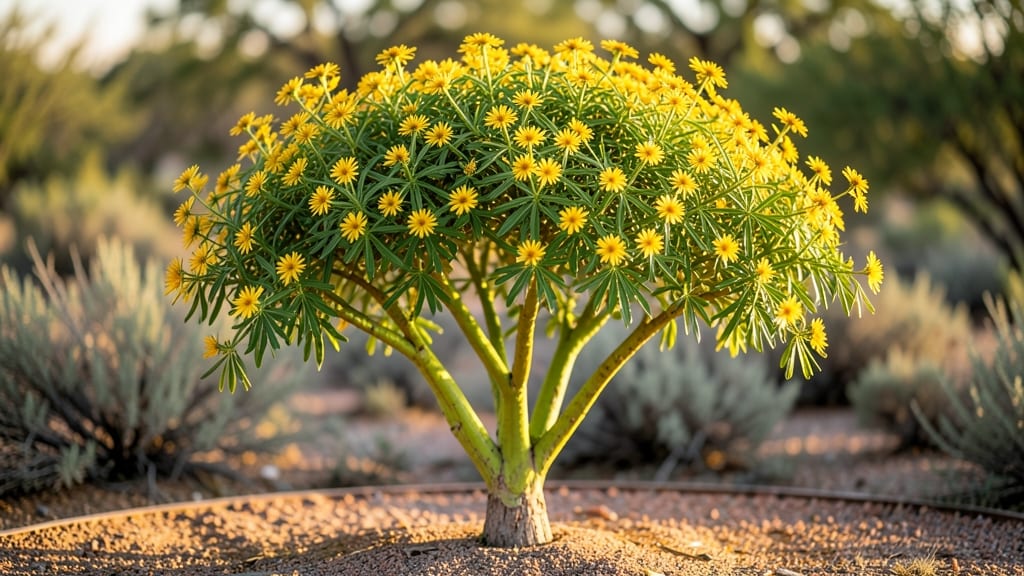
A palo verde tree in your front yard transforms curb appeal into desert elegance—its bright green bark and delicate flowers make it a standout year-round. 🌵 I planted mine under a power line, and the way it arches over the sidewalk creates natural shade while keeping the sidewalk clear.
The key is strategic placement: avoid planting too close to structures, and give it room to grow into its distinctive shape. This tree thrives in full sun and well-draining soil, making it perfect for arid climates.
Pair it with drought-tolerant ground covers like lantana or succulents to create a cohesive, low-maintenance landscape. The bright yellow blooms in spring add a pop of color, while the unique bark provides winter interest when other plants fade.
With strategic pruning—just after flowering—you encourage denser growth and maintain its natural form. A well-placed palo verde becomes the focal point of your yard, offering shade, beauty, and minimal upkeep. The result? A front yard that feels intentional, not just landscaped.
Works beautifully in Mediterranean or desert-style gardens, and its adaptability makes it a great choice for urban yards too. Let's make your front yard the envy of the neighborhood!
Root Causes Of Palo Verde Stress
Understanding why your palo verde tree (Parkinsonia microphylla) might struggle in a front yard setting starts with recognizing its natural resilience—and where it falls short. These drought-tolerant trees thrive in desert landscapes, but urban environments introduce unique stressors. Here’s why problems arise, broken down by the real culprits.
Palo verde trees are succulents at heart, meaning they store water in their swollen trunks and branches.
Yet, many homeowners—intending to help—overwater, leading to: - Root rot: Excess moisture suffocates roots by blocking oxygen, inviting fungal pathogens like Phytophthora or Fusarium. - Weakened structure: Waterlogged soil prevents nutrient uptake, causing leaves to yellow or drop prematurely. - Soil compaction: Clay-heavy or amended soils (e.g., with peat moss) trap water, exacerbating drainage issues.
Actionable fix: Test soil moisture 2–3 inches deep before watering. If damp, wait. Amend heavy soils with gravel or coarse sand to improve aeration.
Palo verde trees bloom on old wood, meaning pruning at the wrong time removes next year’s flowers and weakens the tree.
Common mistakes: - Late winter/early spring cuts: Triggers new growth that’s vulnerable to frost or heat stress. - Aggressive summer pruning: Encourages water-stress-prone shoots during peak heat. - Removing too many branches at once: Over-pruning reduces photosynthesis, starving the tree of energy.
Actionable fix: Prune only in late winter (just before buds swell) or immediately after flowering (May–June). Never remove more than 25% of foliage in one session.
Front yards often lack the phosphorus and micronutrients palo verde trees need, especially in:
- Newly constructed areas: Soil may be stripped or compacted from grading.
- Over-fertilized lawns: Excess nitrogen (from lawn fertilizers) burns roots and attracts pests like scale insects.
- Deficient micronutrients: Zinc or iron deficiencies cause interveinal chlorosis (yellowing between leaf veins).
Actionable fix:
- Conduct a soil test (local extension offices offer cheap kits).
- Apply a slow-release, low-nitrogen fertilizer (e.g., 5-10-10) in early spring.
- Mulch with wood chips (2–3 inches) to retain moisture and release nutrients gradually.
Urban environments concentrate pests and pathogens.
Palo verde trees face: - Scale insects: Sap-sucking pests that weaken branches, leaving sticky honeydew (attracts sooty mold). - Powdery mildew: Thrives in humid microclimates (e.g., near sprinklers or dense foliage). - Canker diseases: Fungal infections (Botryosphaeria) enter through pruning wounds, causing bark lesions.
Actionable fix:
- Inspect branches monthly for cottony white webs (scale) or powdery residue (mildew).
- Prune infected limbs with sterilized tools (70% isopropyl alcohol), then dispose of debris.
- Encourage natural predators: Ladybugs and lacewings prey on scale; attract them with native pollinator plants like desert marigold.
Palo verde trees are adapted to full sun and dry heat, but urban factors can overwhelm them:
- Reflective heat: Dark pavement or walls bake the tree’s roots, increasing transpiration stress.
- Wind exposure: High winds dry leaves faster, mimicking drought conditions.
- Salt buildup: In coastal areas or from de-icing salts, sodium accumulates in soil, poisoning roots.
Actionable fix:
- Shade roots with mulch (not bark chips—use gravel or decomposed granite to reflect heat).
- Group trees with other plants to break wind currents.
- Flush soil annually with water (1–2 inches) to leach salts in winter.
Front yards often feature sidewalks, driveways, or irrigation lines that disrupt palo verde roots:
- Girdling roots: Roots growing in circles around the trunk strangle the tree as they expand.
- Compacted soil: Heavy machinery or foot traffic reduces root oxygen, stunting growth.
- Buried mulch or rocks: Piling organic matter against the trunk creates anaerobic zones, inviting rot.
Actionable fix:
- Avoid planting near hardscapes: Keep sidewalks at least 3 feet away from the trunk.
- Aerate soil annually with a manual auger (12–18 inches deep) to relieve compaction.
- Create a root zone: Use drip irrigation (not sprinklers) to water only the dripline (area under the canopy).
Revitalizing Your Palo Verde Tree
A well-maintained Palo Verde tree can transform your front yard into a stunning, year-round focal point—but only if you address common issues with the right care.
Below, we’ve mapped out practical solutions for the most frequent problems, from overgrowth to pest troubles, along with prevention tips to keep your tree thriving.
Cause: Aggressive growth, lack of pruning, or improper shaping. Fix:
- 🔪 Trim in Late Winter/Early Spring – This is the tree’s dormant season, making it the ideal time to prune. Remove dead, crossing, or weak branches first, then thin out dense areas to improve airflow.
- 🌳 Shape with Purpose – Palo Verdes respond well to open-canopy pruning. Aim for a balanced, vase-like shape to mimic natural growth while keeping branches from rubbing.
- 📏 Use the Right Tools – Sharp bypass pruners (for small branches) and a pole saw (for higher limbs) ensure clean cuts. Disinfect tools between cuts to prevent disease spread.
💡 Prevention Tip: Schedule light pruning every 6–12 months to maintain shape and health. Avoid heavy pruning in summer, as it stresses the tree.
Cause: Weakened tree from poor care, infestations (like psyllids or scale insects), or fungal issues (e.g., sooty mold). Fix:
- 🐜 Identify the Problem First – Check for:
- Sticky residue (honeydew) on leaves → Scale insects.
- Yellowing leaves with curled edges → Psyllids.
- Black sooty fungus → Secondary infection from sap-sucking pests.
- 🚿 Blast Off Pests – Use a strong hose spray to dislodge scale insects. For psyllids, apply neem oil (mix 1 tbsp neem oil + 1 tsp mild soap per gallon of water) and spray every 7–10 days until they’re gone.
- 🌱 Boost Tree Health – Deep-water the tree (1–2 inches per week) and fertilize in early spring with a low-nitrogen, high-phosphorus formula (like 5-10-5) to strengthen roots.
💡 Prevention Tip:
- Inspect monthly during growing seasons (spring–fall).
- Encourage natural predators (like ladybugs) by planting companion flowers (e.g., marigolds) nearby.
Cause: Overwatering, underwatering, nutrient deficiency, or root stress (common in newly planted trees). Fix:
- 💧 Check Watering Habits –
- Too much water? Let soil dry 4–6 inches deep before watering again.
- Too little? Water deeply 2–3 times per week (not daily shallow watering).
- 🌱 Soil Test & Amend – Palo Verdes prefer well-draining, slightly alkaline soil (pH 7.0–8.5). If leaves are yellow with green veins, it’s likely iron deficiency—apply chelated iron or Epsom salt (1 tbsp per gallon of water).
- 🌿 Mulch Properly – Spread 2–3 inches of mulch (wood chips or gravel) 3 inches away from the trunk to retain moisture and regulate soil temp.
💡 Prevention Tip:
- Water at the base (not overhead) to reduce fungal risks.
- Avoid compacting soil around roots—use aeration tools if the ground feels hard.
Cause: Weak branch attachment, monsoon winds, or ice storms (common in desert climates). Fix:
- 🚨 Act Fast – Remove hanging or broken branches immediately to prevent further damage.
- 🔧 Secure Large Branches – If a major limb is still attached but unstable, brace it with a tree tie (not wire—it can cut into bark).
- 🌪️ Prune for Wind Resistance – Thin out the canopy to reduce wind catch, and avoid "lion’s tail" (long, weak branches) by pruning back to a strong lateral branch.
💡 Prevention Tip:
- Prune in late winter to reduce weight before monsoon season.
- Stake young trees (first 1–2 years) to help them establish stability.
To keep your Palo Verde tree healthy and beautiful for decades: ✅ Prune annually (best in February–March). ✅ Water deeply but infrequently (avoid soggy roots). ✅ Fertilize in spring (use slow-release granules). ✅ Monitor for pests (early detection = easier fixes). ✅ Avoid heavy foot traffic near the trunk (roots are shallow!).
Pro Tip: 🌡️ Heat & Drought Tolerance – Palo Verdes are desert natives, but young trees still need extra care. If your area gets extreme heat waves, provide light shade (like a shade cloth) for the first few years.
By following these targeted fixes, your Palo Verde will stay lush, pest-free, and structurally sound—turning your front yard into a stunning, low-maintenance oasis. 🌵✨
Frequently asked questions
How close can I plant a palo verde tree to my house or sidewalk?
Keep the trunk at least 10–15 feet from your house and 3–5 feet from sidewalks to prevent root damage. Palo verdes have shallow roots that can crack foundations or lift pavement over time. If planting near structures, choose a smaller variety like 'Little Palo Verde' (matures at 15–20 feet).
Will a palo verde tree block sunlight for my front yard?
Not significantly! Its open, airy canopy lets 30–50% of sunlight through—ideal for ground covers or smaller plants beneath. For maximum light, plant it on the west or south side of your yard. The tree’s natural shape creates dappled shade perfect for drought-tolerant perennials like agave or yucca.
How fast does a palo verde tree grow in a front yard?
Expect 12–24 inches per year when young, with mature height of 20–35 feet depending on variety. In ideal conditions (full sun, well-draining soil), it can reach 10 feet in 3–5 years. Prune annually to control size and maintain its elegant form.
Are palo verde trees messy? Do they drop leaves or flowers?
Minimal mess! They shed small, papery leaves seasonally (not a heavy drop) and bright yellow flowers that fall cleanly. The green bark adds winter interest without debris. Unlike oaks, they don’t produce acorns or large seed pods—just occasional tiny seed clusters that disperse easily.
Can I plant a palo verde tree in a pot for my front yard?
Not recommended for long-term health. While young trees (3–5 years old) can live in 15–20 gallon containers, they’ll need annual repotting and suffer in extreme heat. For curb appeal, plant directly in the ground where roots can spread freely. If you love container gardening, try a smaller desert shrub like 'Desert Spoon' instead.