
Diseases
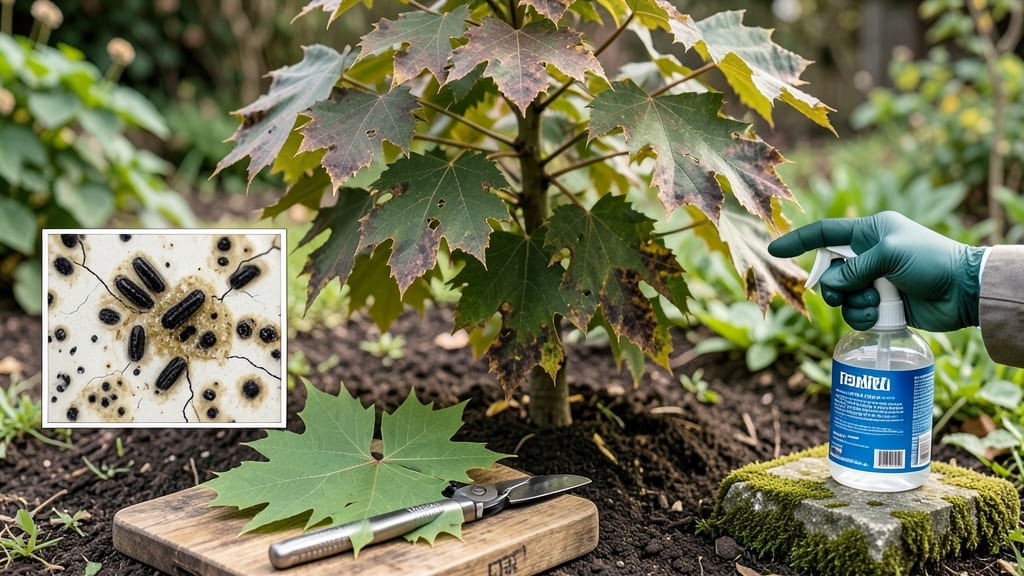
Anthracnose on maple trees turns vibrant green leaves into sad, spotted messes by June. 🌳 I’ve watched this fungal disease strip entire canopies bare in just a few weeks, but I’ve also learned how to stop it before it starts—without harsh chemicals.
The key is catching it early when those first dark spots appear along leaf edges.
Most people mistake anthracnose for environmental stress or insect damage, but the giveaway is those raised, sunken spots that turn brown and paper-thin. Heavy defoliation follows if left untreated, leaving your tree vulnerable to secondary pests.
The fungus thrives in wet springs, so if you’ve had recent rain paired with warm days, that’s your warning sign.
With the right organic treatments—copper fungicides, neem oil sprays, and proper pruning—you can save your tree’s health and keep those leaves lush. I’ll show you how to prune infected branches correctly (yes, there’s a right way) and when to apply treatments for maximum impact.
Your maple’s fall color show depends on it.
This works for sugar, red, and silver maples alike, and I’ll cover what to do if your tree is already half-bare. Early action makes all the difference—let’s get your maple back to its glory before next spring.
Fungal Pathogens Behind Anthracnose
Anthracnose in maple trees isn’t just a random attack—it’s the result of specific fungal invaders teaming up with the right environmental conditions. Understanding why these diseases take hold helps you spot vulnerabilities and stop outbreaks before they spread. Let’s break down the key culprits and their sneaky strategies.
The primary villain behind anthracnose is the fungus Apiognomonia veneta (for maple anthracnose) or related species like Gloeosporium. These fungi are obligate pathogens, meaning they only infect living tissue—they can’t survive long-term on dead wood or soil. Here’s how they strike:
- Dormant spores on leaves: Over winter, fungal spores cling to fallen leaves, buds, or even bark crevices. When spring arrives, these spores germinate in damp conditions, sending out tendrils to penetrate young, tender maple leaves.
- Wind and water spread: Rain splashes spores onto fresh foliage, while wind carries them from infected trees to healthy ones. Splash dispersal is especially effective during prolonged wet periods (think: 12+ hours of leaf wetness).
- Bud infection: Spores can also infect flower buds in late winter, lying dormant until buds swell. This ensures the fungus has a head start when leaves emerge.
💡 Pro Tip: Prune infected branches before spring bud break to remove overwintering spores. Dispose of debris far from your tree—not in mulch piles where spores can survive.
Fungal diseases like anthracnose don’t thrive in dry, sunny conditions—they love moisture and mild temperatures. Here’s how weather sets the stage:
| Factor | How It Helps the Fungus | Risky Conditions |
|---|---|---|
| Humidity | High humidity keeps leaf surfaces wet longer, giving spores direct access to stomata (leaf pores). | >70% humidity for 24+ hours |
| Rainfall | Heavy rain splashes spores onto leaves and washes away natural protective waxes. | 1+ inch of rain in a short period (e.g., thunderstorms). |
| Temperature | Cool, damp springs (50–75°F) are ideal for spore germination and fungal growth. | 59–68°F with leaf wetness (peak risk). |
| Slow-Drying Leaves | Tightly clustered or thick maple leaves trap moisture, creating microclimates perfect for fungal colonies. | Shady, low-ventilation areas (e.g., under dense canopies). |
🌡️ Key Insight: Anthracnose is most aggressive in regions with cool, wet springs (e.g., Pacific Northwest, Northeast U.S.). If your area fits this pattern, proactive fungicide sprays in early spring can disrupt the fungus’s timeline.
A healthy maple tree can resist anthracnose, but stress weakens its defenses. Common stressors that invite fungal attacks include:
- Nutrient deficiencies: Low nitrogen or potassium levels reduce leaf toughness and chlorophyll production, making leaves more susceptible to infection. Yellowing or purpling foliage? That’s a red flag.
- Competition for water: Drought stress or root damage (from construction, compacted soil, or poor drainage) forces trees to prioritize survival over defense. Weakened roots = weaker immune response.
- Physical damage: Hail, strong winds, or improper pruning create entry points for spores. Even insect damage (e.g., from Japanese beetles) can leave wounds.
- Over-fertilization: Too much nitrogen promotes lush, soft growth that fungi love to colonize. Slow-release, balanced fertilizers are safer.
✨ Prevention Hack: Mulch properly (2–4 inches of organic mulch, kept away from the trunk) to retain moisture without suffocating roots. This keeps your tree hydrated but not stressed.
By targeting these three core triggers—fungal spores, favorable weather, and tree stress—you can disrupt anthracnose’s lifecycle before it gains a foothold. Next, we’ll cover how to spot early signs so you can act fast.
Fixing Anthracnose in Maple Trees
Now that you’ve identified anthracnose in your maple tree, it’s time to act! This fungal disease thrives in wet conditions, but with the right organic strategies, you can restore your tree’s health and prevent future outbreaks.
Below, we’ve mapped out practical, step-by-step solutions tailored to the root causes—plus prevention tips to keep your maple tree lush and disease-free.
---
Cause: Fungal spores overwinter in fallen leaves and twigs, ready to reinfect in spring. Solution: - 🔥 Rake up all fallen leaves (especially under the tree) and dispose of them in a sealed trash bag or compost pile away from your yard. Anthracnose spores can survive for years in organic matter! - 🍳 Prune infected branches (look for blackened, crinkled, or early-dropping leaves). Cut 6 inches below the damage to remove hidden spores. Sterilize pruners with 70% rubbing alcohol or a 10% bleach solution (1 part bleach to 9 parts water) between cuts. - ⏰ Do this in late fall or early spring to break the disease cycle before spores spread.
💡 Pro Tip: If your tree is heavily infected, consider mulching with straw or pine needles instead of leaves to reduce moisture retention near the base.
---
Cause: Anthracnose loves damp, shaded conditions—perfect for fungal growth. Solution: - 👨🍳 Thin out dense branches to allow sunlight and air to circulate. Aim for an open canopy (about 30% of foliage removed). This also helps water dry faster on leaves. - 🥘 Adjust watering habits: Water deeply but infrequently (1–1.5 inches per week) and early in the day so leaves dry by evening. Avoid overhead sprinklers—use soaker hoses or drip irrigation instead. - 🌡️ Raise the soil level around the tree’s base by 2–3 inches with compost or bark mulch. This creates a drier root zone and prevents splashing spores onto the trunk.
✨ Prevention Hack: Install tree rings or drip irrigation to keep water away from the trunk and foliage.
---
Cause: Severe infections may require targeted treatments to stop spore production. Solution: - 🔪 Use these organic fungicides (apply in early spring before buds swell or after heavy rain): - Neem oil (1–2% solution): Spray every 7–10 days for 3–4 weeks. It disrupts fungal growth and has preventive properties. - Baking soda spray: Mix 1 tbsp baking soda + 1 tbsp horticultural oil + 1 tsp soap per gallon of water. Spray leaves underneath (where spores hide) every 2 weeks. - Copper fungicide (like Copper Soap): Apply once in early spring to create a protective barrier. Use sparingly—copper can harm soil microbes in excess. - 🎯 Time it right: Apply fungicides before rain or in the early morning to avoid washing off.
💡 Pro Tip: For prevention, spray dormant oil in late winter to smother overwintering spores.
---
Cause: Weak or stressed trees are more susceptible to anthracnose. Solution: - 📊 Feed with organic fertilizer: Use a balanced, slow-release fertilizer (like fish emulsion or compost) in early spring to boost the tree’s immune system. - 💪 Avoid over-fertilizing with nitrogen—this encourages soft, succulent growth that fungi love. Stick to a low-nitrogen, high-phosphorus blend (e.g., 5-10-10). - 🥗 Mulch properly: Spread 3–4 inches of wood chips or shredded bark around the base (keep it 6 inches away from the trunk). This regulates soil temperature and moisture.
🔥 Emergency Boost: If your tree is struggling, inject it with mycorrhizal fungi (available as a powder or liquid) to enhance root health and disease resistance.
---
Once you’ve treated anthracnose, keep it from coming back with these habits: - 🌧️ Monitor weather: Anthracnose flares up after prolonged rain or high humidity.
If forecasts predict wet conditions, reapply fungicides preventatively. - 🍂 Clean up annually: Remove and burn or bag all fallen leaves in autumn. - 🌿 Choose resistant varieties: If replanting, opt for anthracnose-resistant maple species like Acer rubrum (red maple) or Acer saccharinum (silver maple). - 👀 Inspect regularly: Check for silver undersides on leaves (a classic anthracnose sign) every 2 weeks during growing season.
--- Final Reminder: Anthracnose is manageable—don’t let it stress you out! With proactive care, your maple tree can bounce back stronger. 🌳💚 Start with one or two steps this season, and you’ll see a difference in just a few months.
Frequently asked questions about maple tree anthracnose
What do anthracnose spots look like on maple leaves?
Anthracnose starts with tiny, dark purple or brown spots along leaf edges that grow into raised, sunken patches with yellow halos. As the disease progresses, leaves develop paper-thin, crinkled areas that eventually turn brown and drop prematurely. The undersides often show silvery-gray fungal growth.
Can I still collect sap from sugar maples with anthracnose?
Yes, but only if the disease hasn't severely weakened the tree. Focus on healthy branches and avoid tapping into infected areas. Anthracnose reduces sap flow, so monitor your tree's overall health—if it's struggling, prioritize treatment over syrup production this season.
How long does it take for organic treatments to work?
Most organic fungicides like neem oil or baking soda show results in 7-14 days with consistent application. For severe cases, you may need 3-4 weeks of treatment. Start early in spring before new growth appears for best results. Remember, prevention is key—treating after heavy infection may take longer to fully recover.
Will my maple tree recover if it loses most of its leaves?
Young, healthy maples often recover fully, but mature trees may take 1-2 years to regrow foliage. The key is reducing stress—improve root health with proper watering and mulching, and avoid heavy pruning. If the tree shows new growth by mid-summer, it's likely on the mend.
Can anthracnose spread to other trees in my yard?
Yes, the fungus spreads easily through wind and rain splashes, particularly to other maples and related species like ash and oak. Remove infected leaves promptly and space out young trees by at least 20 feet for better airflow. Regularly inspect nearby trees during wet springs to catch early signs.