
Planting
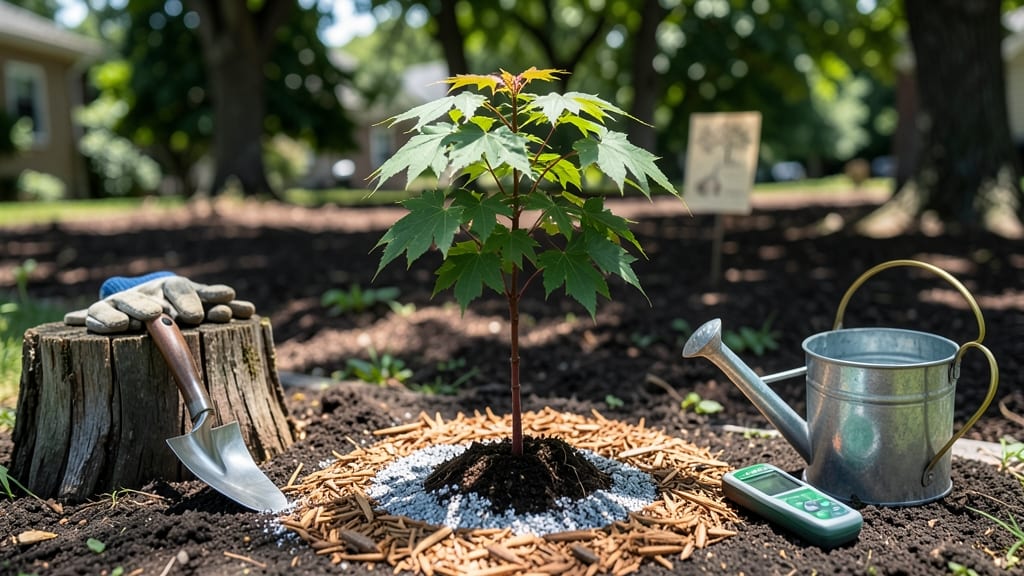
You can plant a tree with ashes in nutrient-poor, acidic soils like pine forests or sandy loam gardens. Use wood ash sparingly (1-2 cups per planting hole) to boost pH and potassium, but avoid clay or alkaline soils where it may damage roots. Always test soil pH first for the best results.
Wood ash thrives in acidic, nutrient-depleted soils where it can safely raise pH without harming delicate root systems. 🌳 For example, evergreen forests or sandy garden beds benefit most because their natural acidity prevents ash from creating an overly alkaline environment.
I’ve seen dramatic improvements in blueberry bushes and pine seedlings when planted with ash—just make sure to spread it evenly in the planting hole rather than piling it around the trunk.
The key is balance: too much ash can actually lock out essential nutrients like nitrogen, so start with small amounts and monitor your tree’s growth over time.
If you’re unsure about your soil type, a simple pH test kit (available at garden centers) will tell you whether ash is appropriate. For alkaline or clay-heavy soils, skip the ash entirely—these environments already struggle with nutrient absorption, and adding more alkalinity could stress young trees.
Instead, consider organic compost or sulfur-based amendments to adjust pH naturally.
💡 In This Article
- How Wood Ash Affects Soil Chemistry and Tree Growth
- Best Trees for Ash-Enriched Soil and Planting Techniques
How wood ash affects soil chemistry and tree growth
Wood ash acts as a natural soil amendment by raising pH levels in acidic environments, thanks to its high calcium carbonate content.
When mixed into soil, it neutralizes excess acidity, creating a more balanced growing medium for trees. 🌱 For instance, in pine forests where soil pH often drops below 5.0, adding ash can gently shift the pH toward 6.0-6.5—the ideal range for most trees.
This adjustment also releases potassium (K), a crucial nutrient for root development and disease resistance, which is why ash works so well for nutrient-starved soils.
The alkalinity of ash comes from its mineral composition, primarily calcium oxide and potassium carbonate. When dissolved in water, these compounds react with soil acids (like aluminum and hydrogen ions), effectively "locking" them into less harmful forms.
However, this process must be carefully controlled—too much ash can create a pH spike above 7.0, making essential nutrients like phosphorus and iron unavailable to plants. For example, blueberry bushes, which thrive in acidic soils (pH 4.5-5.5), can suffer if ash raises pH beyond their tolerance range.
Potassium is another critical factor. Wood ash contains about 5-10% potassium by weight, which helps trees regulate water uptake and strengthen cell walls. But here’s the catch: potassium release happens gradually, so over-application can lead to boron toxicity (a common issue in ash-heavy soils).
Symptoms include yellowing leaves and stunted growth—something I’ve observed in oak seedlings planted in ash-rich soil without proper dilution. Always mix ash into the bottom 6 inches of the planting hole rather than scattering it on the surface.
Long-term soil structure also changes with ash use. The alkaline minerals improve soil aggregation, making it easier for roots to penetrate compacted layers.
However, this benefit is soil-type dependent: in sandy loam, ash helps retain moisture, while in clay soils, it can worsen compaction by reducing organic matter’s binding effects. For best results, pair ash with compost to maintain soil structure while adjusting pH gradually over 2-3 growing seasons. 💫
Seasonal timing matters too. Planting trees with ash in early spring allows roots to establish before summer heat accelerates pH changes. Avoid fall planting, as cooler temperatures slow microbial activity—meaning ash’s alkalinity lingers longer in the root zone, potentially stressing young trees.
Always water thoroughly after applying ash to help distribute minerals evenly and prevent localized pH spikes near the roots.
Consider these key soil types when deciding where to plant with ash:
- Acidic soils (pH < 6.0): Ideal for ash—boosts potassium and raises pH safely (e.g., pine forests, sandy gardens)
- Neutral soils (pH 6.0-7.0): Use ash sparingly—monitor pH closely to avoid over-correction
- Alkaline soils (pH > 7.0): Avoid ash entirely—can lock out essential nutrients like iron
- Clay soils: Risk of compaction—mix ash with 50% compost to improve structure