
Pests and Diseases
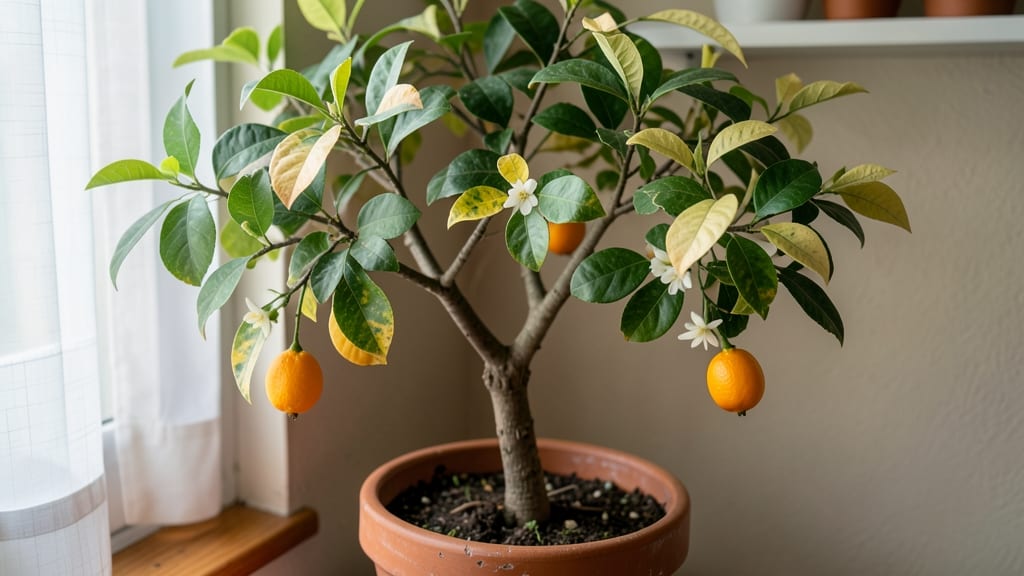
Your mandarin tree’s yellow leaves might be screaming "fungal spot" more than you think. 🌿 I’ve seen this exact pattern—bright yellow patches with darker rings—plague trees that looked healthy one week and stressed the next. The good news? Catching it early means you can save your tree without harsh chemicals.
Fungal spots thrive when humidity lingers and airflow stalls—think thick canopies or crowded pots. The yellowing starts between veins, then spreads like a stubborn stain. My first mistake was waiting too long; now I check leaves weekly during damp seasons.
A quick spray of neem oil or copper fungicide (mixed right) stops it in its tracks.
Within two weeks of proper care, new growth stays green and glossy. You’ll notice fewer spots, thicker leaves, and that sweet citrus scent returning. The key is acting fast—fungus spreads faster than you’d expect, but with the right mix of pruning and prevention, your tree bounces back.
Works for both container and in-ground trees, and the remedies are gentle enough for edible fruit. Here’s how to diagnose and fix it before it spreads further—no guesswork involved.
Root Causes Behind Leaf Discoloration
Yellowing leaves on your mandarin tree can be alarming, but understanding the underlying causes helps you address the issue effectively. Below are the most common reasons why your tree’s foliage may be turning yellow, along with clear scientific explanations and actionable insights.
Mandarin trees thrive when their soil is rich in essential nutrients, but deficiencies—especially in nitrogen, iron, or magnesium—can trigger yellowing leaves. Here’s how each deficiency manifests and what to do:
- 🔹 Nitrogen Deficiency (General Yellowing) Nitrogen is vital for leaf production and overall growth.
When lacking, older leaves turn pale yellow or yellow-green first, progressing to younger leaves if untreated. Why it happens: Poor soil quality, overwatering (which leaches nutrients), or compacted soil restricts root absorption. Actionable fix: - Conduct a soil test to confirm nitrogen levels. - Apply a balanced organic fertilizer (e.g., compost, fish emulsion, or blood meal) in early spring. - Mulch around the base to retain moisture and nutrients.
- 🔹 Iron Chlorosis (Yellow Between Veins) Iron deficiency causes leaves to develop bright yellow areas between veins while veins remain green.
This is common in alkaline or calcareous soils, where iron becomes unavailable to roots. Why it happens: High pH (>7.0) locks out iron, even if it’s present in the soil. Actionable fix: - Lower soil pH by adding elemental sulfur or peat moss (aim for pH 6.0–6.5). - Use chelated iron supplements (e.g., iron sulfate or iron EDTA) applied to the soil or as a foliar spray. - Avoid over-fertilizing with lime, which worsens alkalinity.
- 🔹 Magnesium Deficiency (Interveinal Yellowing + Brown Edges) Older leaves develop yellow patches between veins, often with brown or dead edges.
Magnesium is crucial for chlorophyll production. Why it happens: Overwatering, excessive potassium fertilization, or poor soil structure. Actionable fix: - Apply Epsom salt (magnesium sulfate) to the soil (1 tbsp per gallon of water, every 4–6 weeks). - Work compost or aged manure into the topsoil to replenish magnesium naturally.
Yellow leaves can signal root stress from excess moisture, which deprives roots of oxygen and promotes fungal growth.
Look for these clues: - 🔹 Yellowing leaves with wilting (despite damp soil). - 🔹 Mushy roots when inspected (a sign of rot). - 🔹 Soil that stays soggy for days after watering.
Why it happens:
- Compacted or clay-heavy soil traps water, suffocating roots.
- Overzealous watering (especially in winter) without allowing the soil to dry slightly.
- Lack of drainage in containers or planting beds.
Actionable fix:
- Improve drainage by amending soil with perlite, sand, or coconut coir.
- Water deeply but less frequently—only when the top 2–3 inches of soil are dry.
- Raise container-grown trees on pot feet to prevent water pooling.
- If root rot is suspected, trim affected roots and repot in fresh, sterile soil.
Mandarin trees are subtropical but can still suffer from extreme temperatures or sudden climate shifts.
Yellowing often appears as: - 🔹 Scorched yellow or brown patches (sunburn from intense afternoon sun). - 🔹 Uniform yellowing after a hard freeze or late frost. - 🔹 Drooping, crispy leaves in prolonged heatwaves.
Why it happens:
- Transplant shock from moving a tree without acclimating it to new light conditions.
- Low humidity causing leaf edges to dry out and yellow.
- Frost damage disrupting cell structure, leading to necrosis.
Actionable fix:
- Provide afternoon shade (especially in hot climates) with lightweight shade cloth (30–50%).
- Mulch heavily (3–4 inches) to protect roots from temperature swings.
- Avoid fertilizing during extreme heat—focus on hydration instead.
- Protect from frost with burlap wraps or a frost cloth in winter.
Yellowing leaves can be a symptom of pathogens like citrus greening (HLB), anthracnose, or leaf spot diseases.
Key indicators: - 🔹 Yellowing paired with black spots (fungal leaf spot). - 🔹 Stunted growth + yellowing new leaves (bacterial infections). - 🔹 Sticky residue (honeydew) on leaves (sign of sap-sucking pests like aphids, which spread disease).
Why it happens:
- Poor air circulation (dense foliage or overcrowded trees).
- Wet leaves from overhead watering, fostering fungal spores.
- Weakened tree from prior stress (drought, poor soil).
Actionable fix:
- Prune for airflow—remove dense branches and thin out foliage.
- Apply copper fungicide (preventative spray) or neem oil (natural antifungal).
- Remove and destroy infected leaves to prevent spread.
- Control pests (e.g., aphids) with soapy water sprays or beneficial insects like ladybugs.
Pro Tip 💡: Before treating, take a close look at the pattern of yellowing—is it uniform, between veins, or paired with spots? This narrows down the cause and saves you from trial-and-error fixes!
Fixing Fungal Spots Naturally
Yellowing leaves on your mandarin tree can be a sign of fungal infections like citrus leaf spot or melanose, but the good news is that organic remedies can help restore your tree’s health.
Below are targeted solutions based on the most common causes—fungal diseases—and practical steps to treat and prevent future outbreaks.
If your mandarin tree’s yellow leaves are accompanied by dark spots, crusty lesions, or leaf drop, a fungal infection is likely the culprit. Here’s how to tackle it:
🔥 Step 1: Prune Infected Leaves & Branches
- 👨🍳 Remove affected foliage using clean, sharp pruners to prevent the fungus from spreading.
- 🔪 Sterilize tools with rubbing alcohol (70% or higher) before and after pruning to avoid cross-contamination.
- ⏰ Do this in the early morning when humidity is lower, reducing the risk of spore dispersal.
🍳 Step 2: Apply Organic Fungicidal Sprays
Use copper-based sprays (like copper sulfate or copper hydroxide) or neem oil—both are effective against fungal diseases. Here’s how:
| Remedy | Mix Ratio | Application Tips |
|---|---|---|
| Copper Sulfate | 1 tsp per 1 gallon of water | Spray every 7–10 days until new growth appears. Avoid spraying in direct sunlight. |
| Neem Oil | 1 tbsp neem oil + 1 tsp mild soap per 1 gallon water | Apply at dusk to avoid leaf burn. Reapply after rain. |
| Baking Soda Spray | 1 tbsp baking soda + 1 tsp oil + 1 gallon water | Use as a preventative spray (not a cure) on dry leaves. |
🌡️ Step 3: Improve Air Circulation & Reduce Moisture
Fungal spores thrive in humid, stagnant conditions.
To create a less hospitable environment: - 💡 Thin out dense branches to allow sunlight and airflow. - ✨ Space trees properly (6–10 feet apart) to prevent overcrowding. - 🎯 Water at the base (avoid overhead sprinkling) and water early in the day so foliage dries quickly.
Once your mandarin tree recovers, take these long-term preventive measures to keep fungal diseases at bay:
💡 Pro Tip: Strengthen the Tree’s Immunity
- 🍎 Fertilize with compost or organic citrus fertilizer (high in nitrogen) to promote healthy growth.
- 🌿 Mulch around the base with wood chips or straw to regulate soil moisture and temperature.
- 🔥 Avoid overwatering—yellow leaves can also signal root rot if the soil stays soggy.
🎯 Seasonal Maintenance Checklist
| Season | Action |
|---|---|
| Spring | Apply a preventative fungicide spray before new growth starts. |
| Summer | Monitor for pests (like aphids) that weaken trees, making them susceptible to fungi. |
| Fall | Clean up fallen leaves and debris to remove fungal spores. |
| Winter | Prune lightly to improve airflow and reduce hiding spots for fungi. |
✨ Bonus: Companion Planting for Natural Defense
Plant marigolds, garlic, or basil near your mandarin tree—they repel fungal spores and deter pests naturally.
By acting quickly and maintaining proper care, your mandarin tree can bounce back from fungal leaf spot and thrive for years to come! 🌿🍊
Frequently asked questions
Why do mandarin tree leaves turn yellow between the veins first?
This classic symptom usually signals iron deficiency (chlorosis), common in alkaline soils where iron becomes unavailable to roots. The veins stay green because they transport iron directly, while surrounding tissue starves. Test your soil pH—aim for 6.0–6.5—and apply chelated iron or peat moss to restore balance.
Can overwatering cause yellow leaves on a mandarin tree?
Root rot from soggy soil blocks oxygen, causing leaves to yellow and wilt despite damp conditions. Check for mushy roots—if present, trim affected areas, repot in fresh well-draining mix, and water only when the top 2–3 inches of soil are dry.
What’s the difference between fungal spots and nutrient deficiencies?
Fungal spots show as black/yellow rings or crusty lesions on leaves, while deficiencies cause uniform yellowing between veins. Examine under leaves for fungal growth—if present, prune infected areas and spray with copper fungicide or neem oil.
Will Epsom salt fix yellow leaves caused by magnesium deficiency?
Yes! Dissolve 1 tablespoon of Epsom salt in 1 gallon of water and apply to soil every 4–6 weeks during growing season. For severe cases, spray diluted solution on leaves too. Magnesium helps chlorophyll production—you’ll see new growth green up within 2–3 weeks.
How do I know if my mandarin tree’s yellow leaves are from pests?
Look for sticky residue (honeydew) on leaves or undersides—this signals sap-sucking pests like aphids or scale. Wipe leaves with soapy water or introduce ladybugs; severe infestations may need horticultural oil sprays.