
How To
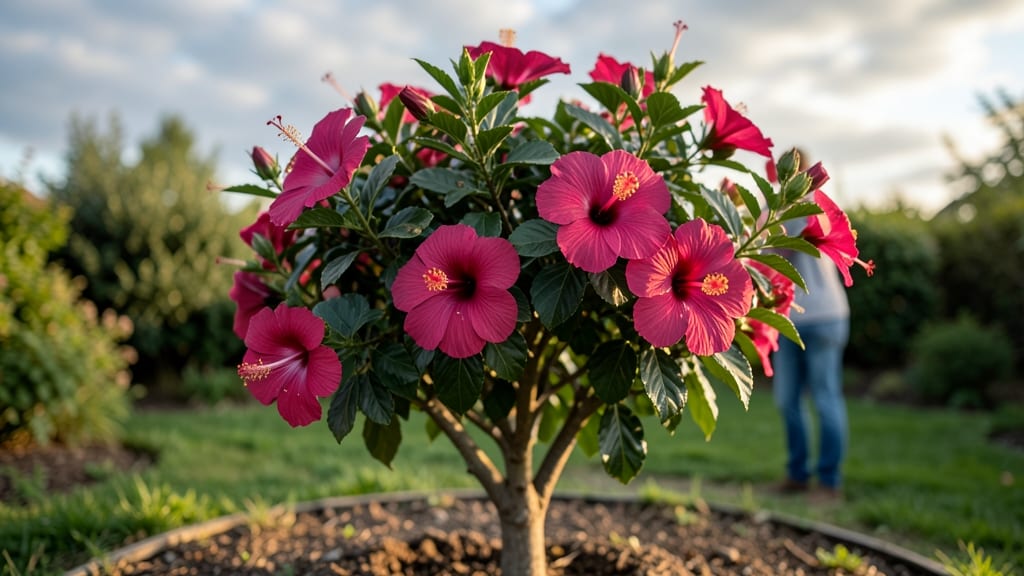
A hibiscus tree grows anywhere from 6 to 20 feet tall, depending on the variety and growing conditions—so your yard’s size and vision will determine which type is right for you.
Picture this: a tropical vibe in your backyard, with bold blooms and lush foliage, but you’re not sure if a towering hibiscus will fit. Some varieties stay small enough for containers, while others grow like small trees, so choosing the right one matters.
Tropical hibiscus (like Hibiscus rosa-sinensis) can reach 10 to 15 feet in ideal conditions, while hardier types, such as Rose-of-Sharon, often cap out around 8 to 12 feet. Whether you want a specimen plant or a privacy screen, knowing the height range helps you plan.
In this guide, I’ll break down exact heights by variety, how to control growth with pruning, and which types grow fastest—so you can pick the perfect hibiscus for your space.


Hibiscus tree height by variety: exact growth ranges for popular types
Choosing a hibiscus tree for your garden starts with understanding its mature height—some varieties grow as small shrubs, while others become towering focal points. The Hibiscus rosa-sinensis (tropical hibiscus) often reaches 10–15 feet tall, while Hibiscus syriacus (Rose-of-Sharon) can climb to 12–20 feet with proper care.
Knowing these ranges helps you plan spacing, pruning, and even container sizes for patio gardening.
Your yard’s climate and pruning habits also influence height. In USDA Zones 8–11, tropical hibiscus grows aggressively, while hardy varieties like Hibiscus moscheutos (swamp hibiscus) thrive in cooler zones but may max out at 8–12 feet.
Let’s break down the exact growth expectations for popular types so you can pick the perfect fit for your space.
| Variety | Mature Height | Spread | Growth Rate | Best For |
|---|---|---|---|---|
| Hibiscus rosa-sinensis (Tropical) | 10–15 ft | 6–10 ft | 2–3 ft/year | Containers, tropical gardens, privacy screens |
| Hibiscus syriacus (Rose-of-Sharon) | 12–20 ft | 8–12 ft | 1–2 ft/year | Specimen trees, hedges, urban landscapes |
| Hibiscus moscheutos (Swamp Hibiscus) | 8–12 ft | 6–8 ft | 1–2 ft/year | Ponds, wetland gardens, borders |
| Hibiscus coccineus (Scarlet Hibiscus) | 6–10 ft | 4–6 ft | 1–1.5 ft/year | Wildlife gardens, cottage-style yards |
| Dwarf Varieties (e.g., 'Pride of Barbados') | 3–6 ft | 3–5 ft | 1 ft/year | Containers, patios, small gardens |
The Hibiscus rosa-sinensis is a top pick for tropical gardens because it grows 3–5 feet per year in ideal conditions. If you’re short on space, opt for dwarf varieties like 'Pride of Barbados', which max out at 3–6 feet—perfect for patio containers or small yards.
Just remember, even dwarf types need 6+ hours of sunlight daily to thrive.
For privacy screens or specimen plants, Hibiscus syriacus is unbeatable, often reaching 15–20 feet in just 5–7 years. Plant it 10–15 feet from fences or structures to avoid overgrowth.
In cooler climates (USDA Zones 5–7), this variety may stay slightly shorter but still delivers stunning blooms from summer to fall.
If you love moisture-loving plants, Hibiscus moscheutos thrives near ponds or rain gardens. Its 8–12 foot height and 6-foot spread make it ideal for naturalized borders.
Unlike tropical types, it’s cold-hardy to Zone 4, so it’s a great choice for northern gardens. Just ensure it has well-draining soil to prevent root rot.
Pruning plays a huge role in controlling height. Tropical hibiscus left unpruned can become unmanageable, while regular trimming keeps it compact and bushy. For Rose-of-Sharon, prune in late winter to shape it and encourage new flowering branches. Always use sterilized shears to avoid disease spread.
Container gardening changes the game for height control. A 5-gallon pot limits Hibiscus rosa-sinensis to 4–6 feet, while a 15-gallon container allows 6–8 feet of growth.
Use fast-draining mix and fertilize monthly during the growing season to support compact growth. Just be prepared to repot every 2–3 years as roots outgrow the space.
Your local climate also affects height. In hot, humid zones (like Florida or Hawaii), hibiscus grows faster and taller, while in cooler regions (like Zone 6), growth may slow to 1–2 feet per year.
If you’re in a transition zone, choose hardy varieties like 'Annabelle' or 'Diana' for reliable performance.
How to control hibiscus tree height: pruning tips for compact growth
Keeping your hibiscus tree at your desired height isn’t just about aesthetics—it’s about maintaining its health and encouraging those stunning tropical blooms. Without proper pruning, even dwarf varieties can outgrow their space, while larger types may become unmanageable.
The key is understanding when and how to prune, whether you're growing hibiscus in the ground or in containers.
Most hibiscus varieties grow 10–20 feet tall if left unchecked, but with strategic pruning, you can easily shape them to stay between 6–12 feet. The best time to prune is late winter or early spring, just before new growth begins.
This timing ensures you’re not cutting back the current season’s flower buds, which form on new wood. For container-grown hibiscus, pruning can be done more frequently to maintain compact size.
- Step 1: Gather Tools – Use sterilized pruning shears, gloves, and disinfectant to prevent disease spread. A ladder may be needed for taller varieties.
- Step 2: Remove Dead or Weak Branches – Start by cutting back any dead wood, diseased branches, or those growing inward. Make cuts at a 45-degree angle just above a leaf node.
- Step 3: Shape the Canopy – To encourage bushier growth, trim back the tallest branches by one-third their length. Focus on the outer edges to maintain an open center.
- Step 4: Prune for Height Control – For dwarf varieties, cut back the topmost growth to promote lateral branching. For standard hibiscus, remove the uppermost 12–24 inches to cap height.
- Step 5: Lightly Prune After Flowering – In late summer, give a light trim to remove spent blooms and encourage new flower buds for next season.
- Step 6: Clean Up – Remove all pruned debris from the area and sterilize tools again to prevent bacterial or fungal infections.
If you’re growing hibiscus in containers, pruning becomes even more critical since root space is limited. Prune container hibiscus more aggressively in early spring to maintain a compact shape and prevent the plant from becoming top-heavy.
Always use well-draining soil and ensure the container has drainage holes to support healthy growth after pruning.
For hardy hibiscus varieties like Hibiscus syriacus (Rose-of-Sharon), pruning can be done more heavily in late winter since these types are more resilient. In contrast, tropical hibiscus (Hibiscus rosa-sinensis) should be pruned lightly to avoid shocking the plant, as they bloom on new growth.
Remember, the goal is to balance height control with flower production. Over-pruning can reduce blooms, while under-pruning leads to leggy, unruly growth. With the right approach, your hibiscus will stay manageable while still putting on a spectacular floral display all season long.
Now that you know the basics, grab your shears and get ready to shape your hibiscus into the perfect tropical centerpiece for your garden! ✂️🌺