
Pruning
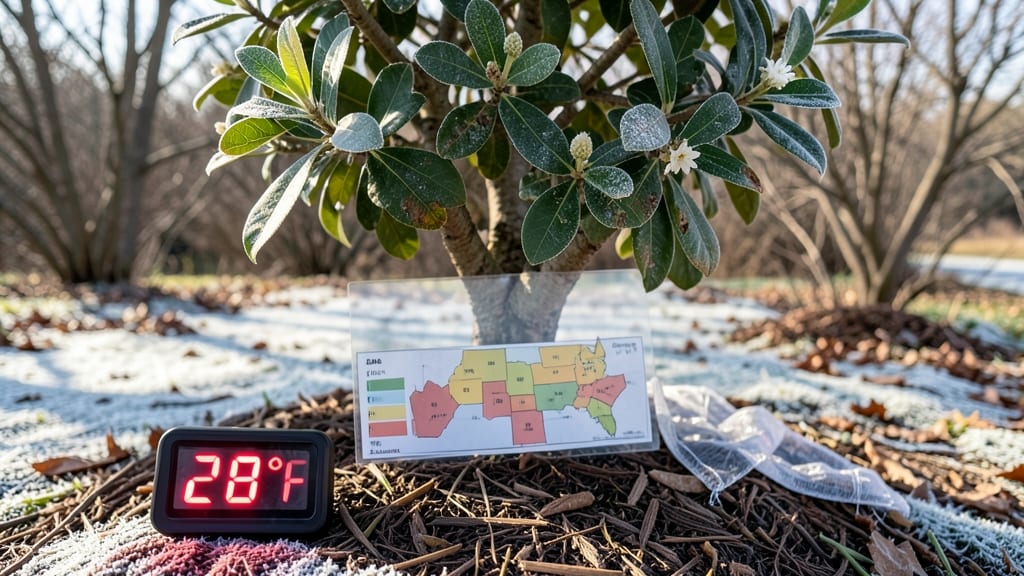
Guava tree cold hardiness lets them survive in USDA Zones 9-11, with brief cold snaps down to 28°F (-2°C) when properly protected. Young trees, tender leaves, and fruit are most vulnerable to frost damage, so mulching, windbreaks, or covering during winter is essential.
Understanding guava tree cold hardiness means recognizing how these tropical plants handle temperature drops differently at each growth stage. 🌡️ While mature trees can tolerate light frosts, their roots and young shoots remain sensitive until fully established.
The key to winter survival lies in insulating the soil with thick mulch—at least 4-6 inches—and wrapping the trunk with bubble wrap or frost cloth.
I've seen firsthand how even a 20°F (-7°C) dip can blacken leaves if protection isn't in place, but with proper prep, trees often bounce back once temperatures rise.
Timing matters just as much as technique. Pruning back dead branches in late winter (after the last frost) helps redirect energy to root growth, while avoiding heavy pruning in fall can prevent stress. For extreme cold events, consider temporary row covers or even moving potted guavas indoors.
The goal is to mimic their natural tropical environment—moisture retention and wind protection are just as critical as temperature control.
💡 In This Article
- USDA Zones for Guava Trees and Cold Temperature Thresholds
- Protecting Guava Trees from Frost: Step-by-Step Winter Care Guide
USDA zones for guava trees and cold temperature thresholds
Guava trees (Psidium guajava) originate from tropical regions where temperatures rarely drop below 50°F (10°C), which explains why they're classified as tender perennials. The USDA Zone system groups areas by average minimum winter temperatures, and guavas thrive in Zones 9-11 where winters stay above 20°F (-7°C).
However, their cold hardiness varies dramatically by tree maturity: young trees (under 3 years) can suffer damage at 32°F (0°C), while established specimens may tolerate brief dips to 28°F (-2°C)—the threshold mentioned in the quick answer.
The science behind this sensitivity lies in cellular damage. Plant cells contain water that expands when frozen, rupturing membranes at temperatures below 32°F (0°C).
Guava leaves, being thin and non-woody, freeze more easily than the thicker bark of mature trunks. 🌱 What's fascinating is how dormancy affects resilience: evergreen guavas don't enter true dormancy like deciduous trees, so their leaves remain active and vulnerable year-round.
This is why even light frosts can cause leaf blackening or fruit splitting—a common issue in Zone 8 gardens where winter temperatures hover around 15-20°F (-9 to -7°C).
Root systems play a crucial role too. Guava roots extend shallowly, making them susceptible to soil freezing. In Zone 9, where winters might reach 25°F (-4°C), proper mulching (with 4-6 inches of organic matter) can raise soil temperatures by 5-10°F by insulating against radiant heat loss.
This explains why gardeners in marginal zones often see survival rates improve dramatically with winter preparation—sometimes allowing trees to endure 2-3°F colder than their official limits.
Consider this comparison: A 5-year-old guava tree in Zone 10 (average 30°F (-1°C) winters) might survive a 28°F (-2°C) frost with minimal protection, while a 1-year-old sapling in the same zone would likely suffer leaf burn.
The difference comes down to the tree's ability to harden off—developing thicker bark and deeper roots over time. 🌿 This biological adaptation explains why many growers recommend waiting until trees are at least 3 years old before pushing their cold limits.
What most people overlook is how wind exacerbates cold damage. Even at 30°F (-1°C), a 15 mph wind can make it feel like 18°F (-8°C) due to wind chill—enough to cause frostbite-like damage to exposed leaves.
This is why creating windbreaks (using burlap or evergreen shrubs) becomes essential in exposed locations. The combination of temperature, wind, and humidity creates what botanists call the "frost risk index," which explains why some Zone 9 gardens see frost damage while others don't—even with identical minimum temperatures.
For those pushing guavas into Zone 8, where winters regularly dip below 20°F (-7°C), the key strategy becomes creating microclimates. Raised beds with 8+ inches of mulch can maintain soil temps 10°F warmer than ambient air, while container-growing allows moving trees to sheltered porches during cold snaps.
The trade-off? Containerized guavas require more frequent watering and fertilizer adjustments, but they often outlast their in-ground counterparts in marginal zones.