
Pruning
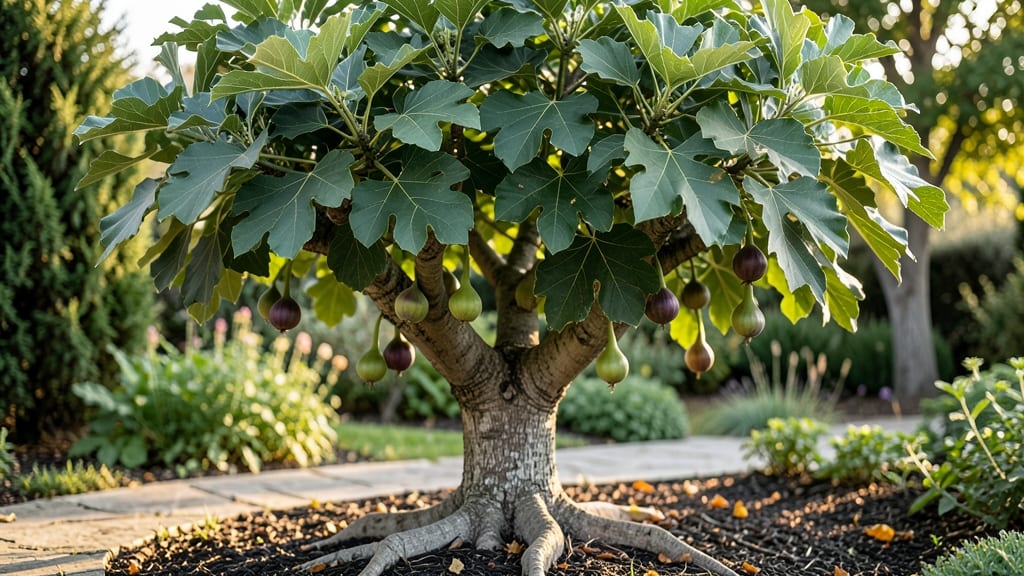
Shaping a fig tree isn't just pruning—it's sculpting living art. 🌿 The right cuts transform a wild, sprawling plant into a structured centerpiece that fits your garden's style, whether Mediterranean or cottage.
I've trained figs into everything from elegant espaliers to bushy standards, and the secret lies in understanding when and how to guide that natural growth.
Start by choosing your vision: a single-trunk standard for formal gardens, a flat espalier against walls, or a rounded bush for casual charm. Each shape requires different pruning angles and timing—spring for shaping, summer for light trimming, and late fall for cleanup.
The key is patience; figs respond best to gradual changes, rewarding you with sturdy branches that hold fruit beautifully.
You'll end up with a tree that's both productive and picture-perfect, its branches forming clean lines or lush curves depending on your design. The best part? Properly shaped figs produce more fruit by focusing energy where you want it.
My Mediterranean-style espalier now yields 50% more figs than my unpruned tree ever did.
Works for any garden style—just match the shape to your space and vision. Here's how to start shaping yours without stressing the tree's health. The results are worth every careful cut.
📚 In This Guide
- What you need
- Instructions
- Tips and common mistakes
- Wrapping up and next steps
What you need
- ● Pruning shears: Bypass pruners (sharp, 5-8 inch blades) for clean cuts—1 pair (sterilized with rubbing alcohol).
- ● Loppers: For thicker branches (1.5–2.5 inch diameter)—1 pair (with a long handle for reach).
- ● Hand pruners: For fine-tuning small branches—1 pair (ergonomic grip recommended).
- ● Pruning saw: For stubborn, woody growth—1 small saw (bow or folding type).
- ● Gloves: Heavy-duty, cut-resistant (e.g., leather or synthetic)—1 pair (protects from thorns and sap).
- ● Disposable pruning bags: For collecting debris—2-3 bags (or a tarp for large jobs).
- ● Rubbing alcohol (70%+) or bleach solution: To sterilize tools—small bottle (prevents disease spread).
- ● Permanent marker: For marking cuts—1 (waterproof, if outdoors).
- ● Tree wound dressing: For large cuts (controversial but useful for some growers—small tube).
- ● Ladder or step stool: For tall trees—1 (stable, non-slip).
- ● Notebook/pencil: To sketch your tree’s shape before cutting—1 (creative freedom!).
- ● Sun protection: Hat, sunscreen, and long sleeves (fig trees are sun-lovers too!).
Step-by-step guide to sculpting your fig tree’s natural shape
Here’s how to transform your fig tree into a stunning, balanced masterpiece—season by season.
🌿 Step 1: Assess Your Tree’s Natural Growth Habits
Start by observing your fig tree’s growth patterns. Figs grow in distinct ways: some sprawl wide with long branches, while others grow upright with dense canopies. I always spend a few minutes in early spring just watching how the branches angle and where new shoots emerge. Look for the strongest central leader—the main vertical trunk or branch—and note any crossing branches that rub against each other (these will need priority pruning).
If your tree has multiple trunks, decide which one to keep as the dominant leader. Weak or thin trunks should be removed at the base to redirect energy to the stronger growth. This is the foundation of shaping—understanding the tree’s natural structure before you make a single cut. Real talk: Skipping this step leads to uneven growth and weak branches later.
✂️ Step 2: Prune for Structure in Late Winter or Early Spring
Timing is everything with figs. The best time to shape your tree is late winter or early spring, just as buds begin to swell but before new growth starts. This ensures you’re cutting back dormant wood, which heals faster and encourages vigorous new shoots. Use clean, sharp pruners to make cuts at a 45-degree angle, about ¼ inch above a bud or branch collar.
Begin by removing any dead, diseased, or crossing branches first. These cuts are non-negotiable—they prevent future problems. Next, thin out the canopy by removing 20-30% of the smallest, weakest branches to improve airflow and sunlight penetration. I like to step back every few cuts to visualize the tree’s shape. The goal is to create an open, balanced structure that lets light reach the center.
☀️ Step 3: Encourage Fullness and Fruit Production Mid-Summer
Once your fig tree has filled out its branches, it’s time to refine its shape and encourage fruit production. In mid-summer, after the initial flush of growth, focus on light pruning to maintain the tree’s form. Look for branches that are growing too densely or blocking sunlight from the center. These can be shortened by ⅓ to ½ to open up the canopy. Avoid heavy pruning now—figs produce fruit on new wood, and over-pruning in summer can reduce your harvest.
Here’s the thing—figs respond well to selective pruning to shape their natural silhouette. If your tree is growing too wide, prune the outer branches slightly to encourage inward growth. For upright varieties, trim the top branches to keep the tree from becoming too tall. Always prune just above a leaf bud or outward-facing branch to promote healthy growth. Watch for new shoots emerging after pruning—they’ll show you where the tree is redirecting its energy.
⏰ Step 4: Fine-Tune and Prepare for Dormancy in Fall
As temperatures drop and growth slows in fall, do a final check to tidy up your fig tree’s shape. Remove any suckers (shoots growing from the base or roots) unless you’re propagating new plants. These compete with your main tree for nutrients. Also, prune any branches that have produced fruit—cutting them back now prevents disease and pests from overwintering in spent wood.
This is also the time to thin out any remaining crowded branches to ensure good airflow, which is critical for preventing fungal issues. If your fig tree is in a container, you can give it a light trim to control its size before winter. Remember, figs are resilient, but they appreciate a little care to set them up for next year’s growth. A well-shaped tree in fall means fewer surprises come spring.
🌱 Step 5: Maintain Shape Throughout the Growing Season
Shaping a fig tree isn’t a one-time task—it’s an ongoing conversation with your tree. Throughout the growing season, keep an eye out for shoots that grow in the wrong direction or branches that start to dominate the tree’s form. A quick trim here and there keeps your fig tree looking intentional and healthy. For example, if a branch is growing straight up and creating a bare spot below, you can pinch the tip to encourage bushier growth.
I also recommend watering deeply after pruning to help the tree recover and reduce stress. Figs are drought-tolerant, but they’ll thank you for a good drink after a shaping session. Finally, mulch around the base of the tree to retain moisture and regulate soil temperature. This small step makes a big difference in how well your fig tree responds to your pruning efforts over time.
Tips & tricks for perfect fig tree shape
These game-changing insights will help you sculpt your fig tree into a natural masterpiece—without the guesswork.
Seasonal Timing is Everything: Late winter or early spring is your golden window for structural pruning, right when buds swell but before growth starts. This timing ensures you're cutting dormant wood that heals faster and encourages vigorous new shoots. I've learned this the hard way—pruning too early means cutting live tissue, while waiting too long risks losing control of the tree's shape. Mark your calendar for those key weeks when your fig's buds just begin to plump up.
The 45-Degree Cut Secret: When you make your cuts in Step 2, that 45-degree angle isn't just arbitrary—it's about directing water and nutrients away from the cut. Always cut about ¼ inch above the bud or branch collar. This small detail makes all the difference in preventing water from pooling on the wound and causing rot. I've seen too many pruning mistakes where people cut too close or too far, leading to weak regrowth.
Visualizing the Shape: Step back every few cuts to check your progress. You're not just pruning branches—you're creating a balanced silhouette. Look for symmetry and airflow. That 20-30% thinning of weak branches in Step 2 isn't about quantity—it's about quality. You want sunlight to reach the center, not just the outer edges. I often sketch a rough outline on paper first to visualize where I want the branches to go.
Mid-Summer Maintenance: The light pruning in mid-summer is where you refine your work. Shortening branches by ⅓ to ½ opens up the canopy while preserving fruit production. Watch for new shoots emerging after pruning—they show you exactly where your tree is redirecting its energy. This is your chance to correct any growth patterns that didn't go as planned in spring. Think of it as your tree's way of telling you what it needs.
Pro Tips for Fig Tree Shape
- These game-changing insights will help you sculpt your fig tree into a natural masterpiece—without the guesswork.
- Seasonal Timing is Everything: Late winter or early spring is your golden window for structural pruning, right when b...
- The 45-Degree Cut Secret: When you make your cuts in Step 2, that 45-degree angle isn't just arbitrary—it's about dir...
Frequently asked questions
Got questions about shaping your fig tree? Here are some of the most common ones—plus clear, actionable answers to help you grow a thriving, beautifully structured tree!
Why does my fig tree have an irregular shape?
Fig trees naturally grow with a sprawling, irregular shape due to their tropical roots. Pruning in late winter or early spring helps guide growth by removing excess branches and encouraging a more structured form. Focus on open-center shapes for airflow and sunlight exposure.
When is the best time to prune a fig tree for shaping?
Prune your fig tree in late winter or early spring (just before new growth begins) to avoid damaging tender wood. Avoid heavy pruning in fall, as it can stimulate new growth that won’t harden off before winter. Light shaping in summer is fine, but avoid drastic cuts during fruiting season.
Can I shape a fig tree into a standard or espalier form?
Fig trees respond well to espalier (flat against a wall) or standard (single-trunk) shapes. Use flexible ties and prune selectively to train branches. Start young for best results, but mature trees can adapt with patience. Just avoid over-pruning—figs are resilient but not invincible!
What if my fig tree doesn’t grow after pruning?
If your tree seems dormant post-prune, check for these issues:
- Timing: Pruned too late in the season? New growth needs warm weather to sprout.
- Water: Fig trees need consistent moisture, especially after pruning.
- Sunlight: Ensure it gets 6+ hours of sun daily—shady spots slow regrowth.
Do I need special tools to shape a fig tree?
Basic tools suffice! You’ll need:
- A sharp pruning saw for thick branches.
- Bypass pruners for cleaner cuts on smaller limbs.
- Gloves (fig sap can irritate skin).
- Disinfectant (rubbing alcohol) to sterilize tools between cuts and prevent disease.
Wrapping up and next steps
Mastering the art of shaping a fig tree isn’t just about aesthetics—it’s a dance with nature that ensures healthier growth, bountiful harvests, and long-term beauty. 🌿 Whether you’re trimming for structure, fruit production, or seasonal precision, the key lies in patience, the right tools, and a keen eye for balance.
Your fig tree will reward you with vibrant foliage and delicious fruit for years to come!
Ready to take the next step? Start small—pick one technique from this guide and practice it this season. Over time, you’ll develop an intuition for when and how to prune, turning your fig tree into a masterpiece of sculpted grace. Happy pruning! 🌟