
Pruning
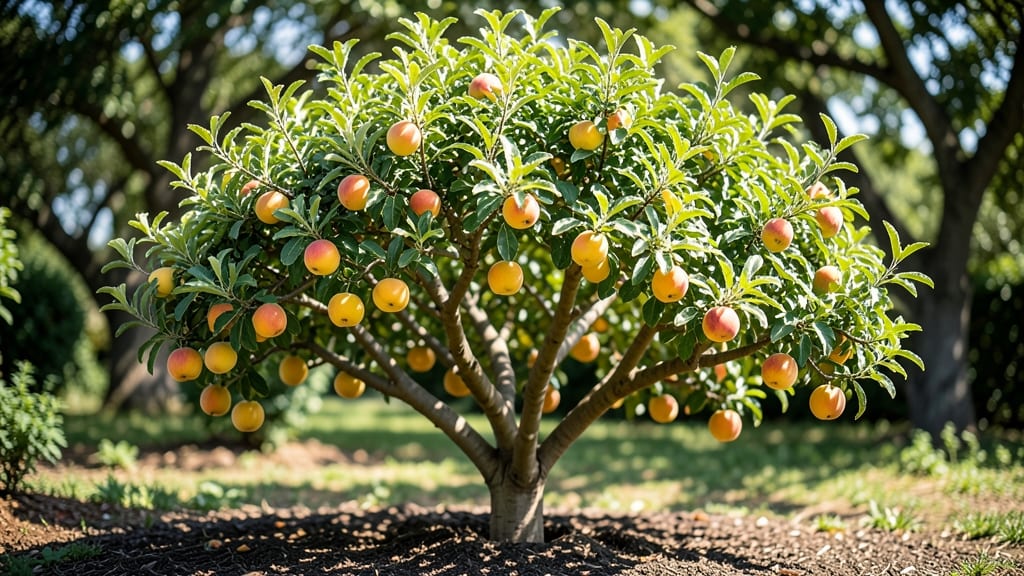
To maintain year-round fruit production in Family Tree Donut Peaches, prune by removing dead wood, thinning crowded branches, and shaping for airflow while keeping 70% of last year’s growth intact.
Pruning these unique peach trees isn't just about cutting branches—it's about creating an open framework that lets sunlight and air circulate freely. 🌳 The donut shape itself is a deliberate design to maximize fruit exposure while preventing rot from trapped moisture.
I always schedule my heaviest pruning in late winter before buds swell, but light shaping in summer helps manage new growth without stressing the tree. What's key is balancing aggressive cuts with preservation of last year's fruiting wood, since these trees produce on both old and new wood.
Don't forget to sterilize your tools between cuts to prevent bacterial spread, and always make clean cuts just outside the branch collar. The goal is to encourage a strong structure that can support the tree's distinctive fruit-bearing habit year after year.
💡 In This Article
- How to Prune Donut Peach Trees for Continuous Fruit
- Best Tools and Timing for Donut Peach Tree Maintenance
How to prune donut peach trees for continuous fruit
The donut-shaped peach tree gets its name from the central void created by strategic pruning, which allows sunlight to penetrate all sides of the tree's canopy. This open structure is crucial because peaches need full sun exposure to develop properly—at least 6-8 hours daily.
The key is removing branches that grow inward or cross each other, which block light and create moisture traps that invite fungal diseases like peach leaf curl.
I always start by identifying these "suckers" (vigorous shoots from the base) and water sprouts (vertical shoots growing from the trunk or branches), as they compete with fruit-bearing wood for nutrients.
Timing matters more than most gardeners realize. Late winter pruning—just before buds swell—is ideal because the tree is dormant, making it easier to see the branch structure. Summer pruning comes into play for shaping and removing only the most aggressive new growth, which helps prevent overcrowding.
What most people miss is that donut peach trees produce fruit on both old and new wood, so you must preserve 70% of last year's fruiting branches
Think of it like sculpting: you're removing excess material to reveal the tree's natural form while maintaining its ability to bear fruit.
Here's the science behind why this works: peach trees rely on a process called "apical dominance," where the terminal bud suppresses growth on lower branches. By removing competing growth, you encourage lateral branches to develop, which is where most fruit forms.
The donut shape also reduces humidity within the canopy, cutting down on diseases that thrive in damp conditions. When done right, this technique can extend your harvest window by 2-3 months compared to traditional peach trees, giving you fruit from early summer through fall.
Don't overlook the importance of branch angles—aim to keep them between 45-60 degrees from the trunk. Steeper angles (like vertical growth) are more prone to breakage under fruit weight, while shallower angles (less than 30 degrees) may not bear as well.
I always make cuts just outside the branch collar (the swollen area where the branch meets the trunk) to prevent damage that could invite disease. The goal is to create a tree that looks like an open donut from above, with sunlight reaching all fruit-bearing branches.
One common mistake is pruning too aggressively in a single session, which stresses the tree. Instead, spread cuts over 2-3 sessions if needed, especially for larger branches over 1 inch thick. These require three-step cuts to prevent tearing: first undercut, then top cut, and finally a clean removal.
The tree's response to pruning is immediate—you'll see new shoots emerge from the pruned areas within 4-6 weeks, signaling successful stimulation of fruit-bearing wood.
For visual learners, imagine the tree as a wheel: the trunk is the hub, and the branches are spokes radiating outward. Your pruning should create that wheel shape with an open center.
This isn't just about aesthetics—it's about creating an environment where every branch gets equal access to sunlight, air circulation, and nutrients. The result? A tree that produces fruit continuously rather than in one big seasonal burst, and with less disease pressure to contend with.