
Pruning
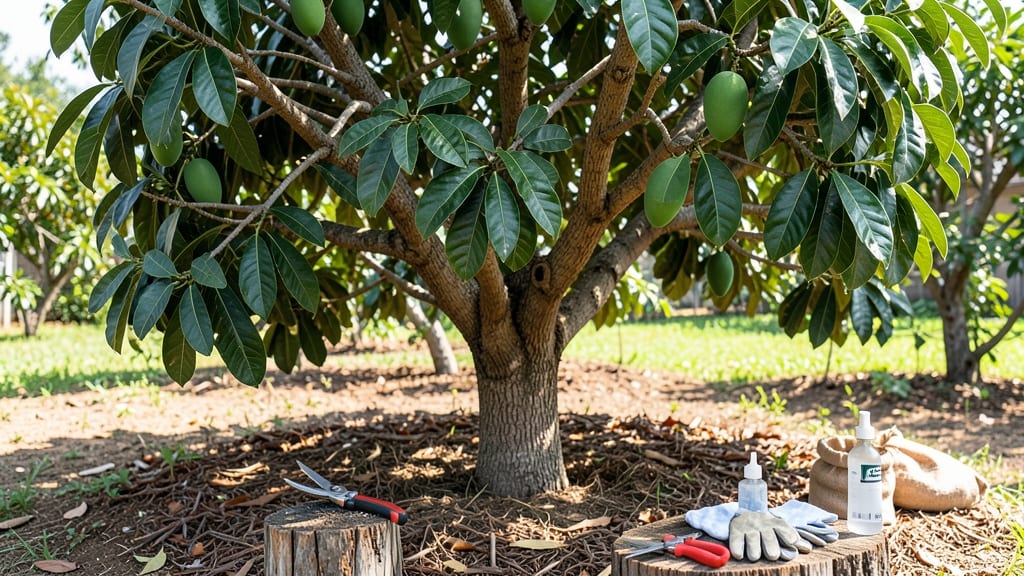
Pruning a mango tree for fruit isn’t just about hacking away at branches—it’s about creating the perfect conditions for heavy, sweet harvests. 🌱 I’ve seen firsthand how strategic cuts can turn a sparse tree into a fruit-bearing powerhouse, with clusters of ripe mangoes hanging so thick they bend the branches.
The key? Timing, technique, and knowing which branches to keep (and which to remove) for maximum sunlight and air flow.
Start in late winter or early spring, just as new growth begins to emerge. You’ll need sharp pruners, a saw for thicker branches, and a clear day to assess the tree’s structure. The goal is to open up the canopy so sunlight reaches the center, where most fruit develops.
Remove dead, crossing, or diseased branches first—these are the easy wins that improve air circulation and prevent disease.
Once the tree is healthy, focus on shaping: cut back branches that grow inward or upward to encourage outward growth. Thin out some of the fruit clusters too—this might seem counterintuitive, but fewer, larger mangoes develop when the tree isn’t overloaded.
After pruning, give the tree a deep watering to help it recover, and watch as new shoots emerge stronger and more productive.
The payoff comes in summer, when your tree bears fruit that’s sweeter, larger, and more abundant than ever. Just avoid pruning during the fruiting season—wait until the harvest is over to start planning next year’s cuts. With patience and precision, you’ll turn your mango tree into a reliable fruit machine.
📚 In This Guide
- What you need
- Instructions
- Tips and common mistakes
- Wrapping up and next steps
What you need
- ● Pruning shears or secateurs – Bypass pruners (8-10 inch blades) for clean cuts on small branches.
- ● Lopping shears – For thicker branches (2-3 inches in diameter)—look for long handles (30+ inches) for leverage.
- ● Pruning saw – For branches over 3 inches thick—choose a curved-tooth saw to avoid tearing wood.
- ● Gloves – Heavy-duty, cut-resistant gloves (e.g., mechanics or gardening gloves) to protect hands from thorns and sharp tools.
- ● Disinfectant (70% isopropyl alcohol or bleach solution) – To sterilize tools between cuts and prevent disease spread.
- ● Rubbing alcohol or hand sanitizer – For cleaning hands after pruning.
- ● Ladder or sturdy step stool – If your tree is taller than 6 feet—ensure it’s stable and rated for your weight.
- ● Tarp or drop cloth – To collect debris and keep your workspace clean.
- ● Permanent marker – For marking branches to identify cuts before pruning.
- ● First-aid kit – Just in case of minor cuts or scrapes from thorns or tools.
- ○ Tree wound dressing (optional) – Pruning paste or sealant for large cuts (controversial—some experts say it’s unnecessary!).
- ● Pole pruner – For high branches if you don’t want to climb.
- ● Work boots or sturdy shoes – With ankle support for stability on uneven ground.
- ● Sunscreen and hat – If pruning on a sunny day to protect from UV exposure.
- ● Pruning guide or ruler – To measure branch thickness and ensure proper cuts.
Step-by-step guide to pruning a mango tree for maximum fruit
Here's my foolproof method for shaping your mango tree—just follow these cuts and timing.
✂️ Step 1: Prune During the Dormant Season
Timing matters most for mango trees. I always prune in late winter to early spring, just before new growth begins. This ensures the tree directs energy toward fruit production instead of leaf regrowth. Avoid pruning during flowering or fruiting—you'll sacrifice next year's crop. Look for dry leaves and bare branches as your signal that it's time.
Use clean, sharp pruning shears to make cuts at a 45-degree angle just above a leaf node or outward-facing bud. This prevents water from pooling and encourages new growth in the right direction. I mark my cuts with a piece of tape first to visualize the shape before making any snips.
☀️ Step 2: Remove Dead, Diseased, or Crossing Branches
Start by eliminating any branches that are dead, diseased, or broken—these sap energy from healthy growth. Next, remove crossing branches where limbs rub against each other. Friction weakens the wood and creates entry points for pests. I always check for mushroom-like growths or blackened bark as red flags for disease.
Thin out overcrowded branches to improve airflow and sunlight penetration. Aim for a sunny, open canopy—mangoes need light to set fruit. If a branch is growing straight up, I cut it back to a side branch to encourage a more horizontal growth habit. This creates a natural scaffold for future fruit.
🌱 Step 3: Shape for a Balanced Canopy
Mango trees thrive with a balanced, rounded shape. I focus on selective pruning to maintain this form: cut back suckers (shoots growing from the base) and water sprouts (fast-growing vertical shoots). These compete with fruit-bearing branches for resources. Use your hand as a guide—if a branch is thinner than your thumb, it’s likely not strong enough to support fruit.
Open the center of the tree by removing inward-growing branches that block sunlight. This prevents shade stress and ensures even ripening. I step back every few cuts to visualize the tree’s silhouette—you want a pyramid shape when young, transitioning to rounded and bushy as it matures. Avoid heavy pruning; mango trees respond best to light, strategic cuts.
⏰ Step 4: Encourage Fruit Production with Strategic Cuts
To maximize fruit yield, I target last year’s growth—these branches produce the most flowers. Cut back overly vigorous shoots by one-third to redirect energy toward flowering. Look for new growth buds along the branches; these are your future fruit zones. Avoid pruning flowering branches—you’ll reduce next year’s crop.
If your tree has long, leggy branches, shorten them by one-quarter to encourage bushier growth. This creates more flowering sites and improves fruit distribution. After pruning, I apply a balanced fertilizer (like 10-10-10) to support new growth. Water deeply but avoid soaking the roots—mangoes hate soggy soil.
Tips & tricks for perfect mango tree pruning
These simple strategies will help you prune like a pro and get the most fruit from your tree.
Timing is Everything: Late winter to early spring is your golden window for pruning—right before those first buds appear. I learned this the hard way after accidentally pruning during flowering and losing next year's potential harvest. Watch for dry leaves and bare branches as your signal that it's time to act. The goal is to give your tree's energy a clear path toward fruit production instead of new leaf growth.
Visualize Before You Cut: I can't stress this enough—mark your cuts with tape first to visualize the shape you're aiming for. This prevents over-pruning and helps you maintain that balanced, rounded canopy. Think of it like sketching on paper before painting: you want to see the big picture before making any permanent changes. Step back every few cuts to check your progress against that pyramid-to-rounded shape transition.
Tool Maintenance Matters: Your pruning shears are your most important tool, so keep them sharp and clean. Dull blades tear wood instead of making clean cuts, which slows healing and invites disease. I wipe my shears with rubbing alcohol between cuts and sharpen them annually. A clean cut at a 45-degree angle above a leaf node is the difference between a healthy new branch and a weak one that struggles to produce fruit.
Fertilizer Follow-Up: After pruning, don't forget the post-care. I always apply a balanced 10-10-10 fertilizer right after finishing cuts. This gives your tree the nutrients it needs to recover and support new growth. Water deeply but avoid soggy soil—mango trees hate wet feet. The key is to help your tree bounce back stronger than before, ready to produce that sweet, juicy fruit you're working so hard for.
Pro Tips for Prune A Mango Tree For Fruit
- These simple strategies will help you prune like a pro and get the most fruit from your tree.
- Timing is Everything: Late winter to early spring is your golden window for pruning—right before those first buds appear.
- Visualize Before You Cut: I can't stress this enough—mark your cuts with tape first to visualize the shape you're aiming for.
Frequently asked questions
Got questions about pruning your mango tree for a bountiful harvest?
Here are answers to the most common ones—so you can prune like a pro and enjoy those sweet, juicy mangoes!
When is the best time to prune a mango tree for fruit?
The ideal time is late winter or early spring (before new growth starts), when the tree is dormant. Avoid pruning during heavy fruiting seasons or extreme weather. For tropical climates, prune in the dry season to reduce stress and disease risk.
How much should I cut back my mango tree?
Remove 20-30% of the tree’s canopy to encourage airflow and sunlight penetration. Focus on:
- Dead, diseased, or crossing branches
- Suckers (shoots growing from the base)
- Overcrowded branches blocking light
What if I prune at the wrong time?
Pruning at the wrong time (e.g., during flowering or fruiting) can stress the tree and lead to:
- Fewer flowers or fruit
- Increased pest/disease risk
- Weakened growth
Will pruning help my mango tree produce more fruit?
Yes! Strategic pruning boosts fruit yield by:
- Improving airflow (reduces fungal diseases)
- Encouraging larger, healthier branches to bear fruit
- Redirecting energy to fruit production instead of excess foliage
Can I prune a young mango tree the same way?
Young mango trees (under 3 years old) need gentle shaping to establish a strong structure. Focus on:
- Removing water sprouts (fast-growing, weak shoots)
- Opening the center for sunlight
- Avoiding heavy cuts—let the tree grow naturally
Wrapping up and next steps
Pruning your mango tree isn’t just about shaping—it’s about unlocking its full fruiting potential! By following these steps, you’ll encourage healthier growth, better air circulation, and a bountiful harvest. Remember, patience and consistency are key—your tree will thank you with juicy, sweet mangoes in no time. 🌱
Now that you’re armed with the know-how, grab those pruners and get started! Start small, observe your tree’s response, and adjust as you go. Happy pruning—and may your mango tree reward you with a tropical treasure trove! 🍈✨