
Pests and Diseases
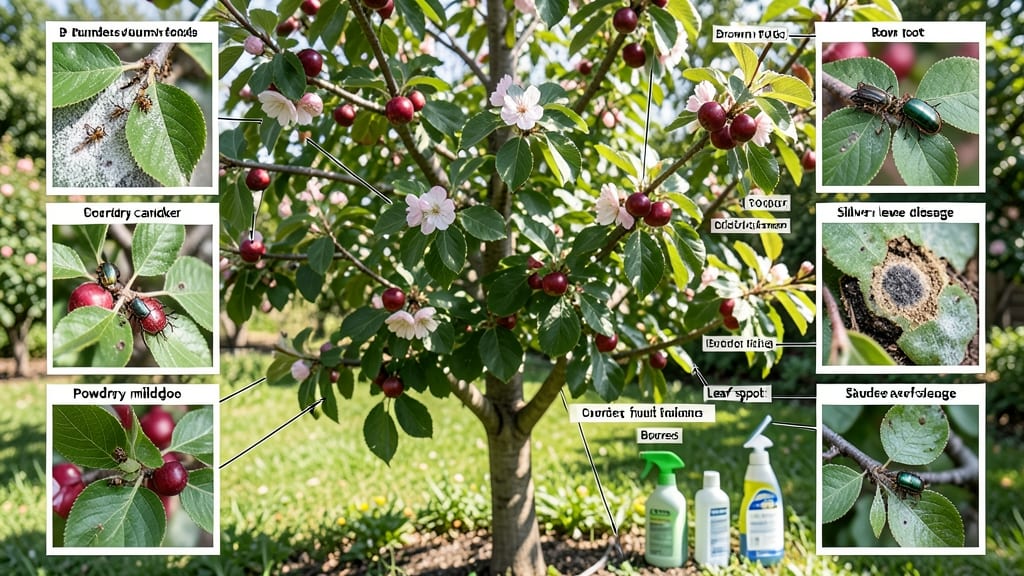
Your cherry tree’s sudden leaf spots or sawdust-like frass could signal the worst—cherry tree pests and diseases—unless you catch them early. 🌿 I’ve seen healthy trees turn into sad skeletons in just one season, but knowing the warning signs saves them every time.
This guide cuts through the confusion so you can spot problems before they spread.
The culprits are sneaky: aphids hide on undersides of leaves, borers tunnel silently under bark, and brown rot starts as tiny specks before turning entire branches black. Organic sprays like neem oil work for soft-bodied pests, while pruning out infected wood stops diseases from spreading.
The key is checking your tree every 2 weeks during growing season.
You’ll learn to identify each threat by its damage pattern—chewed leaves, sticky residue, or strange growths—and choose the right fix. With these strategies, your tree stays strong, productive, and free of the most common pests and diseases.
Prevention is easier than cleanup, and your tree will thank you with years of sweet fruit.
Works for sweet, sour, and ornamental cherries alike, whether you’re dealing with a young sapling or a mature tree. Let’s keep your tree thriving—no guesswork required.
Root Causes Behind Tree Struggles
Your cherry tree isn’t just fighting pests and diseases on its own—it’s reacting to a mix of environmental, biological, and human-induced factors. Understanding why these issues arise is the first step to preventing them.
Below, we break down the science behind the most common threats to your tree’s health, so you can address the real culprits before they take hold.
Cherry trees, like all plants, rely on a complex immune system to fend off invaders. When this system weakens, pests and pathogens move in like uninvited guests at a buffet. Here’s why your tree’s defenses might be down:
- Nutrient Deficiencies: Cherry trees need a balanced diet of nitrogen (N), phosphorus (P), and potassium (K), along with micronutrients like zinc, iron, and boron. A deficiency—often caused by poor soil quality, overwatering, or compacted roots—stunts growth and thickens cell walls, making the tree more susceptible to fungal infections like Monilinia (brown rot) or bacterial canker. 💡 Pro Tip: Test your soil every 2–3 years to catch deficiencies early.
- Stress from Environmental Shocks: Sudden temperature swings, drought, or flooding can shock a cherry tree’s metabolism. For example, late spring frosts damage blossoms, reducing fruit set and leaving the tree energy-depleted. Weakened trees are prime targets for pests like Japanese beetles or spotted wing drosophila, which thrive on stressed hosts. 🌡️ Key Insight: Mulch around the base to regulate soil temperature and retain moisture.
- Physical Damage: Broken bark or pruning wounds create entry points for pathogens. Even well-intentioned pruning can stress the tree if done at the wrong time (e.g., during active growth) or with dull tools, which tear instead of cleanly cut. ✨ Prevention Tip: Prune in late winter (dormant season) and sterilize tools with 70% isopropyl alcohol to avoid spreading disease.
Pests don’t randomly attack cherry trees—they’re drawn by specific conditions that make your tree an easy meal. Here’s how they exploit weaknesses:
| Pest | Why They Target Your Tree | Triggering Factors |
|---|---|---|
| Japanese Beetles | Adults feed on leaves, flowers, and fruit, while grubs chew on roots. |
|
| Spotted Wing Drosophila | Larvae burrow into ripening cherries, causing them to rot. |
|
| Cherry Fruit Fly | Larvae tunnel into fruit, making it unmarketable. |
|
🎯 Actionable Fix: Monitor pest populations with pheromone traps and remove fallen fruit weekly to disrupt breeding cycles.
Fungal, bacterial, and viral diseases don’t just appear—they’re often introduced or spread by specific conditions. Here’s how they gain a foothold:
- Fungal Spores Need Moisture: Diseases like powdery mildew or black knot thrive in humid conditions (70%+ relative humidity). Overhead watering or poor drainage keeps leaves and bark damp, creating a perfect breeding ground. 💡 Fun Fact: Fungal spores can travel miles on wind or rain, but they need a “wounded” tree to infect.
- Bacteria Love Wounds: Pseudomonas syringae (bacterial canker) enters through pruning cuts, hail damage, or even insect bites. Once inside, it blocks water transport, causing wilting and dieback. 🔥 Warning: Never prune during wet weather—wait for dry, calm days.
- Viruses Spread via Vectors: Most cherry tree viruses (e.g., cherry leaf roll virus) are transmitted by aphids or grafting infected scions. Once established, they weaken the tree over years, reducing vigor and fruit yield. 🌿 Prevention: Buy certified disease-free nursery stock and inspect new plants for symptoms.
By addressing these root causes—whether it’s improving soil health, reducing stress, or disrupting pest cycles—you’ll give your cherry tree the best chance to stay resilient. Early detection starts with understanding the “why” behind the problem.
Quick Fixes for Sick Cherry Trees
When pests or diseases strike your cherry tree, acting fast is key to saving its health—and your harvest. Below, we’ve mapped out practical, step-by-step solutions for the most common threats, from fungal infections to hungry insects. Each fix includes prevention tips to keep your tree thriving long-term.
Causes: Overwatering, poor airflow, or wet foliage. Fixes:
🔥 Prune for Airflow (First Line of Defense)
- Step 1: Remove infected branches (black spots, wilting, or oozing sap) 6 inches below the damage using sterilized pruners (wipe with rubbing alcohol between cuts).
- Step 2: Thin out dense foliage to improve sunlight and airflow—fungi love damp, shaded areas.
- Step 3: Rake up and dispose of fallen leaves (don’t compost them!).
🍳 Fungicide Spray (When Needed)
- Best options:
- Copper fungicide (for brown rot or leaf spot) – spray every 7–10 days during wet seasons.
- Neem oil (organic) – mix 1 tbsp per quart of water, spray early morning or evening (avoid direct sun).
- Pro tip: 💡 Add baking soda spray (1 tsp baking soda + 1 tbsp oil + 1 quart water) for a low-cost, natural boost.
🌡️ Adjust Watering Habits
- Water at the base (not overhead) to keep leaves dry.
- Mulch with wood chips (2–3 inches deep) to regulate soil moisture and prevent splash-up spores.
Causes: Weak trees, drought stress, or lack of natural predators. Fixes:
👨🍳 Manual Removal (For Aphids & Mites)
- Step 1: Blast pests off with a strong stream of water (early morning works best).
- Step 2: Wipe leaves with a soapy water solution (1 tsp mild soap per gallon of water).
- Step 3: Encourage predators—plant marigolds or dill nearby to attract ladybugs and lacewings.
🔪 Borer Infestation?
Drill & Treat - Step 1: Drill holes (¼ inch wide) into the base of the tree where you see sawdust-like frass (borer poop). - Step 2: Inject with insecticide (use Bt [Bacillus thuringiensis] for organic or imidacloprid for severe cases). - Step 3: Seal holes with tree sealant to prevent re-entry.
🕷️ Spider Mites? Knock ‘Em Out Fast
- Spray with:
- Horticultural oil (apply when temps are above 50°F).
- Insecticidal soap (reapply every 5–7 days).
- Pro tip: 🌡️ Mites hate humidity—mist the tree on hot days to deter them.
Before pests/diseases strike, build resilience:
- 🎯 Fertilize right: Use a balanced 10-10-10 fertilizer in early spring (avoid high-nitrogen in fall).
- ✨ Inspect weekly: Check undersides of leaves and tree bark for early signs.
- 🌱 Plant smart: Choose disease-resistant varieties (e.g., ‘Stella’ or ‘Lapins’ cherries).
- 🔥 Solarize soil (for severe fungal issues): Cover infested areas with clear plastic for 4–6 weeks in summer to kill pathogens.
Remember: Early action is everything! Most issues are fixable if caught before they spread. If your tree is severely damaged, consult a local arborist for expert help. 🌳💪
Frequently asked questions
How often should I inspect my cherry tree for pests and diseases?
Check your tree every 2 weeks during the growing season (spring through fall). Focus on leaf undersides, bark crevices, and fruit for early signs like tiny holes, sticky residue, or unusual growths. Regular inspections catch problems before they spread, especially for soft-bodied pests like aphids or fungal spores that thrive in damp conditions.
Can I use the same treatment for both fungal diseases and insect pests?
No, they require different approaches. Fungal issues like brown rot need copper fungicide or neem oil, while insect pests respond to insecticidal soap or horticultural oil. Always identify the problem first—fungicides won’t kill borers, and pesticides won’t stop mildew. For mixed issues, rotate treatments (e.g., copper spray followed by oil-based insecticide).
What’s the best time of year to prune infected branches?
Prune during dormant season (late winter) to minimize stress and prevent disease spread. If you must remove infected branches mid-season, do it on a dry, calm day and sterilize tools between cuts. Never prune when leaves are wet—this spreads fungal spores. Remove 6 inches below visible damage to ensure you get the whole infected area.
Will my cherry tree recover from a severe infestation?
It depends on how quickly you act. Early-stage issues (like aphids or powdery mildew) are often reversible with proper care. However, deep-rooted problems (e.g., borers or bacterial canker) may require professional treatment. If >50% of the canopy is damaged, consult an arborist—they can assess whether the tree’s structure is still salvageable or if removal is the best option.
Are there any natural predators that help control cherry tree pests?
Ladybugs, lacewings, and parasitic wasps naturally prey on aphids and mites. To attract them, plant marigolds, dill, or yarrow nearby. Birds also eat beetle grubs—install a bird feeder or nest box to encourage their presence. Avoid broad-spectrum pesticides that kill these helpful allies.