
Trees
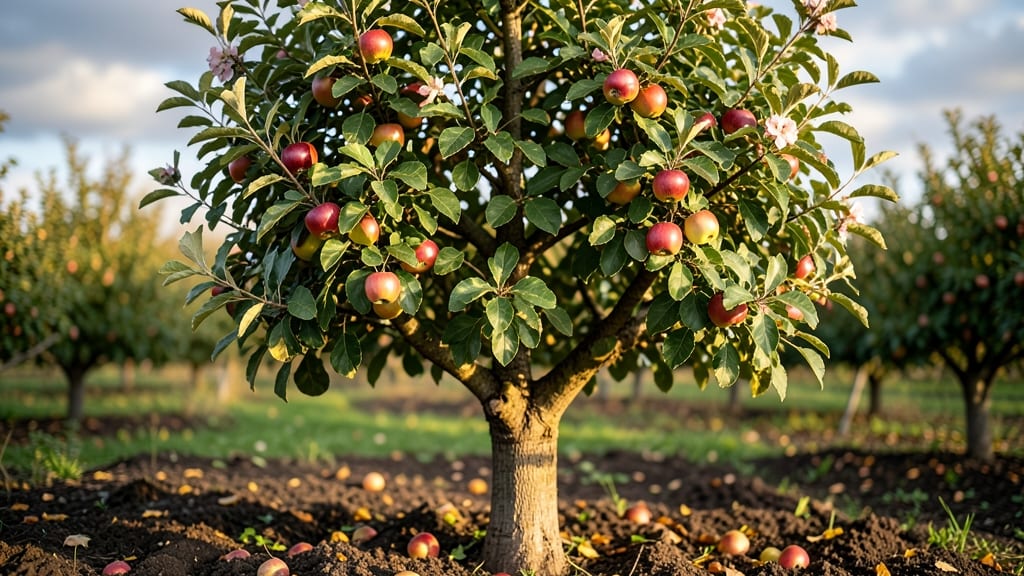
Yes, one apple tree can produce fruit—typically between 50 to 200 apples annually, depending on variety, age, and growing conditions. Most standard apple trees begin bearing fruit within 3 to 5 years after planting, with peak production in their 5th to 10th year.
One apple tree absolutely can produce fruit on its own, but the yield depends heavily on whether it's a self-pollinating variety or requires cross-pollination. 🍏 For example, 'Anna' apples thrive alone, while 'Fuji' needs another tree nearby.
Young trees take patience—early years focus on root and branch growth before they shift energy to fruit production. Even then, environmental factors like sunlight exposure and proper pruning can double or halve your harvest.
What many gardeners don't realize is that dwarf varieties (like 'Columnar' apples) produce fruit faster than standard trees, making them perfect for small spaces. These compact trees often bear fruit within 2-3 years, though their total yield will be smaller—around 20-50 apples per season.
The key is choosing the right variety for your climate and space while providing consistent care.
💡 In This Article
- Factors Affecting Apple Tree Fruit Production
- Best Apple Tree Varieties for Solo Fruit Production
Factors affecting apple tree fruit production
Apple trees produce fruit through a complex interplay of biology and environment. The most critical factor is pollination—most commercial varieties require cross-pollination from another tree, but self-pollinating types like 'Anna' or 'Enterprise' can thrive alone.
These self-fertile trees develop flowers with both male and female parts, allowing them to set fruit without neighbors. The difference shows up in yield: cross-pollinated trees may produce 150-200 apples, while self-pollinating varieties often yield 50-100 apples annually.
Sunlight exposure directly impacts fruit quality and quantity. Apple trees need 6-8 hours of direct sunlight daily—less than 4 hours reduces photosynthesis, leading to smaller fruit and fewer blossoms. The tree's canopy structure matters too: dense foliage can block sunlight from inner branches, causing uneven ripening.
Pruning in late winter removes competing growth, redirecting energy to fruit production. A well-pruned 5-year-old tree might bear 75-120 apples, while neglected trees produce 20-40 apples with poor color.
Soil quality determines nutrient availability, with ideal pH between 6.0-7.0. Too acidic or alkaline soil limits root absorption of essential minerals like nitrogen (for leaf growth) and phosphorus (for flowering).
Watering patterns also play a role: consistent moisture during bloom (1-1.5 inches per week) prevents blossom drop, while drought stress reduces fruit set. Dwarf varieties handle water fluctuations better than standard trees, making them more reliable for container growing.
Climate zones further influence production. Trees in USDA Zone 5-8 (where most apple varieties thrive) produce more consistently than those in marginal zones. Late frosts after bloom can destroy flowers, while summer heat waves cause fruit to split or develop sunburn.
Varieties like 'Liberty' handle disease pressure better than 'Gala', which requires more fungicide applications—adding labor costs that can reduce net yield by 15-25%.
Age matters dramatically: a 3-year-old tree might bear 10-20 apples, while a 10-year-old tree at peak production can yield 200+ apples. After 20 years, yields decline as the tree's energy shifts to maintenance.
This lifecycle explains why many gardeners replace older trees with dwarf varieties—smaller size means faster maturity and easier harvest.
Consider these key factors when choosing a tree:
- Pollination needs: Self-pollinating varieties ('Anna') eliminate the need for a second tree
- Sunlight access: Southern exposure maximizes fruit quality and quantity
- Soil prep: Amend clay soil with compost to improve drainage
- Pruning schedule: Annual winter pruning increases airflow and fruit exposure
What most people overlook is how rootstock type affects production. Dwarf trees on M.9 rootstock produce fruit faster but have shorter lifespans (15-20 years), while standard trees on seedling rootstock live 30+ years but take longer to mature.
The trade-off between early yields and longevity depends entirely on your gardening goals.