
Diseases
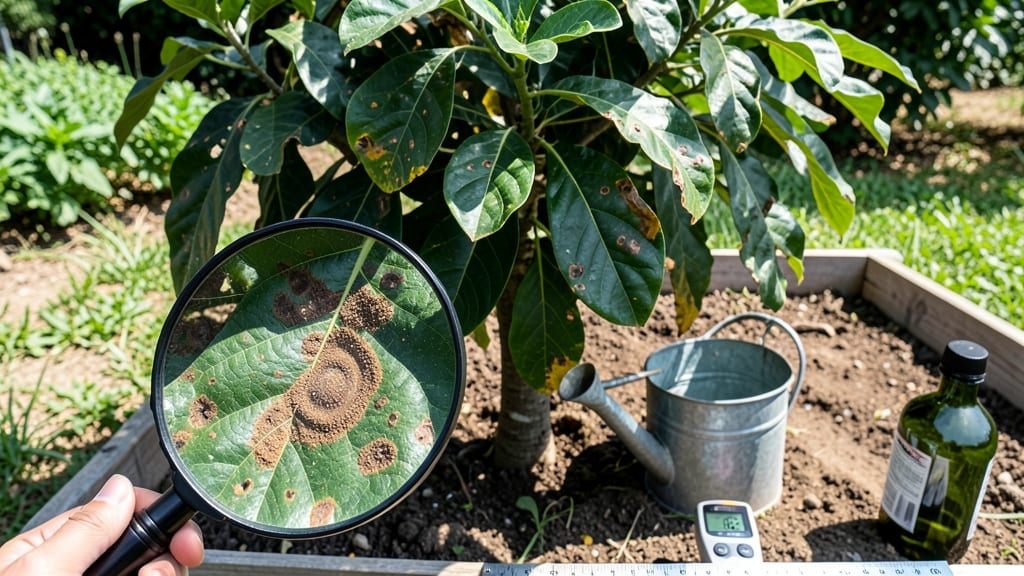
Brown spots on avocado tree 🥑 leaves are a clear sign your plant is fighting a fungal battle—and ignoring it could mean losing your tree entirely.
Picture this: You’ve nurtured your avocado tree for months, only to wake up one morning and find its leaves looking like a crime scene. Those unsightly brown spots aren’t just cosmetic—they’re a fungal warning sign that could spread and kill your tree if left unchecked.
But here’s the good news: identifying the right culprit early and acting fast can save your tree and its precious fruit harvest.
Fungal diseases like anthracnose, leaf spot, or even root rot thrive in humid conditions and poor airflow, turning your tree’s leaves into a buffet of decay. The key is catching the problem before it spreads—whether it’s on new growth or mature foliage—and knowing which treatment works for each type.
In this guide, I’ll walk you through the three most common fungal causes of brown spots, how to diagnose them, and the exact steps to treat and prevent them—so your avocado tree stays healthy and productive for years to come.
3 Common fungal diseases causing brown spots on avocado tree leaves
When your avocado tree leaves start showing brown spots, it’s rarely just environmental stress—it’s usually a fungal infection waiting to spread. These diseases thrive in humid conditions and poor air circulation, turning vibrant foliage into a patchwork of decay.
The key to saving your tree? Early identification of which fungus is attacking—whether it’s targeting new growth or mature leaves—so you can treat it before it spreads to the fruit.
Fungal diseases like anthracnose, leaf spot, and root rot don’t just ruin the appearance of your avocado tree—they weaken its immune system, reduce fruit yield, and can even kill the plant if left unchecked.
The good news? Each has distinct symptoms and environmental triggers that help you diagnose and treat them effectively. Let’s break down the three most common culprits and how to spot them.
Anthracnose is the most aggressive of the three, often starting on new growth and spreading like wildfire in humid climates. Look for dark brown sunken spots with yellow halos—these are classic anthracnose warning signs.
The fungus thrives when leaves stay wet for long periods, so if you’ve been watering overhead or your tree is in a shaded, damp area, this is likely your culprit. Prune infected leaves immediately and improve airflow to stop its spread.
Leaf spot is more subtle but just as damaging over time. It targets mature leaves, especially in the lower canopy where airflow is poor. The circular brown spots with tan centers are unmistakable, and if left unchecked, they’ll cause leaves to drop prematurely, weakening your tree. This disease loves warm nights and splashing water, so avoid wetting foliage during irrigation and consider a fungicide spray if spots appear frequently.
Root rot is the silent killer—you might not see the brown spots on leaves until it’s too late. This fungus attacks the root system, causing yellowing between leaf veins and wilting, even when the soil is moist.
If you notice mushy, dark roots when you dig around the base, your tree is in serious trouble. Root rot thrives in waterlogged soil, so improving drainage and reducing watering frequency is critical. In severe cases, you may need to repot the tree or even replace the soil entirely.
The key to beating these fungal diseases is acting fast. Once you’ve identified which fungus is attacking your avocado tree, you can tailor your treatment plan.
For anthracnose and leaf spot, copper fungicides or neem oil sprays work well, while root rot often requires soil amendments like perlite or sand to improve drainage. Prevention is easier than cure, so focus on proper spacing, morning watering, and regular pruning to keep your tree healthy.
Don’t let those brown spots become a full-blown crisis. With the right diagnosis and treatment, your avocado tree can bounce back stronger than ever. Start by examining the spots closely—are they sunken and irregular, or small and circular? That’s your first clue to saving your tree. 🌱
Step-by-step treatment guide for each fungal infection type
Once you’ve identified the fungal infection plaguing your avocado tree, the next step is targeted treatment. Each disease requires a slightly different approach, but the core principles remain: stop the spread, restore plant health, and prevent recurrence.
Here’s how to tackle the most common fungal infections with organic, effective methods that won’t harm your tree or the environment.
For all treatments, work on a dry, sunny day to allow foliage to dry quickly—this minimizes fungal spores from spreading. Wear gloves and long sleeves to protect your skin from spores and fungicides.
And remember: patience is key. Fungal infections don’t disappear overnight, but consistent care will restore your tree’s health over 4-8 weeks, depending on severity.
🌿 Anthracnose Treatment Protocol
- Step 1: Prune infected leaves—use sterilized pruners and remove all brown/black spots (including 1-2 inches of healthy tissue below the spot). Dispose of clippings in a sealed bag.
- Step 2: Apply neem oil spray—mix 1 tbsp neem oil, 1 tsp mild soap, and 1 quart water. Spray upper and lower leaf surfaces every 7-10 days for 4-6 weeks.
- Step 3: Improve airflow—thin out dense foliage and space trees 15-20 feet apart. Use a fan on low speed near the tree for 30 minutes daily in humid climates.
- Step 4: Adjust watering—water deeply but less frequently (every 10-14 days for in-ground trees). Avoid overhead watering; use a drip irrigation system instead.
- Step 5: Boost soil health—add 2 inches of compost around the drip line and mulch with straw or wood chips to retain moisture and regulate temperature.
If your avocado tree is battling leaf spot, the process is similar but with a few critical tweaks. Start by removing infected leaves—this time, focus on small, circular spots with yellow halos.
For treatment, swap neem oil for a copper fungicide spray (like Copper Soap) and apply it every 5-7 days until new growth appears. Copper is more aggressive against leaf spot but must be used carefully to avoid leaf burn.
For root rot, the stakes are higher—this disease attacks the roots, and recovery takes longer. Stop watering immediately and let the soil dry out completely. Then, repot the tree into fresh, well-draining soil mixed with perlite or sand.
Apply a hydrogen peroxide solution (1 part 3% peroxide to 10 parts water) to the roots to kill fungal spores. After repotting, reduce watering to every 2-3 weeks and monitor for new root growth.
Throughout treatment, monitor your tree closely. If brown spots persist or worsen after 6 weeks, consult a local plant pathologist or extension service for advanced diagnostics.
Often, secondary infections or nutrient deficiencies (like magnesium or zinc) can mimic fungal issues. A simple soil test can reveal hidden problems.
With consistent care, your avocado tree can bounce back—even after severe fungal infections. The key is acting fast, staying diligent, and adapting your approach based on how your tree responds.
Soon, those brown spots will be a distant memory, and your tree will be back to producing lush, healthy foliage and delicious fruit. 🌱