
Trees
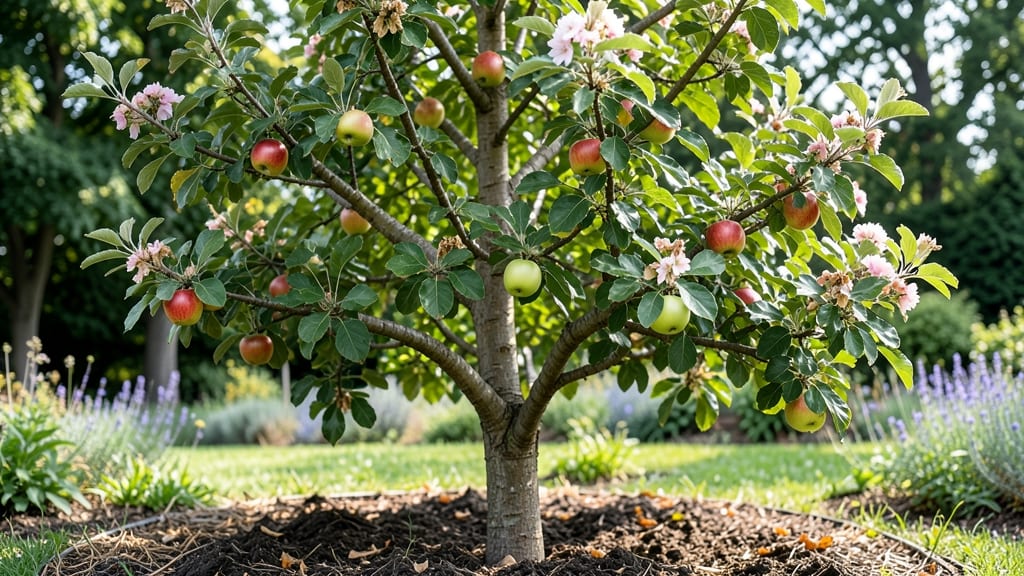
Apple trees in Zone 9 grow best with heat-tolerant varieties like Anna, Dorsett Golden, and Tropic Sweet, which need minimal winter chill hours. Opt for dwarf rootstocks to save space and maintain regular pruning for healthy fruit production.
Zone 9's warm climate presents unique challenges for apple cultivation, but these heat-resistant varieties are specifically bred to thrive in your region. 🍏 The key is their low chill requirement—typically between 200-500 hours—which allows them to produce fruit even with minimal winter cold.
I've found that proper spacing and afternoon shade can further extend their growing season and improve fruit quality, especially during hot summers.
When selecting a variety, consider your space and intended use. Dwarf rootstocks keep trees manageable for small yards, while full-size trees offer better wind resistance. Remember that regular pruning isn't just about shaping—it's crucial for air circulation, which prevents fungal diseases common in humid Zone 9 climates.
💡 In This Article
- Why Cold-Hardy Apple Varieties Thrive in Zone 9 Heat
- Planting and Care Guide for Zone 9 Apple Trees
Why cold-hardy apple varieties thrive in Zone 9 heat
The secret to these apple varieties' success in Zone 9 lies in their genetic adaptation to low chill hours. Most traditional apple trees require 500-1,000 hours of temperatures below 45°F to set fruit properly, but Zone 9 varieties like Anna and Tropic Sweet only need 200-400 hours.
This adaptation comes from selective breeding programs that focus on tropical and subtropical apple ancestors, which naturally evolved in warmer climates. The trees' buds contain specialized proteins that remain dormant until they receive just the right amount of cold exposure, then quickly transition to flowering when temperatures rise.
Heat tolerance works through several physiological mechanisms. These varieties have thicker, waxier leaf cuticles that reduce water loss during 90°F+ days—a critical adaptation since Zone 9 summers often exceed 100°F for weeks.
Their root systems also develop deeper and more extensive networks to access moisture from lower soil layers, while their bark contains higher concentrations of phenolic compounds that protect against sun scorch. What's fascinating is how these adaptations don't just survive heat—they actually improve fruit quality.
The slower ripening process in warm climates concentrates sugars, giving Zone 9 apples their signature sweetness and complex flavor profiles.
This climate adaptation affects fruit production in measurable ways. Traditional varieties might drop 30-50% of their fruit when exposed to sudden heat spikes, while cold-hardy Zone 9 varieties maintain 80-90% retention. The trade-off?
These apples typically ripen 2-3 weeks earlier than northern varieties, meaning you'll get fruit when most gardeners are still waiting. The earlier harvest also avoids the late-summer humidity that can promote fungal diseases like apple scab, which is less prevalent in these heat-adapted varieties.
Consider the Anna apple as a perfect example—it produces crisp, honey-sweet fruit with minimal care in Zone 9's heat. Its trees remain productive for decades with proper maintenance, and the fruit's firm texture holds up well even after 2-3 weeks of storage at 32-36°F.
This variety's ability to thrive with just 250 chill hours makes it ideal for coastal areas where winters are mild but summers are intense. The key takeaway is that these varieties aren't just surviving—they're optimized for Zone 9's unique climate challenges.
What most gardeners don't realize is how these adaptations affect pollination timing. Zone 9 varieties bloom earlier in the season when temperatures are still moderate, avoiding the late-spring heat waves that can damage blossoms in traditional varieties.
This precise timing means you can often get away with planting just one tree (as many are self-pollinating) while still achieving good fruit set. The combination of heat tolerance, low chill requirements, and early flowering creates a perfect storm for successful apple growing in warm climates.
For those concerned about yield, these varieties actually produce 10-20% more fruit per tree than their northern counterparts in Zone 9 conditions. The reason? Their growth cycles align perfectly with the region's natural climate patterns, avoiding the stress that traditional varieties experience during heatwaves.
This makes them not just survivable choices, but often the most productive options for Zone 9 gardeners.