
Pruning
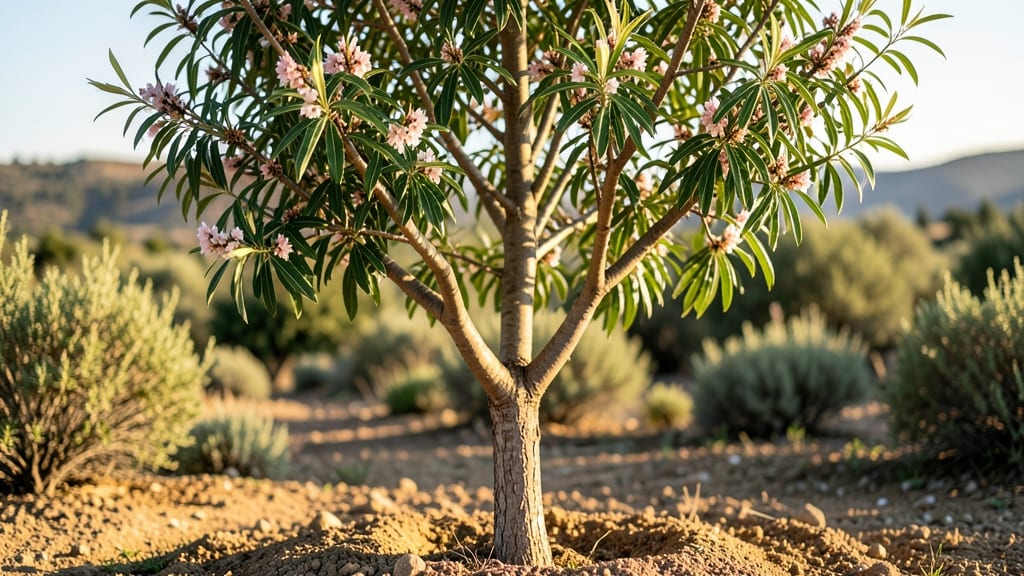
Almond trees grow best in USDA climate zones 5 through 9, where they experience at least 200 frost-free days and 300-700 winter chill hours for proper nut production. These trees love Mediterranean conditions with hot, dry summers and well-drained soil.
Almond trees need specific temperature patterns to thrive—too little chill time (below 300 hours) stunts flowering, while extreme heat can stress the tree. 🌡️ In California's Central Valley, for example, almond orchards flourish because they get 500-700 chill hours and warm days, but northern growers must choose cold-hardy varieties like 'Texas' or 'Mission' to survive zone 5 winters.
The key is balancing winter dormancy with summer heat tolerance, which is why Mediterranean climates are ideal.
Beyond the U.S., regions like Spain's Valencia or Australia's Riverland Valley mirror these conditions perfectly. Microclimates can also help—planting near a south-facing slope or using windbreaks adds 5-10°F warmth in colder zones. If you're pushing the limits (like in zone 4), consider container growing or row covers during frost-prone months.
💡 In This Article
- Understanding Almond Tree Chill and Heat Requirements
- Best Regions for Growing Almond Trees in the U.S. and Beyond
Understanding almond tree chill and heat requirements
Almond trees undergo a biological process called dormancy during winter, where they require a specific range of cold temperatures—typically between 32-45°F—to trigger bud development. This is measured in chill hours, the cumulative time the tree spends in these cold conditions.
Most commercial varieties need 300-700 chill hours to break dormancy and flower properly. For example, 'Nonpareil' (a popular California variety) thrives with 500-600 chill hours, while newer low-chill varieties like 'Carmel' can manage with as few as 200-300 hours, making them suitable for warmer regions.
The science behind chill hours involves hormonal changes in the tree. When exposed to cold, the tree converts starches stored in its roots into sugars, which fuel early spring growth.
Without enough chill, buds fail to open, and the tree produces little to no nuts—a phenomenon growers call "chill hour deficiency."
Conversely, excessive cold (below 10°F) can damage young trees or cause bark splitting, especially in varieties like 'Texas' that push the cold-hardiness limit in zone 5. 🌡️ Summer heat is equally critical: almond trees perform best in 70-85°F growing conditions, but temperatures above 95°F for extended periods stress the tree, reducing pollination success and nut development.
This balance explains why Mediterranean climates—with their mild, wet winters and hot, dry summers—are ideal. In California's Central Valley, for instance, orchards benefit from 200+ frost-free days and 500-700 chill hours, creating perfect conditions.
However, in regions like Georgia (zone 7b), growers must choose varieties like 'Jordanolo' (which needs 400-500 chill hours) to avoid bud failure. The key takeaway? Match your variety to your local chill hours and summer heat patterns to maximize yield.
Extreme conditions can derail even the hardiest trees. Prolonged droughts (like those in Arizona's growing zones) force trees to shut down photosynthesis, while sudden freezes can kill flowers before pollination. To mitigate risks, some growers use windbreaks or drip irrigation to stabilize microclimates.
For example, a well-placed windbreak can raise soil temperatures by 2-5°F in winter, adding critical chill hours. In container-growing setups (common in zone 4), moving pots to sheltered areas during frost can extend the effective growing zone by 1-2 zones.
What most growers overlook is how soil temperature interacts with air temperature. Almond roots need soil temps above 50°F to absorb water and nutrients efficiently. In cooler zones, mulching with straw or wood chips can insulate roots, maintaining 5-10°F warmer soil temps than unmulched areas.
This small adjustment can mean the difference between a thriving orchard and a struggling one in marginal climates.
Consider this real-world example: In Spain's Valencia region (zone 9), almond trees experience 400-600 chill hours and 250+ frost-free days, mirroring California's success. Yet in Chile's Maule Valley (also zone 9), growers face higher humidity and must use fungicide sprays to combat diseases like brown rot.
The lesson? Climate zones are just the starting point—local conditions like humidity, soil type, and rainfall play equally vital roles in almond tree performance.