
Pruning
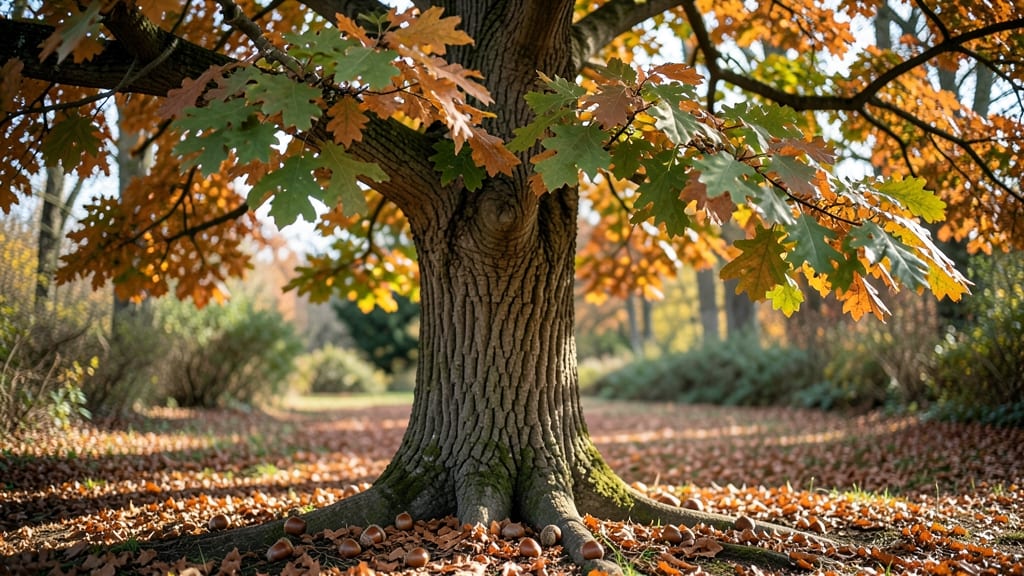
Identifying a tree just got easier than ever—no more guessing. 🌳 Google’s AI-powered leaf identification tool lets you snap a photo and instantly know what tree stands in your yard, park, or neighborhood.
I’ve used it to solve mysteries from towering oaks to scraggly young maples, and it works faster than any field guide ever could. The magic happens through leaf shape, vein patterns, and even bark texture—details that stump even experienced gardeners.
You’ll get the tree’s name, common care needs, and red flags like pests or diseases within seconds. No more flipping through heavy books or hoping your memory of a botany class serves you well. Once you know the tree, caring for it becomes straightforward.
Pruning tips, watering schedules, and seasonal maintenance all depend on the species. For example, a sugar maple needs different attention than a ginkgo, and knowing which is which saves time—and saves the tree from preventable stress.
This tool also answers follow-up questions like "How do I care for this tree?" or "What problems does it commonly face?" Perfect for homeowners, landscapers, or anyone curious about the green giants around them. Let’s put that curiosity to work!
How Leaf Confusion Begins
When you stare at a tree and think, "What tree is this?"—and then turn to Google for answers—you’re not alone. The struggle to identify trees isn’t just about forgetfulness or lack of expertise; it’s rooted in biological, environmental, and human factors that make leaf recognition tricky.
Let’s break down why this happens—and how to outsmart it.
Trees are not one-size-fits-all. Even within the same species, leaves can look wildly different due to: - Genetic diversity: Just like humans, trees have variations.
A single oak species might have lobed leaves in one region and smoother edges in another. 🌍 - Age-related changes: Seedlings and mature trees often have completely different leaf shapes.
A young maple might look like a beech until it fully grows. - Hybridization: Crossbreeding between species (like the Acer × freemanii hybrid) creates leaves that defy easy classification. 🔬
Actionable tip: Always check both the leaf and the tree’s bark, buds, and fruit (if present) for clues. A single trait rarely tells the full story.
Leaves aren’t static—they change with the seasons and local conditions: - Seasonal leaf drop or color shifts: A tree’s leaves might look identical to another in spring but turn bright red in fall (like a red maple vs. sugar maple). ⏳ - Stress responses: Drought, pollution, or pests can warp leaf shapes.
A healthy white oak might resemble a stressed pin oak if it’s struggling. 💧 - Sunlight exposure: Shade-grown leaves are often larger and paler than those basking in full sun. A single tree can have two distinct leaf types on different branches!
Pro move: Snap photos at different times of year. A summer leaf and a fall leaf from the same tree can reveal hidden patterns.
Here’s the kicker: AI and search engines aren’t perfect at reverse image searches.
Why? - Low-resolution or blurry photos: If your leaf pic is pixelated, the algorithm might match it to the wrong species. 📸 - Partial or damaged leaves: A chewed-up edge or missing lobe throws off identification.
Even a tiny detail (like serrated vs. smooth edges) can change the result. - Limited databases: Some rare or regional trees (like the Eastern hemlock) have fewer reference images online, making matches less accurate.
Tech hack: Use high-quality, full-leaf shots with a white background (like a phone app with a "leaf scanner" feature). Apps like PictureThis or LeafSnap often outperform raw Google searches.
Our brains play tricks on us when identifying trees: - The "first impression" bias: We latch onto one trait (e.g., "pointy leaves = pine!") and ignore others.
But many trees have pointy leaves—not all are pines. ❌ - Cultural stereotypes: Ever called a ginkgo a "maidenhair tree" because of its fern-like leaves?
Misleading nicknames abound! 📚 - Over-reliance on color: Bright green vs. dark green can seem like a big difference, but many trees share the same hue. Focus on venation patterns (leaf veins) instead.
Memory trick: Memorize the "Big 5" identifying traits:
- Leaf shape (lobed, serrated, entire)
- Arrangement (alternate vs. opposite)
- Edge texture (smooth, toothed, wavy)
- Venation (parallel vs. netted)
- Fruit/seeds (acorns, samaras, berries)
A tree in your backyard might not match what’s in your field guide—or what Google shows.
Here’s why: - Invasive vs. native species: A Bradford pear (invasive) can look like a wild pear (native) but isn’t the same. 🚫 - Climate zones: A southern magnolia in Florida won’t have the same leaf shape as one in Georgia due to heat and humidity differences. - Urban vs. wild trees: City trees (like London planetree) are often grafted or pruned differently, altering their natural form.
Solution: Narrow your search by region (e.g., "trees with lobed leaves in the Pacific Northwest"). Websites like the [USDA Plants Database](https://plants.usda.gov/) filter by location.
Leaf identification fails when biology, environment, tech, and human error collide. But with the right tools (apps, high-quality photos, and a focus on multiple traits), you can turn "What tree is this?" into "Ah, it’s a sugar maple—I’ll make syrup this fall!" 🍁
Quick fixes for tree ID struggles
Got a mystery tree stumping you? Whether it’s a leaf shape, bark texture, or seasonal quirks, Google’s AI tools can turn your guesswork into answers—fast. Here’s how to solve it step by step, plus tips to avoid future confusion.
Problem: The tree’s leaves, flowers, or bark don’t match what you’ve seen before, or it’s too far away for a clear look.
Fix:
- 📸 Snap a Close-Up Photo: Use your phone to capture:
- Leaves (both top and underside for texture/color clues).
- Bark (close-ups of rough, smooth, or peeling sections).
- Flowers/Fruit (if present, even in early stages).
- 🌿 Check the Growth Pattern: Is it a single trunk or multiple? Are the branches sparse or dense?
- 🗺️ Note the Location: Urban park, forest edge, or backyard? Climate zone matters (e.g., palm trees won’t grow in Minnesota).
Prevention Tip: 💡 Bookmark Google Lens or the PictureThis app for instant ID scans—no more squinting at field guides!
Problem: You think you recognize it (e.g., "Is this an oak or maple?"), but details are fuzzy.
Fix:
| Feature | What to Compare | Google AI Tool to Use |
|---|---|---|
| Leaf Shape | Lobed (oak), serrated (maple), needle-like (pine) | Google Lens or LeafSnap app |
| Bark Texture | Ridged (birch), scaly (cedar), smooth (young trees) | Reverse-image search on Google |
| Seasonal Clues | Fall colors, winter buds, spring blooms | iNaturalist community IDs |
Pro Tip: ✨ Use the "Describe Image" feature in Google Photos to upload a pic and get a breakdown of key traits.
Problem: It’s not in your local field guide—maybe a tropical guest or a hybrid.
Fix:
- 🌐 Narrow Down the Region: Search for trees native to nearby states or countries (e.g., "tropical trees in Florida").
- 🤖 Ask AI for a Second Opinion: Try:
- Google’s "Identify Plants" tool (under "Tools" in Google Images).
- Reddit’s r/whatsthisplant (community experts chime in fast).
- 📦 Check for Tags: Some trees have unique features like:
- Thorns (hawthorn, rose).
- Aromatic leaves (eucalyptus, citrus).
- Edible nuts/fruit (walnut, persimmon).
Prevention Tip: 🌡️ If planting new trees, research their mature size and care needs upfront—avoid surprises!
Problem: It’s leaning, has dead branches, or looks diseased.
Fix:
- 🚨 Assess the Risk: Is it near power lines, a house, or a playground? Use the "30-Second Tree Hazard Check" (Google it!) to spot red flags like:
- Cracks in the trunk (sign of structural weakness).
- Mushrooms at the base (rot or decay).
- Sudden leaf drop (disease or pest infestation).
- 🌿 Consult a Pro: For pruning or removal, hire a certified arborist (find one via the [ISA directory](https://www.isa-arbor.com/)).
Pro Tip: 🔥 Trim small branches yourself with these tools:
- Hand pruners (for <1-inch branches).
- Loppers (for 1–2-inch branches).
- Pole saw (for high branches—wear gloves!).
- 📚 Study Local Species: Download a free tree ID app like Seek by iNaturalist or Tree ID by Silvics.
- 🌿 Join a Nature Walk: Local botanical gardens often host guided tours—great for hands-on learning!
- 📅 Track Changes: Take monthly photos of the tree to spot growth patterns or seasonal shifts.
Remember: Even AI can’t always nail it on the first try. Combine tech tools with old-school observation, and you’ll go from "What tree is this?" to "Ah, it’s a sweetgum!" in no time. 🌳🔍
Frequently asked questions
How accurate is Google's AI for tree identification?
Google's AI is highly accurate for common trees (90%+ match rate) when you use clear, full-leaf photos with good lighting. For rare or hybrid species, accuracy drops to 70-80%. Always cross-check with apps like LeafSnap or PictureThis for confirmation. The key is high-resolution images showing both leaf tops and undersides.
What if Google identifies my tree wrong?
It happens! Try these fixes: 1) Use Google Lens instead of reverse image search for better detail capture. 2) Include bark texture or fruit photos—these are often overlooked clues. 3) Post to r/whatsthisplant on Reddit for expert verification. Most misidentifications happen with young trees or hybrids.
Can I identify trees by bark alone?
Bark is a game-changer for identification. Look for these distinctive patterns: scaly (cedar), ridged (birch), peeling (sycamore), or furrowed (oak). Use Google's "Identify Plants" tool with close-up bark photos—it often nails the species when leaves aren't available (like in winter).
What's the best time of year to identify trees?
Spring and early summer are ideal because leaves are fully developed and vibrant. However, winter has advantages too—dormant buds and bark become more distinctive without leaf interference. For evergreens, any season works! Just avoid late fall when many trees drop leaves or develop brown edges.
How do I care for my newly identified tree?
Care varies by species, but here's a universal starting point: 1) Water deeply 1-2 times per week for the first year. 2) Mulch 3 inches around the base (keep mulch 6 inches from trunk). 3) Prune only dead/diseased branches—never more than 25% of foliage at once. Use the USDA's Plant Guide for species-specific tips.