
Companion Plants
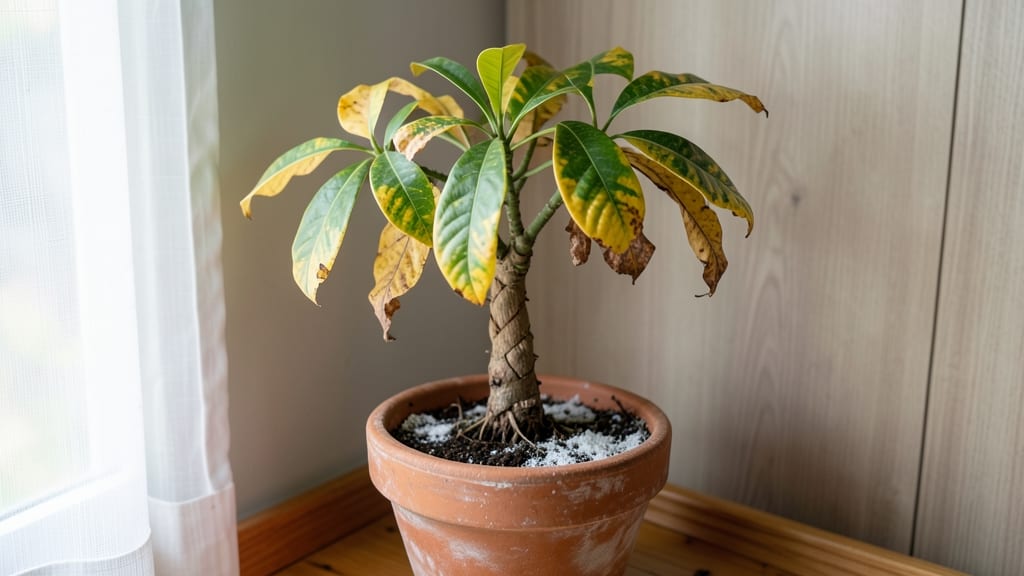
What does an overwatered money tree look like? Those droopy leaves and yellowing foliage aren’t just bad luck—they’re screaming "I’m drowning!" 🌱 Overwatering turns vibrant green leaves into sad, mushy messes, and the roots? They’ll rot faster than a forgotten sandwich. I’ve nursed more than a few back to health, and the fix starts with recognizing these exact warning signs.
Look for leaves that stay limp even when you’re not touching them, or edges turning brown like they’ve been singed. The soil might smell sour or cling to your fingers like wet clay.
Worst of all? Roots that look grayish and squishy instead of firm and white. These are the red flags that tell you to stop watering now—before the plant gives up completely.
Recovery isn’t hard: let the soil dry out completely between waterings, move the plant to brighter (but indirect) light, and check the pot’s drainage. Within a few weeks, you’ll see new growth pushing through, and those sad leaves will start to perk up.
Trust me, your money tree can bounce back—if you catch it in time.
Pro tip: Stick your finger in the soil first. If it’s still damp after a week, you’re overdoing it. A well-drained pot and a watering schedule that matches your home’s humidity will keep your plant thriving year-round. No more guesswork, just happy green growth.
Root Causes of Overwatering
Overwatering your money tree (Pachira aquatica) isn’t just a mistake—it’s a silent killer that disrupts the plant’s delicate balance of hydration and oxygen. Understanding the why behind it helps you fix the problem before it’s too late.
Let’s break down the science and common triggers that turn your thriving money tree into a soggy mess.
Your money tree thrives in well-draining soil and hates soggy roots. When you water too often—whether out of habit, forgetfulness, or misjudging soil moisture—roots suffocate. Here’s why:
- Oxygen Deprivation: Roots need aeration to breathe. Overwatering displaces oxygen in the soil, forcing roots to struggle in anaerobic conditions. Without oxygen, roots stop absorbing nutrients and begin to rot. - Soil Saturation: Money trees prefer soil that dries out top to bottom between waterings.
If the top 1–2 inches of soil are still damp, hold off! A quick test: Stick your finger in the soil—if it’s wetter than a damp sponge, wait. - Root Rot Pathogens: Fungal and bacterial infections (like Phytophthora or Pythium) thrive in waterlogged soil.
These pathogens break down root cell walls, leading to mushy, blackened roots.
💡 Pro Tip: Water only when the top 2–3 inches of soil are bone-dry. In winter, reduce watering to every 3–4 weeks—growth slows, so roots need less moisture.
Not all soil or containers are created equal. If your money tree’s home doesn’t allow excess water to escape, pooling at the bottom creates a death trap.
- Clay vs. Plastic Pots: Clay pots wick away moisture, while plastic traps it. If your plant is in a plastic container, switch to terracotta or ceramic for better airflow. - Compacted or Heavy Soil: Money trees need fast-draining, airy mixes.
If your potting soil is too dense (like garden soil or peat-heavy blends), water lingers instead of draining.
Ideal mixes include: - 50% cactus/succulent soil - 30% perlite or pumice (for aeration) - 20% orchid bark or coconut coir (for structure) - No Drainage Holes: This is a dealbreaker. Without holes, water collects at the bottom, drowning roots.
If your pot lacks them, repot immediately into one with drainage.
🔥 Warning: If your money tree is in a cache pot (a decorative outer pot without drainage), never let it sit in saucers of water. Empty saucers daily to prevent hidden root rot.
Your money tree’s environment plays a huge role in how it handles water. High humidity or cold drafts can trick you into overwatering—or worse, mask the signs of rot.
- High Humidity: In humid climates (like bathrooms or kitchens), soil stays moist longer. A money tree in 60%+ humidity may need water only every 10–14 days, not weekly. - Cold Drafts: Roots slow down in cold temps (below 60°F/15°C).
If your plant is near a window in winter, it’s not drinking as much.
Overwatering in these conditions = root suffocation. - Seasonal Confusion: Many plant owners water on a schedule (e.g., every Monday), ignoring the plant’s actual needs. Seasonal adjustments are key: - Spring/Summer: Water every 7–10 days (when topsoil is dry). - Fall/Winter: Water every 3–4 weeks (growth pauses).
🌡️ Quick Fix: Use a moisture meter ($10 on Amazon) to check soil moisture before watering. No meter? The finger test works—stick your finger in the soil and gauge dryness.
Money trees tell you when they’re thirsty or drowning—you just have to listen. Common mistakes include: - Mistaking Droopiness for Thirst: Yellow, mushy leaves + drooping = overwatering, not underwatering.
A thirsty money tree’s leaves feel crispy, not slimy. - Skipping the "Soak and Dry" Cycle: Money trees love deep watering but hate soggy soil.
A quick spritz from a spray bottle? Not enough. Water until it pours out the drainage hole, then wait until the soil is completely dry before repeating. - Using Ice Cubes or Cold Water: Shock value! Cold water restricts root function.
Always use room-temperature water to avoid stressing the roots.
✨ Sign You’re Overwatering: If you see white, fuzzy mold on the soil surface, stop watering immediately. This is root rot in action—act fast by repotting in fresh, dry soil.
Believe it or not, your pot choice can make or break your money tree’s health.
- Too Small = Root Bound: If roots are circling the pot, they can’t access water efficiently, leading to uneven moisture distribution (some areas get too wet, others dry out). - Too Large = Water Trapping: A huge pot holds excess moisture for weeks.
Stick to a pot that’s only 1–2 inches larger in diameter than the root ball. - Decorative Pots Without Drainage: If you love the look of a cache pot, use a grow pot inside with drainage, then place it in the decorative outer pot. Never skip the inner pot!
👨🍳 Action Step: If your money tree is in a non-draining pot, repot it ASAP into a terracotta or fabric grow pot with holes. Trim any black, mushy roots before replanting.
How to Fix Overwatered Money Trees
Reviving your money tree after overwatering is totally doable—just follow these targeted steps based on the root cause. Whether it’s soggy soil, root rot, or nutrient loss, we’ll get your plant back to its happy, thriving self with practical fixes and smart prevention tips.
Cause: Excess moisture is the #1 enemy of overwatered plants. Fix:
- Pause watering for at least 5–7 days to let the soil dry out. If the pot feels heavy or water drips out when lifted, wait longer.
- Check moisture levels by sticking your finger 1–2 inches into the soil. If it’s damp, hold off on watering.
Pro Tip: 💡 Use a moisture meter for accuracy—no guesswork!
Cause: Compacted, waterlogged soil suffocates roots. Fix:
- Remove the plant gently from its pot and inspect the roots.
- Shake off excess soil to assess damage (more on this below).
- Repot in fresh, well-draining mix:
- Use a cactus or succulent mix (or add perlite/pumice to regular potting soil for aeration).
- Choose a terracotta pot (if possible)—it dries faster than plastic.
- Bottom-water (place the pot in a tray of water for 10–15 mins, then drain) to avoid soggy topsoil.
Pro Tip: ✨ Avoid fertilizing for 2–4 weeks post-repotting—roots need time to recover!
Cause: Mushy, black, or smelly roots = fungal/bacterial rot. Fix:
| Root Condition | Action Needed | Tools Needed |
|---|---|---|
| Firm, white roots | Trim only brown/mushy bits, repot in fresh soil. | Pruning shears, fungicide (optional) |
| Mostly black/mushy | Severe rot? Trim all black roots, then soak the remaining healthy roots in hydrogen peroxide (3%) for 10 mins to kill fungus. | Scissors, peroxide, new pot |
| Smelly or slimy roots | Emergency fix: Rinse roots in water + 1 tsp cinnamon (natural antifungal) for 5 mins, then repot. | Cinnamon, clean water |
Pro Tip: 🌡️ If roots are beyond saving, propagate a cutting—money trees root easily in water!
Cause: Overwatering often stems from poor habits (e.g., sticking to a schedule). Fix:
- Water only when the top 1–2 inches of soil are dry (test with your finger!).
- Water deeply but infrequently: Give your money tree a good soak until water runs out the drainage holes, then wait.
- Use the "knuckle test": If your knuckles feel damp when pressed into the soil, wait another day.
Pro Tip: 🎯 Bottom-watering (placing the pot in a tray of water) encourages roots to grow downward and reduces topsoil sogginess.
Cause: Weak, etiolated growth from low light + excess moisture. Fix:
- Move to bright, indirect light (east or north-facing windows are ideal). Avoid harsh direct sun.
- Reduce humidity if your home feels damp:
- Use a dehumidifier near the plant.
- Avoid misting (it adds moisture to leaves, which can lead to fungal issues).
Pro Tip: 🔥 Aim for 40–60% humidity—money trees tolerate dry air better than soggy conditions!
Cause: Yellow, mushy, or droopy leaves won’t recover. Fix:
- Snip off any leaves that are:
- Yellow or brown (dead tissue).
- Mushy or slimy (fungal infection).
- Use sterilized scissors and cut at a 45° angle just above a leaf node.
- Don’t prune more than 1/3 of the plant at once—stress weakens recovery.
Pro Tip: 💡 Propagate cuttings! Place healthy pruned leaves in water to grow new plants.
- Upgrade your pot: Ensure it has drainage holes (no exceptions!).
- Monitor soil moisture: Invest in a moisture meter or use the finger test.
- Seasonal adjustments: - Winter: Water every 3–4 weeks (growth slows). - Summer: Water every 1–2 weeks (but check soil first!).
- Fertilize lightly: Use a balanced liquid fertilizer (diluted to ½ strength) every 2–3 months in spring/summer.
- Rotate the pot: Every few weeks to ensure even light exposure.
Final Note: 🌟 With patience and these fixes, your money tree will bounce back—often with new, vibrant growth within 4–6 weeks! Keep an eye on those roots, and soon you’ll be back to admiring its lush, lucky foliage.
Frequently asked questions
Why do my money tree's leaves turn yellow when overwatered?
Yellow leaves are a classic sign of overwatering because they indicate root suffocation. When roots sit in soggy soil, they can't absorb oxygen or nutrients, causing the plant to break down chlorophyll. Look for yellowing starting at the older leaves first—this is different from nutrient deficiencies, which usually start on new growth.
Can I save my money tree if the roots are mushy and smelly?
Yes, but you'll need to act fast! Trim all black, mushy roots with sterilized scissors, then repot in fresh, well-draining soil. For extra protection, soak healthy roots in 3% hydrogen peroxide for 10 minutes before replanting. If most roots are affected, you may need to propagate cuttings instead.
How often should I water my money tree in winter?
In winter, reduce watering to every 3-4 weeks since growth slows dramatically. The soil should dry out completely between waterings—stick your finger 2 inches deep. If it's still damp, wait longer. Cold drafts and shorter daylight hours mean your plant needs far less water than in summer.
What's the difference between overwatered and underwatered money tree leaves?
Overwatered leaves feel soft and mushy, often with yellowing or brown edges, and may develop a slimy texture. Underwatered leaves feel crispy and dry at the edges, with a papery texture. Both conditions cause drooping, but overwatered plants usually smell sour from rotting roots, while underwatered plants smell dry.
Will my money tree grow back after overwatering damage?
With proper care, your money tree can recover remarkably well. Focus on draining soil, proper pot size, and pruning damaged foliage. New growth often emerges within 4-6 weeks if you catch it early. The key is patience—don't fertilize until you see fresh green leaves appearing!