
Watering
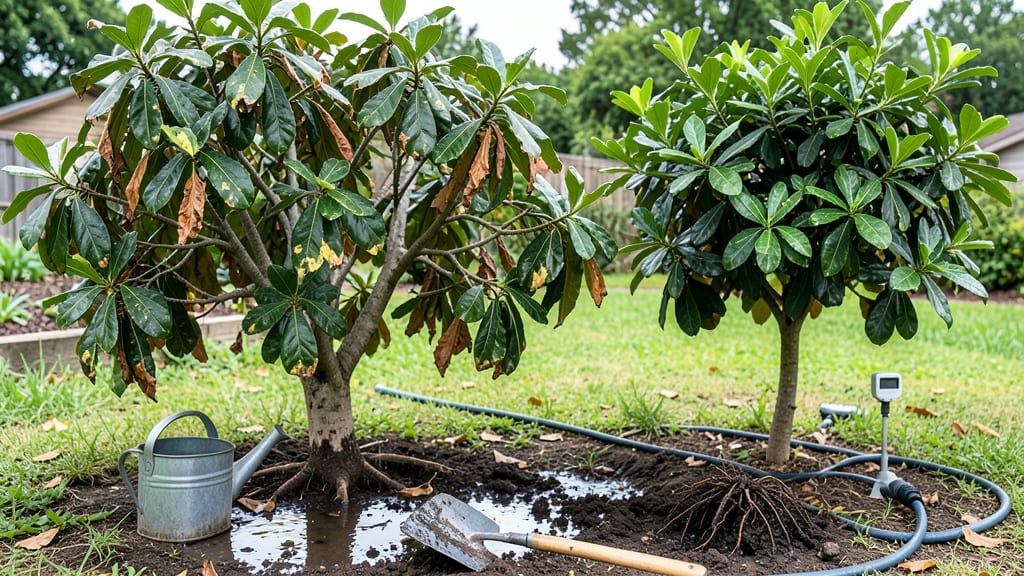
What does an overwatered avocado tree look like?
It reveals itself in shocking ways—yellow leaves that won’t stop, drooping branches that sag like wet paper, and roots so mushy they collapse when touched. 🌱 I’ve seen this happen after just two weeks of overzealous watering, and the damage spreads faster than you’d think.
The soil stays soggy for days, smelling like a swamp instead of fresh earth, while the trunk oozes dark sap where roots rot beneath the surface.
Here’s the kicker: these symptoms mimic underwatering at first glance. Both conditions cause yellowing leaves, but overwatered trees develop a dull, grayish tint while their edges curl inward. Check the soil—if it’s compacted and smells foul, you’ve got root rot.
Underwatered trees, meanwhile, have crispy, brown edges and pull away from the pot easily. The key difference? Overwatered trees feel heavy with water, while thirsty ones feel bone-dry.
Fixing it starts with cutting back water immediately—let the top 2-3 inches of soil dry completely between waterings. Improve drainage by adding perlite or sand to the mix, and prune any blackened or mushy roots you find.
Within weeks, you’ll see fresh green growth pushing through, and those sad branches will perk up like they’ve been given a second chance. The first sign of recovery? New leaves that stay bright green instead of fading to yellow.
This isn’t just about saving your tree—it’s about learning your avocado’s water needs. Most people overcorrect after fixing the problem, so I keep a moisture meter nearby to track progress. Once you’ve got the rhythm down, your tree will reward you with glossy leaves, sturdy branches, and maybe even fruit.
Trust me, the first avocado you harvest from a tree you’ve nursed back to health tastes like victory.
The Real Culprits Behind Overwatering
Overwatering your avocado tree isn’t just a gardening mistake—it’s a silent killer that disrupts the plant’s delicate balance. Avocados, native to tropical climates, thrive in well-draining soil, but when watered excessively, their roots suffocate, nutrients leach away, and diseases take hold.
Let’s break down the key reasons this happens, so you can avoid turning your green thumb into a soggy disaster. 🌧️🌱
Avocado trees despise soggy feet. Unlike drought-tolerant succulents, they need consistent moisture—but not saturation. When you water too often, the roots can’t absorb oxygen, leading to anaerobic conditions (low or no oxygen). This triggers:
- Root rot: Fungal pathogens like Phytophthora thrive in waterlogged soil, breaking down root cells and cutting off nutrient uptake.
- Nutrient leaching: Overwatering flushes essential minerals (like nitrogen, potassium, and magnesium) from the soil, starving the tree even as it drowns.
- Weak root structure: Healthy roots need air pockets to grow. Without them, roots become mushy, brittle, and unable to anchor the tree.
Actionable fix: Let the top 2–3 inches of soil dry out between waterings. Stick your finger in the soil—if it’s damp, wait. If it’s bone-dry, you’ve likely underwatered (but overwatering is worse!).
Avocados hate sitting in their own juice—literally. Whether potted or in-ground, compacted or clay-heavy soil traps water like a sponge, preventing excess moisture from escaping. Signs your tree is drowning in bad drainage:
- Water pooling: After watering, does a puddle linger for hours? That’s a red flag.
- Hard, crusty soil: Clay or poorly amended soil repels water, creating waterlogged "pockets" around roots.
- Root-bound pots: Roots circling the container block airflow and trap moisture.
Actionable fix:
- For potted avocados: Use a mix of 60% potting soil, 20% perlite, and 20% coconut coir to improve aeration. Elevate pots on saucers with drainage holes.
- For in-ground trees: Amend the soil with compost or sand to break up clay. Consider a French drain (gravel trench) around the base to redirect water.
Timing matters more than you think. Watering at the wrong time of day or during peak growth seasons can turn your avocado’s roots into a swamp. Here’s why:
- Evening watering: Cool nights slow evaporation, leaving roots sitting in damp soil for hours—ideal for fungal growth.
- Winter overwatering: Avocados slow their growth in cooler months. Watering as heavily as in summer forces roots to work overtime, leading to stress.
- Heavy rain + watering: Double-dosing moisture (e.g., watering after a storm) drowns roots before they can recover.
Actionable fix:
- Water early morning (6–9 AM) to let foliage dry before nightfall.
- Reduce watering by 30–50% in winter—check soil moisture before watering.
- After rain, wait 3–5 days before watering again unless the soil is parched.
Avocado trees aren’t one-size-fits-all when it comes to water. A sapling needs more frequent (but shallow) watering, while a mature tree has deeper roots that can handle longer dry spells. Misjudging their needs leads to:
- Overwatering young trees: Their shallow roots can’t handle deep saturation, leading to root rot within weeks.
- Underwatering mature trees: While less common, overcompensating with too much water after drought stress can shock established roots.
Actionable fix:
Tree Stage
Watering Needs
Red Flags
Seedlings (0–1 year)
Keep soil consistently moist (water every 2–3 days in pots).
Yellowing leaves, wilting despite wet soil.
Juvenile (1–3 years)
Water when top 1–2 inches dry (every 5–7 days).
Drooping leaves, soil smells sour.
Mature (3+ years)
Deep water once every 1–2 weeks (check 4+ inches down).
Mushy roots, fungal growth at base.
Sometimes, overwatering isn’t the sole villain—it’s a team player with pests and pathogens. Here’s how they team up:
- Fungal infections (e.g., root rot, powdery mildew): Thrives in wet conditions, clogging root pores and blocking water/nutrient flow.
- Scale insects or mites: Weak, waterlogged trees can’t fend off pests, which further stress the plant.
- Bacterial soft rot: Waterlogged soil creates anaerobic zones where bacteria multiply, causing roots to liquefy.
Actionable fix:
- Inspect roots for dark, mushy spots or white fungal threads.
- Use neem oil or copper fungicide if you spot mold or pests.
- Prune affected roots (sterilize tools with rubbing alcohol) and repot in fresh, dry soil.
Revive Your Avocado Tree Now
Overwatering can feel like a slow-motion disaster for your avocado tree, but the good news is that fixing it is totally doable—even if your tree looks like it’s staging an intervention. The key is acting fast, adjusting your watering habits, and giving your plant’s roots a chance to breathe.
Below, we’ll break down exact steps for each symptom, plus prevention tips to keep your avocado thriving long-term.
If your avocado tree’s leaves are turning yellow or brown at the edges, root rot might already be setting in. Here’s how to save it:
Step 1: Stop Watering Immediately
🚰 Pause all watering for at least 3–5 days to let the soil dry out. This gives the roots a chance to recover before they suffocate further.
Step 2: Check the Soil Moisture
👨🍳 Stick your finger 2 inches into the soil—if it’s damp, wait another day or two. If it’s bone-dry, you’ve been underwatering (unlikely if you’re here, but good to confirm!). For avocados, top 2 inches should be dry before watering again.
Step 3: Improve Drainage
🔨 Repot if needed: If your tree is in a container, choose a pot with drainage holes (or drill them yourself!). If it’s in the ground, amend the soil with perlite, sand, or coconut coir to loosen compacted earth.
Step 4: Prune Damaged Foliage
✂️ Trim yellow or mushy leaves with clean pruners. This helps the tree focus energy on healthy growth. Don’t panic-prune—just remove what’s clearly dead or dying.
💡 Pro Tip:
> Test your soil’s drainage by filling a pot with water and timing how long it takes to drain. If it sits for more than 30 minutes, your soil is too dense.
Droopy branches are a clear SOS from your avocado tree. This usually means waterlogged roots are struggling to absorb nutrients. Here’s the emergency protocol:
Step 1: Lift and Inspect the Roots (For Potted Trees)
🌱 Gently remove the tree from its pot (if possible) and examine the roots. Healthy roots are firm and white; rotten roots are mushy, black, or smell foul.
If you see white fungal growth, that’s a red flag.
Step 2: Trim Rotten Roots
✂️ Use sterilized scissors or pruners to snip off any black, mushy, or squishy roots. Cut cleanly (no tearing) to prevent further damage.
Step 3: Repot in Fresh, Well-Draining Soil
🏺 Rinse the remaining roots with water to remove old soil, then repot in a mix of:
- 60% potting soil
- 20% perlite or pumice (for aeration)
- 20% compost or worm castings (for nutrients)
Step 4: Water Lightly and Monitor
💦 Water sparingly for the first week—just enough to moisten the soil, not soak it. Avoid overhead watering (which can promote fungus).
💡 Pro Tip:
> For ground-planted trees, dig around the base to loosen compacted soil and mix in sand or grit to improve drainage. If the soil stays soggy for days, consider raising the planting area slightly.
If you’ve spotted mushrooms, mold, or a foul odor near the roots, your tree is dealing with advanced root rot. This requires aggressive treatment:
Step 1: Sterilize Everything
🧼 Clean your tools with rubbing alcohol or a 10% bleach solution. Disinfect the pot (if repotting) by soaking it in hot, soapy water for 10 minutes.
Step 2: Apply Fungicide
💊 Use a copper-based or hydrogen peroxide fungicide (3% solution) to drench the roots before repotting. This helps kill fungus and prevent spread.
Step 3: Adjust Watering Forever
⏰ Water only when the top 3 inches of soil are dry. Use the “finger test” daily until you see improvement. Morning watering is best—it gives excess moisture time to evaporate.
💡 Pro Tip:
> Add beneficial microbes like mycorrhizal fungi to your repotting mix. These boost root health and help the tree recover faster.
Now that your tree is on the mend, lock in these habits to prevent overwatering for good:
✅ Choose the Right Pot: Always use containers with drainage holes. If planting in the ground, avoid low-lying areas where water pools.
✅ Water Deeply, Not Often: Soak the soil until water runs out the drainage holes, then wait until the top 2–3 inches are dry before watering again.
✅ Mulch to Retain Moisture (Without Overdoing It): Use 2–3 inches of organic mulch (like wood chips) to slow evaporation, but keep it 2 inches away from the trunk to prevent rot.
✅ Monitor the Weather: Reduce watering in rainy seasons or if humidity is high. Avocados hate soggy feet—even in humid climates!
✅ Fertilize Wisely: Over-fertilizing can burn roots, making them more susceptible to rot. Use a balanced, slow-release fertilizer (like 10-10-10) every 2–3 months in spring and summer.
✅ Watch for Signs Early: Yellowing leaves, wilting, or slow growth? Act fast—catching overwatering early means minimal damage.
Final Thought: 🌿 Your avocado tree might need a little TLC, but with these steps, it can bounce back stronger than ever. Patience is key—some trees take weeks to recover, but consistent care will have it thriving in no time.
Now go give that leafy friend a second chance! 🌱💚
Frequently asked questions
How can I tell if my avocado tree's yellow leaves are from overwatering vs. underwatering?
Overwatered avocado trees show dull, grayish yellow leaves with edges curling inward, while underwatered trees have crispy, brown edges curling outward. Check the soil: if it's soggy and smells foul, you're overwatering. If it's bone-dry and pulls away from the pot, it's thirsty.
Why do my avocado tree's branches keep drooping even after I water?
Drooping branches in an avocado tree usually mean root rot from overwatering. The roots can't absorb nutrients when waterlogged, causing the tree to wilt. Lift the pot (if possible) to check for mushy, black roots—if you see these, you need to trim the rotten roots and repot in fresh, well-draining soil.
Can I save an avocado tree with root rot, or is it too late?
It's never too late to act! First, stop watering immediately and let the soil dry completely. Then, prune all black/mushy roots and repot in a mix of 60% potting soil, 20% perlite, and 20% compost. Use a copper fungicide to prevent further infection. With proper care, many trees recover within 4-6 weeks.
How often should I water my avocado tree to avoid overwatering?
For potted avocados, water when the top 2-3 inches of soil are dry (about every 5-7 days in summer, less in winter). For mature trees in ground, water deeply once every 1-2 weeks. Always check soil moisture before watering—stick your finger in! Morning watering is best to prevent fungal growth.
What's the best way to improve drainage for my avocado tree?
For potted trees, use a mix of 60% potting soil, 20% perlite, and 20% coconut coir. Ensure the pot has drainage holes. For in-ground trees, amend clay soil with sand or compost and consider creating a French drain (gravel trench) around the base. Elevate the planting area slightly if water pools after rain.