
Plants
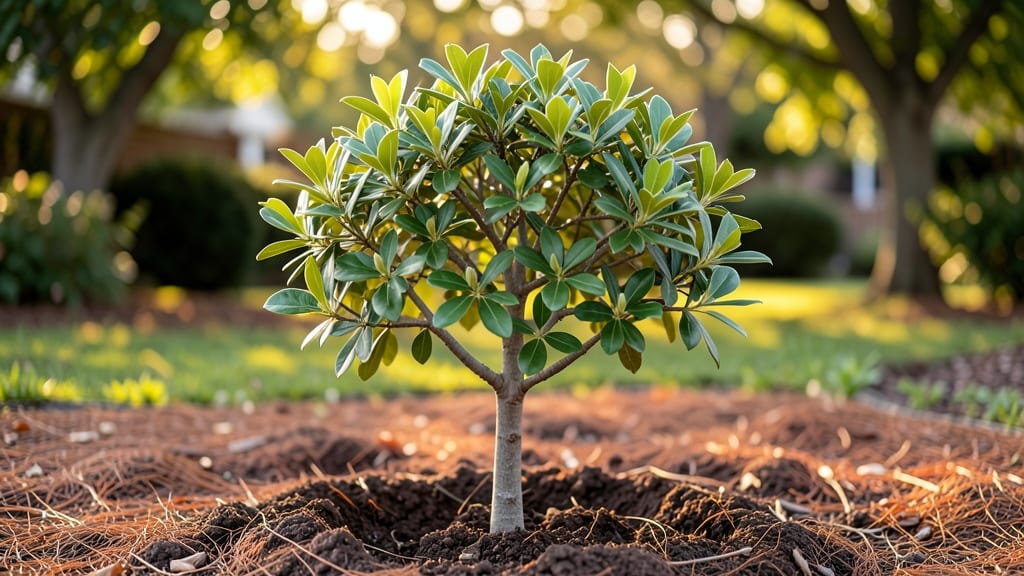
What does a young magnolia tree look like? It starts as a delicate, slow-growing wonder with glossy leaves shaped like oval eggs. 🌱 The bark is smooth and silvery-gray, almost like a miniature version of its grander self, while the branches grow upright and sturdy—though still thin enough to bend with a gentle touch. Unlike mature magnolias, these young trees rarely bloom in their first few years, but their leaves alone tell the story of their future grandeur.
Southern magnolias begin with dark green, leathery leaves that feel almost waxy to the touch, while star magnolias show lighter green, slightly fuzzy foliage. The growth habit is compact—often under 5 feet tall after three years—making them perfect for small yards or containers.
Confusing them with other trees? Look for the distinctive magnolia leaf shape and the way new growth unfurls from bright red buds.
By year five, you’ll start seeing the first hints of what’s to come: small, cup-shaped blooms on star magnolias or the occasional late-season flower on Southern varieties. The bark develops subtle ridges, and the branches thicken, but the tree still carries that youthful charm.
These early stages are where the magic of magnolias begins—quiet, patient, and full of promise.
Whether you’re trying to identify a sapling or nurture one from seed, recognizing these features early helps you give it the right care. Young magnolias thrive in partial shade and well-draining soil, setting the stage for decades of beauty.
The key is watching for those telltale leaves and buds—they’re your first clues to a future giant.
Natural Growth Stages Explained
Understanding why a young magnolia tree looks the way it does starts with recognizing its developmental phases—each with distinct visual cues. Magnolias follow a predictable growth pattern influenced by genetics, environment, and care. Here’s a breakdown of the key reasons behind their appearance at different stages:
Magnolias are slow-growing, long-lived trees, and their early appearance is hardwired into their DNA. Different species (like Magnolia grandiflora or Magnolia stellata) have unique leaf shapes, bark textures, and bloom timings due to evolutionary adaptations.
For example: - **Southern magnolias (M. grandiflora) sprout leathery, evergreen leaves almost immediately after germination because they’re adapted to warm climates. - Deciduous magnolias (M. soulangeana) grow smooth, coppery-red buds in winter, which later unfurl into large, showy flowers—a trait that helps them attract pollinators early in the season. - Pro tip: 🌡️ If your young magnolia’s leaves look too small or thin, it might be a hybrid or a different species entirely.
Check its parentage or consult a local nursery for confirmation.
When a magnolia starts from a seed or cutting, its first leaves are simple, alternate, and often serrated—a survival strategy to maximize sunlight capture in shaded forest understories (their natural habitat).
Key factors: - Cotyledons (first leaves): These are not true magnolia leaves but temporary structures that store energy.
They’ll fall off as the seedling matures. - True leaves: After 4–8 weeks, dark green, oval-shaped leaves emerge, often with a slightly waxy coating to reduce water loss. - Why it matters: If your seedling’s first leaves yellow or drop prematurely, it may be overwatered or suffering from fungal infection** (like Phytophthora, common in damp soil).
Young magnolias are highly sensitive to their surroundings, and their appearance can shift based on:
| Factor | Effect on Appearance | Solution |
|---|---|---|
| Sunlight | Too much sun = bleached or curled leaves | Plant in partial shade (4–6 hours of sun). |
| Water stress | Wilting, brown edges, or stunted growth | Keep soil moist but not soggy (1–2 inches deep). |
| Cold damage | Blackened buds or leaves (common in spring) | Mulch heavily in winter; choose cold-hardy species (e.g., M. × loebneri). |
| Soil pH | Yellowing leaves (chlorosis) if pH > 6.5 | Test soil and amend with sulfur or peat moss. |
💡 Pro tip: If your young magnolia’s bark looks rough or peeling early, it could be a sign of bacterial leaf scorch—prune affected branches and avoid overhead watering.
Magnolias prioritize growth over flowers in their first few years.
Here’s why: - First 2–3 years: The tree focuses on root and stem development, so blooms are rare or absent. - Years 4–5: If conditions are ideal (full sun, rich soil, proper watering), you’ll see buds forming—but they may drop if the tree isn’t strong enough. - Why buds fail to open: - Late frost (magnolias bloom before leaves in some species, making them frost-sensitive). - Nutrient deficiency (lack of phosphorus or potassium delays flowering). - Over-fertilizing with nitrogen (promotes leafy growth at the expense of blooms).
🎯 Actionable fix: If your magnolia has buds but no flowers, try lightly fertilizing in early spring with a low-nitrogen, high-phosphorus formula (e.g., 5-10-10).
Young magnolias are prime targets for pests and pathogens because their thin bark and tender leaves are easy to penetrate.
Common culprits: - Scale insects → Sticky residue (honeydew) on leaves and yellowing foliage. - Webworms → Silky webs between leaves and chewed leaf edges. - Fungal leaf spot → Dark spots with yellow halos (often from overhead watering). - Solution: Use neem oil for pests or copper fungicide for diseases. Prune infected areas immediately to prevent spread.
Improper pruning can stunt growth or alter a magnolia’s natural shape.
Common mistakes: - Cutting too late in the season (after June) → Encourages weak, frost-sensitive growth. - Removing too many leaves → Reduces photosynthesis, slowing development. - Topping the tree → Creates ugly, bushy growth instead of a graceful form. - Fix it: Prune only in late winter/early spring (before buds swell) and never remove more than 20% of the canopy in one year.
Quick Fixes for Young Magnolia Care
Got a young magnolia tree that’s not thriving? Don’t worry—most issues have simple, effective solutions. Below, we’ll match common problems to practical fixes, so you can help your tree grow strong and healthy. 🌱💚
Cause: Too much water, poor drainage, or a lack of essential nutrients (like nitrogen or iron).
How to Fix It: ✅ Adjust Watering Habits 💧
- Magnolias hate soggy roots! Water deeply once a week (or less in rainy seasons) and ensure the soil drains well. If your tree is in a pot, use a container with drainage holes.
- Test the soil: Stick your finger 2 inches deep—if it’s damp, wait before watering again.
✅ Fertilize Smartly 🌱
- Use a balanced, slow-release fertilizer (like 10-10-10) in early spring. Avoid high-nitrogen fertilizers if your tree has yellowing leaves—it could worsen the issue.
- For iron deficiency (yellow leaves with green veins): Apply chelated iron or use a foliar spray.
💡 Prevention Tip: Mulch around the base (2–3 inches thick) to retain moisture and regulate soil temperature.
Cause: Sudden temperature changes, poor planting, or exposure to harsh elements.
How to Fix It: ✅ Protect from Extreme Conditions ❄️☀️
- If planted recently, avoid moving it for at least a year. Magnolias dislike being transplanted as adults.
- In hot climates, provide afternoon shade (especially for Southern Magnolias).
- Windbreaks: Use a temporary fence or barrier if your tree is in a breezy spot.
✅ Check the Roots 🌳
- If leaves are dropping after planting, the roots may be circumferentially girdled (wrapped too tightly in burlap or wire). Gently loosen any bindings.
- Water deeply after planting to help roots establish.
💡 Prevention Tip: Plant magnolias in fall or early spring when temperatures are mild, giving roots time to settle before summer stress.
Cause: Sap-sucking insects (like scale) or chewing pests (like Japanese beetles) weaken young trees.
How to Fix It: ✅ Spot and Treat Pests Early 🦟🔍
- Scale insects (brown bumps on stems/leaves): Wipe off with a soapy water solution (1 tsp mild dish soap per gallon of water).
- Spider mites (tiny webs on undersides of leaves): Spray with neem oil or horticultural oil every 5–7 days.
- Caterpillars (chewed leaves): Handpick them or use Bt (Bacillus thuringiensis), a natural bacteria-based pesticide.
✅ Encourage Natural Predators 🐞
- Ladybugs and lacewings eat spider mites! Plant companion flowers like marigolds or alyssum nearby to attract them.
💡 Prevention Tip: Inspect leaves weekly during growing season. Early action prevents infestations from spreading.
Cause: Poor soil, lack of sunlight, or root-bound conditions (if potted).
How to Fix It: ✅ Improve Soil Quality 🌦️
- Magnolias love acidic, well-draining soil (pH 5.0–6.5). If your soil is alkaline, amend with peat moss or sulfur.
- For potted trees: Repot every 2–3 years with fresh, airy potting mix.
✅ Optimize Sunlight ☀️
- Most magnolias need partial shade (4–6 hours of sun). Too much direct sun can scorch leaves, while too little slows growth.
- Test your spot: If leaves are pale, it needs more light. If they’re crispy, it’s getting too much.
💡 Prevention Tip: Feed in early spring with a low-phosphorus fertilizer (like 12-4-8) to encourage leafy (not flower-heavy) growth.
Cause: Overwatering, poor drainage, or fungal infection (like anthracnose).
How to Fix It: ⚠️ Act Fast—This Is Serious!
- Stop watering immediately and let the soil dry out.
- Trim affected leaves/stems with sterilized pruners (dip in rubbing alcohol).
- Apply fungicide (like copper fungicide or neem oil) if you see dark spots or mold.
- For severe root rot: Dig up the tree, trim dead roots, and repot in fresh, sterile soil.
💡 Prevention Tip: Never let magnolias sit in standing water. Elevate containers or improve drainage with gravel.
Keep a simple care journal—note when you water, fertilize, or see changes. Most magnolia issues are fixable with consistent, gentle adjustments. If all else fails, consult a local arborist for a soil test or expert advice.
Your young magnolia will thank you with glossy leaves, sturdy branches, and future blooms—just give it the right love! 🌸🌿
Frequently asked questions
How can I tell if my young magnolia is a Southern magnolia or a star magnolia?
Look at the leaves and buds! Southern magnolias have dark green, leathery, evergreen leaves that stay on year-round, while star magnolias grow lighter green, fuzzy leaves that turn yellow in fall. Star magnolias also develop bright red buds in winter that bloom into star-shaped white flowers, while Southern magnolias bloom later with large, creamy-white flowers.
Why does my young magnolia have no flowers after 3 years?
Magnolias prioritize root and branch growth in their first few years, so blooms are rare before age 4-5. If your tree is healthy (glossy leaves, smooth bark), just be patient—star magnolias often bloom earlier than Southern varieties. If it’s struggling, check for over-fertilizing with nitrogen (which delays flowering) or late spring frosts that can damage buds.
What does a magnolia seedling look like in its first month?
A newborn magnolia seedling starts with cotyledons (first leaves) that look like tiny, rounded seed leaves, not true magnolia foliage. After 4-8 weeks, the real leaves appear as dark green, oval-shaped with a slightly waxy texture. The stem is thin and upright, often only 2-4 inches tall at this stage, with a smooth, silvery-gray bark.
How tall should a 2-year-old magnolia tree be?
A healthy 2-year-old magnolia typically grows 2-3 feet tall, though some dwarf varieties may stay under 1 foot. If yours is much smaller, check for poor soil drainage or insufficient sunlight (they need partial shade). Overwatering can also stunt growth—water only when the top 1-2 inches of soil feel dry.
Can I grow a young magnolia in a pot?
Yes, but choose a large container with drainage holes (at least 18 inches wide) and use acidic potting mix. Repot every 2-3 years and move it outdoors in spring/summer, bringing it inside before 32°F temperatures. Just remember—potted magnolias grow slower than in-ground trees and may take longer to bloom.