
Pruning
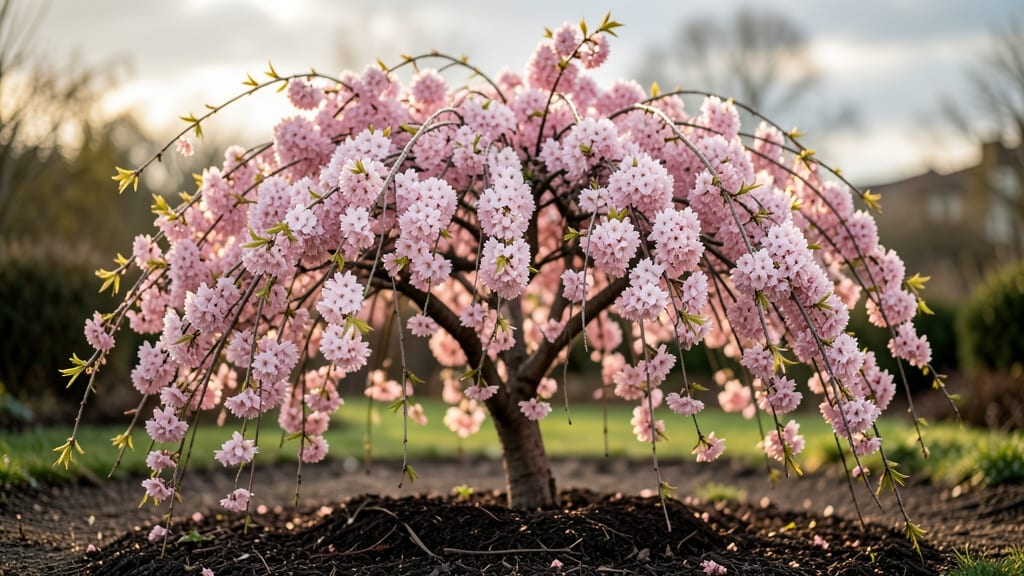
Your weeping tree pink could be the centerpiece of your garden's soft elegance. ✨ These trees aren't just beautiful—they're architectural statements with cascading branches that frame any landscape like a living watercolor.
Their delicate pink blooms turn heads in spring, but with the right pruning, they'll keep putting on shows all season long.
Start by pruning right after flowering to encourage fresh growth before summer. I trim my tree's lower branches first to create that signature weeping shape, then thin out crowded areas to let light reach the center.
This isn't about drastic cuts—think gentle shaping, like sculpting with living branches. The goal is to maintain that graceful, almost fountain-like silhouette that makes these trees so special.
When done right, your tree will burst with fresh pink blooms come spring and maintain that lush, layered look all year. Pair it with hostas for contrast, or let it spill over a retaining wall near a water feature for maximum drama.
The key is keeping the center open so light and air circulate—this prevents those pesky dead branches that ruin the effect.
Here's the secret: prune in stages. Do a light shaping in late winter, then just maintain throughout the year. Your tree will reward you with those signature cascading branches and a canopy of pink that makes every season feel like spring.
The best part? You'll get compliments that make your neighbors jealous of your green thumb.
📚 In This Guide
- What you need
- Instructions
- Tips and common mistakes
- Wrapping up and next steps
What you need
- ● Pruning shears: Bypass pruners (sharp, clean, and disinfected with rubbing alcohol). Quantity: 1 pair.
- ● Loppers: For thicker branches (1.5" diameter or larger). Quantity: 1 pair.
- ● Hand pruners: Small, precise cuts for fine branches. Quantity: 1 pair.
- ○ Pruning saw: For stubborn, large branches (optional but helpful). Quantity: 1.
- ● Gloves: Heavy-duty gardening gloves (protects from thorns and sap). Quantity: 1 pair.
- ● Disinfectant: 70% isopropyl alcohol or bleach solution (1 part bleach to 9 parts water) to sterilize tools.
- ● Trash bags: Heavy-duty for debris disposal. Quantity: 2-3.
- ○ Pruning sealant (optional): For large cuts to prevent disease (e.g., Tanglefoot Tree Wound Pruning Seal).
- ● Timing: Prune in late winter or early spring (before buds swell) or right after blooming (May-June) to avoid cutting off next year’s flowers.
- ● Weather: Choose a dry, calm day to prevent sap bleeding and disease spread.
- ● Safety gear: Safety glasses (if sawing large branches) and long sleeves to protect from sap irritation.
- ● Cleanup supplies: Paper towels or rags for wiping tools between cuts.
Step-by-step guide to pruning weeping tree pinks
Here’s how to revive your weeping tree pink’s graceful shape and keep those blooms coming all season.
✂️ Step 1: Time Your Pruning for Peak Health
Prune your weeping tree pink right after flowering, typically in late spring or early summer. This timing ensures you don’t cut off next year’s buds while the plant is still storing energy for new growth. Avoid pruning in fall or winter—cold weather stresses the plant, and new growth won’t harden off properly before frost.
If your tree pink bloomed heavily this spring, you’ll notice spent flower clusters and leggy branches reaching outward. These are your first targets. Use sharp, clean pruners to make cuts just above a leaf node or outward-facing bud. This encourages new growth in the right direction and prevents a messy, overgrown look.
✂️ Step 2: Shape the Weeping Form
Weeping tree pinks thrive on their cascading shape, so focus on maintaining that natural flow. Start by thinning out overcrowded branches from the center—these compete for sunlight and weaken the structure. Remove any branches growing straight up or inward; they disrupt the tree’s graceful silhouette.
For longer branches, cut back by about one-third to encourage bushier growth. Look for places where branches fork naturally—these are ideal spots to make your cuts. If a branch is completely dead or diseased, remove it entirely at the base. You’ll know it’s dead if it’s brittle, has no leaves, and peels easily when touched.
✂️ Step 3: Encourage More Blooms
To keep your weeping tree pink blooming all season, prune lightly throughout the summer. After each flush of flowers fades, trim back the spent blooms by about ½ inch above the next set of leaves. This practice, called deadheading, signals the plant to redirect its energy into producing more flowers instead of seeds.
Pay special attention to the outer edges of the tree. These areas often grow leggy and sparse. Cutting back these branches by ¼ to ⅓ will stimulate denser foliage and more blooms. You’ll see new shoots emerging within 4-6 weeks, and the tree will fill out more evenly. Just avoid heavy pruning in late summer—it can stunt fall blooms.
💧 Step 4: Post-Pruning Care for Recovery
After pruning, give your weeping tree pink a deep watering to help it recover. Focus on the root zone, watering slowly until the soil is moist 6-8 inches deep. Mulch around the base with 2-3 inches of organic mulch (like shredded bark or wood chips) to retain moisture and protect roots from temperature swings.
Keep an eye out for signs of stress, like yellowing leaves or wilting branches. If you see these, your tree might need more water or shade during the first few weeks after pruning. Avoid fertilizing right after trimming—let the plant focus on healing before adding extra nutrients. Once new growth appears, you can feed it lightly with a balanced fertilizer in early fall to prep for next year’s blooms.
⏰ Step 5: Plan for Year-Round Maintenance
Weeping tree pinks reward consistent care, so schedule a light pruning session every 4-6 weeks during the growing season. This keeps the shape refined and encourages continuous blooming. In late fall, do a final cleanup by removing any dead or crossing branches—this prevents pests and diseases from hiding over winter.
Here’s the thing—weeping tree pinks grow fast, so don’t wait until they look unruly to prune. A little attention now means fewer drastic cuts later. You’ll notice a difference in just a few weeks: fuller branches, more blooms, and that signature cascading form you fell in love with.
Tips & tricks for pruning weeping tree pinks
Here's what I've learned after years of shaping these elegant plants—these little details make all the difference in keeping your tree pinks looking their best.
Tool Prep Matters: Before you even touch a branch, disinfect your pruners with rubbing alcohol. I learned this the hard way when my tree pink developed brown spots after pruning—turns out, old pruners can harbor bacteria that spreads disease. Sharp tools also make cleaner cuts that heal faster, so take 2 minutes to hone your blades before starting. The right angle matters too: make cuts at a 45-degree angle just above a leaf node to encourage new growth in the right direction.
The One-Third Rule: When cutting back longer branches in Step 2, remember this guideline: never remove more than one-third of the branch length at once. I once over-pruned a branch by half and ended up with bare spots where no new growth would come. The plant needs its leaves to photosynthesize and fuel new growth, so be patient. If you're unsure, cut back just a quarter and reassess in a few weeks.
Seasonal Bloom Hack: For continuous blooming, I've found that timing your deadheading just right is key. After each flush of flowers fades (about every 6-8 weeks), trim back by ½ inch above the next set of leaves. This works because it removes the spent blooms while preserving the leaf nodes that will produce new flowers. The key is consistency—don't skip this step after every bloom cycle, or you'll miss out on that second flush of flowers many varieties produce.
Recovery Checklist: After your pruning session, don't just walk away! Your tree needs proper care to recover. I always do these three things:
- Water deeply to the 6-8 inch mark,
- Add 2-3 inches of organic mulch to protect roots, and
- Give it a light shade cloth if temperatures exceed 90°F for more than a few days. This routine helps prevent transplant shock and keeps your tree pink thriving through its recovery period.
Pro Tips for Weeping Tree Pink
- Here's what I've learned after years of shaping these elegant plants—these little details make all the difference in keeping your tree pinks looking their best.
- Tool Prep Matters: Before you even touch a branch, disinfect your pruners with rubbing alcohol.
- The One-Third Rule: When cutting back longer branches in Step 2, remember this guideline: never remove more than one-third of the branch length at once.
Frequently asked questions
When is the best time to prune my Weeping Tree Pink?
Prune your Weeping Tree Pink in early spring (just before new growth starts) or right after flowering (late spring to early summer). Avoid pruning in fall or winter—this tender perennial needs time to recover before cold snaps. Pro tip: If you live in a mild climate, a light trim after each bloom cycle can extend flowering!
How much can I cut back without harming the plant?
You can safely trim up to 1/3 of the plant’s height in one session. For a Weeping Tree Pink, focus on removing dead or leggy stems first, then shape by cutting just above a leaf node (the bump where leaves grow). Avoid over-pruning—this can stress the plant and reduce blooms. Pro tip: Use clean, sharp shears to prevent tearing!
Will pruning make my Weeping Tree Pink bloom more?
Pruning encourages bushier growth and more flowers by removing spent blooms and congested stems. The key is regular light trims (every 4–6 weeks during the growing season). Deadheading (snipping off faded flowers) also signals the plant to produce new blooms. Pro tip: Pinch back young plants in early summer to promote a fuller shape!
What should I do if my Weeping Tree Pink looks sad after pruning?
If your plant looks wilted or sparse post-pruning, it’s likely adjusting to the change. Give it bright, indirect light and consistent water (keep soil lightly moist but not soggy). Avoid fertilizing right after pruning—wait 2–3 weeks to let it recover. Pro tip: A light layer of mulch helps retain moisture and protect roots!
Are there alternatives if I don’t want to prune?
If pruning feels overwhelming, you can still maintain your Weeping Tree Pink with minimal effort:
- Deadhead spent blooms to encourage new flowers.
- Remove only dead or diseased stems (no shaping needed).
- Divide the plant every 2–3 years to rejuvenate growth.
Just know that regular pruning = longer blooms and a fuller shape—but even low-maintenance care keeps it happy!
Wrapping up and next steps
The Weeping Tree Pink is a stunning addition to any garden, and with the right pruning techniques, you can ensure its graceful shape and vibrant blooms for seasons to come. 🌸 By following the steps outlined—timing, tools, and aftercare—you’ll not only enhance its beauty but also promote healthier growth.
Now that you’re equipped with the knowledge, why not take the first step this weekend? Grab your pruners, admire your tree, and give it the care it deserves for a flourishing future!