
Flowers
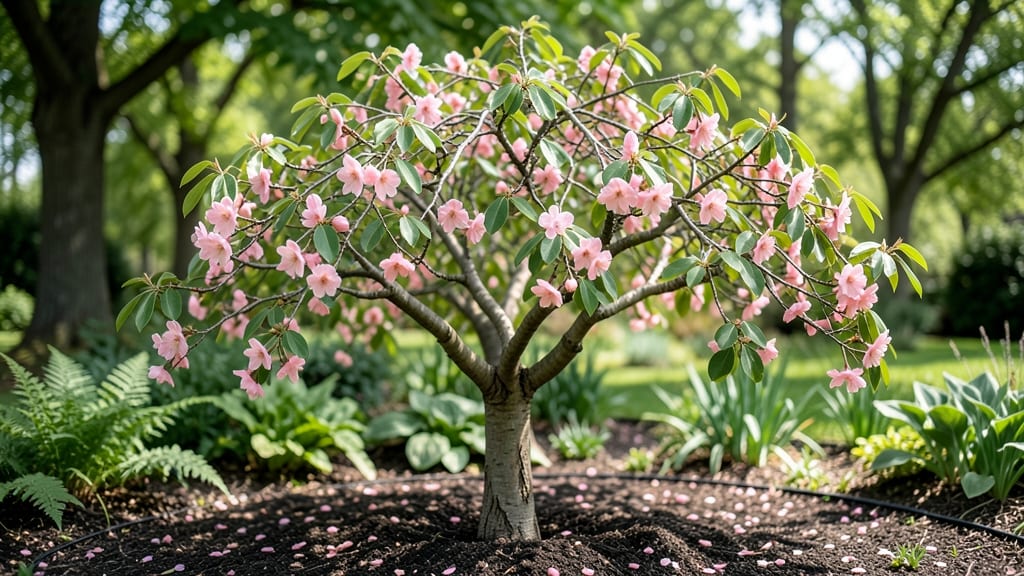
Transform your garden into a dreamy pink paradise with a tree with little pink flowers that bloom like fairy dust. 🌸 I’ve planted three varieties that turn heads in spring—Japanese cherry (Prunus serrulata), crabapple (Malus), and flowering almond (Prunus triloba)—each with delicate pink flowers that attract bees and butterflies while adding soft color to any landscape.
These trees aren’t just pretty—they’re practical too. Japanese cherries create dramatic focal points with their cascading branches, while crabapples offer year-round interest with their glossy foliage and persistent fruit.
Flowering almonds are the underdogs: low-maintenance, drought-tolerant, and perfect for smaller spaces. Plant them near patios or along driveways for easy enjoyment.
Spring blooms last 2-3 weeks, but the show doesn’t stop there. Crabapples hold onto their fruit through fall, and all three trees develop attractive bark and foliage for winter structure. Pair them with spring bulbs like daffodils or early perennials like bleeding heart for layered color.
Pruning is simple: just remove dead wood in late winter and shape lightly after blooming. Mulch well to retain moisture, and water deeply during the first growing season. With minimal effort, you’ll have a tree that steals the show every spring—and keeps your garden lively all year.
The Science Behind Blossoms
If you’ve ever spotted a tree adorned with delicate pink blooms and wondered why it happens, the answer lies in a fascinating blend of biology, genetics, and environmental cues. These tiny floral displays aren’t just random—they’re the result of carefully orchestrated processes that ensure survival, reproduction, and even seasonal adaptation.
Let’s break down the key reasons why trees produce these charming pink flowers, from genetic blueprints to environmental triggers.
Every tree’s floral display starts with its genetic code. Some species, like the Cercis canadensis (eastern redbud) or Prunus serrulata (Japanese cherry), are hardwired to produce pink flowers as part of their reproductive strategy. These genes dictate:
- Flower color: Pink hues often attract specific pollinators (like bees or butterflies) that are drawn to this wavelength of light.
- Bloom timing: Genes trigger flowering at precise times—sometimes early spring—to coincide with pollinator activity.
- Flower structure: The shape and size of petals are optimized for pollination efficiency.
Actionable tip: If you’re growing a tree with pink flowers, choose varieties bred for your climate. For example, Lagerstroemia indica (crape myrtle) thrives in warm zones, while Cornus mas (cornelian cherry) prefers cooler regions. 🌡️
Trees don’t bloom on a whim—they respond to environmental cues that signal it’s time to flower. The two biggest triggers are:
| Factor | How It Works | Example |
|---|---|---|
| Day Length (Photoperiodism) | Many trees detect changes in daylight hours. Short days (winter) or long days (spring) can trigger bud formation. | Magnolia stellata blooms in early spring when days lengthen. |
| Temperature | Cold winters (vernalization) break dormancy, while warm spells kickstart growth. Some trees need a chilling requirement (e.g., 500–1,000 hours below 45°F). | Prunus avium (wild cherry) needs winter chill to flower. |
| Rainfall & Humidity | Moisture ensures buds stay hydrated and prevents stress. Drought can delay or stifle blooms. | Davidia involucrata (handkerchief tree) thrives in humid climates. |
Pro tip: If your tree isn’t flowering, check its hardiness zone and mimic natural conditions. For instance, simulate winter chill with a dormancy spray or adjust watering to avoid stress. 💡
Pink flowers often evolve to attract pollinators, which are essential for fertilization. Here’s how it works:
- Nectar rewards: Bright pink petals signal nectar-rich flowers to bees, butterflies, and hummingbirds.
- Visual cues: Pink stands out against green foliage, making trees more visible to flying pollinators.
- Timing sync: Trees bloom when pollinators are most active (e.g., early spring for bees emerging from hibernation).
What if pollinators are scarce? Some trees may produce fewer flowers or rely on wind pollination (like Betula nigra, the river birch, which has catkins). To support pollinators, plant companion flowers (e.g., lavender or daffodils) near your tree. 🐝
While genetics and nature drive flowering, stress can disrupt the process. Common culprits include:
- Over-fertilizing: Too much nitrogen promotes leafy growth at the expense of flowers (think of a fertilizer burn on blooms).
- Poor drainage: Waterlogged roots starve the tree of oxygen, weakening its energy reserves for flowering.
- Pruning at the wrong time: Cutting back flowering branches in late winter removes next year’s buds.
- Pests/disease: Aphids, scale, or fungal infections (like powdery mildew) drain the tree’s energy.
Fix it: For nitrogen-heavy soil, switch to a balanced 10-10-10 fertilizer in early spring. Test soil pH—most flowering trees prefer 6.0–7.0. 🔧
Next time you see a tree bursting with pink blooms, remember: it’s not just luck—it’s a perfect storm of genetics, timing, and teamwork between plant and pollinator. And with the right care, you can encourage even more of these whimsical displays in your own garden! 🌸
Revitalizing Your Blossoming Beauty
Watching your tree with delicate pink blooms struggle can feel like a quiet garden tragedy—especially when it’s supposed to be a star of your landscape. But don’t fret! With the right care, you can nurse it back to health and even prevent future setbacks.
Below, we’ve mapped out practical solutions tailored to the most common issues, from nutrient deficiencies to pests and environmental stressors. Each fix is designed to be simple, effective, and easy to implement—no green thumb required!
If your tree’s pink flowers are sparse or leaves look lackluster, it’s likely crying out for nutrients. Here’s how to address the most common deficiencies:
🔥 Soil Test First (Know Your Battle)
Before grabbing random fertilizers, test your soil (kits cost ~$20 and are available at garden centers). This tells you exactly what’s missing—whether it’s nitrogen, phosphorus, potassium, or micronutrients like iron or magnesium.
🍳 Quick Fixes for Common Deficiencies
| Symptom | Likely Cause | Solution |
|---|---|---|
| Yellowing leaves (especially older ones) | Nitrogen deficiency | Apply a balanced fertilizer (10-10-10) or compost. For organic options, use alfalfa meal or fish emulsion. |
| Purple-tinged leaves | Phosphorus deficiency | Use a phosphorus-rich fertilizer (like bone meal) or add rock phosphate to the soil. |
| Brown leaf edges or weak stems | Potassium deficiency | Apply potassium sulfate or wood ash (sparingly). Banana peels composted into the soil also work! |
| Yellow leaves with green veins (iron chlorosis) | Iron or zinc deficiency (common in alkaline soil) | Use chelated iron fertilizer or apply sulfur to lower soil pH. For organic fixes, try Epsom salt (magnesium sulfate) mixed into water. |
🌡️ Pro Tip: Timing Is Everything
Feed your tree in early spring (just as new growth appears) and again after it blooms. Avoid fertilizing in winter—roots are dormant, and excess nutrients can burn them.
Pests like aphids, spider mites, or borers can sap your tree’s energy faster than you can say “spring cleanup.” Here’s how to evict them without harsh chemicals:
👨🍳 DIY Pest Control Recipes
Mix these in a spray bottle and apply in the early morning or evening (when bees aren’t active):
- Soapy Water Spray: 1 tsp mild dish soap + 1 quart water. Shake well and spray directly on pests (aphids, mites). Reapply every 3–4 days.
- Neem Oil Solution: 1 tbsp neem oil + 1 tsp honey or dish soap + 1 quart water. Shake and spray under leaves (targets soft-bodied insects like scale and whiteflies).
- Garlic-Chili Spray: Blend 2 cloves garlic + 1 tsp chili powder + 1 quart water. Strain and spray to repel chewing insects.
🔪 For Stubborn Infestations: Manual Removal
If pests are deep in the bark (like borers), use a wooden skewer or toothpick to gently scrape them out. For caterpillars, handpick them into soapy water. Yes, it’s tedious—but it works!
✨ Prevention: Keep Pests Away for Good
- Encourage beneficial insects like ladybugs and lacewings by planting marigolds or dill nearby.
- Prune dead or crowded branches to improve airflow (pests love damp, shaded spots).
- Water at the base, not overhead, to avoid fungal issues that attract pests.
Sometimes, the issue isn’t what’s happening to your tree, but what’s happening around it. Here’s how to tweak its environment for resilience:
💡 Light & Location Fixes
If your tree’s flowers are small or sparse, it might be getting too much shade or too much sun:
- Too little light? Move it to a spot with 4–6 hours of sunlight daily (most flowering trees thrive here).
- Too much sun? Provide afternoon shade with a sheer curtain or nearby shrubs.
- Windburn? Plant it 10–15 feet away from high-traffic wind zones or use a windbreak (like a lattice fence).
🥗 Soil & Watering Adjustments
Overwatering or poor drainage can drown roots, while underwatering stresses the tree. Strike the balance:
- Test drainage: Dig a hole near the tree, fill it with water, and time how long it takes to drain. If it’s still soggy after 6 hours, amend soil with perlite or sand.
- Water deeply but infrequently: Aim for 1–1.5 inches of water per week (including rain). Use a drip irrigation system to deliver water slowly to the roots.
- Avoid wetting leaves (especially at night) to prevent fungal diseases like powdery mildew.
🎯 Mulching for Moisture & Protection
Apply a 2–3 inch layer of mulch (wood chips, bark, or straw) around the base of the tree, but keep it 6 inches away from the trunk. This:
- Retains moisture
- Regulates soil temperature
- Suppresses weeds that compete for nutrients
Remember: Patience is key. Some trees take a season or two to bounce back after stress. Monitor your progress, adjust as needed, and soon, your pink-flowered tree will be the showstopper of your garden once again! 🌸✨
Frequently asked questions
Which tree with delicate pink flowers is best for small gardens?
The flowering almond (Prunus triloba) is perfect for small spaces! It grows just 15–20 feet tall and bursts with pale pink blooms in early spring. Its compact size and low-maintenance nature make it ideal for patios or narrow yards. Plus, its spring foliage turns golden-yellow for extra seasonal interest.
Do pink-flowering trees attract bees and butterflies?
Trees like crabapple (Malus) and Japanese cherry (Prunus serrulata) produce nectar-rich pink flowers that bees and butterflies adore. Plant them near pollinator-friendly perennials (like lavender or coneflowers) to create a buzzing garden ecosystem. The flowers also provide early-season food when other blooms are scarce.
How long do pink flowers typically last on these trees?
Most pink-flowering trees bloom for 2–3 weeks in spring, with Japanese cherry often lasting slightly longer (up to 4 weeks in ideal conditions). For extended color, choose varieties like 'Royal Purple' crabapple, which has deep pink blossoms that fade gracefully. Pair with early-blooming bulbs for layered seasonal interest.
Can I grow a pink-flowering tree in a container?
Yes! Dwarf varieties like 'Snowgoose' crabapple or 'Taylor's Pink' flowering almond thrive in large containers (20+ gallon pots). Use well-draining soil and ensure the pot has drainage holes. Move containers to sunny spots in spring/summer and protect from harsh winds. Just be prepared to water more frequently than in-ground trees.
What's the easiest pink-flowering tree to care for?
The flowering almond (Prunus triloba) takes the prize for low-maintenance! It tolerates drought once established, handles poor soil, and requires minimal pruning. For extra resilience, choose 'Spire' crabapple, which has disease resistance and pinkish-white flowers. Both need full sun but otherwise demand little attention.