
Planting
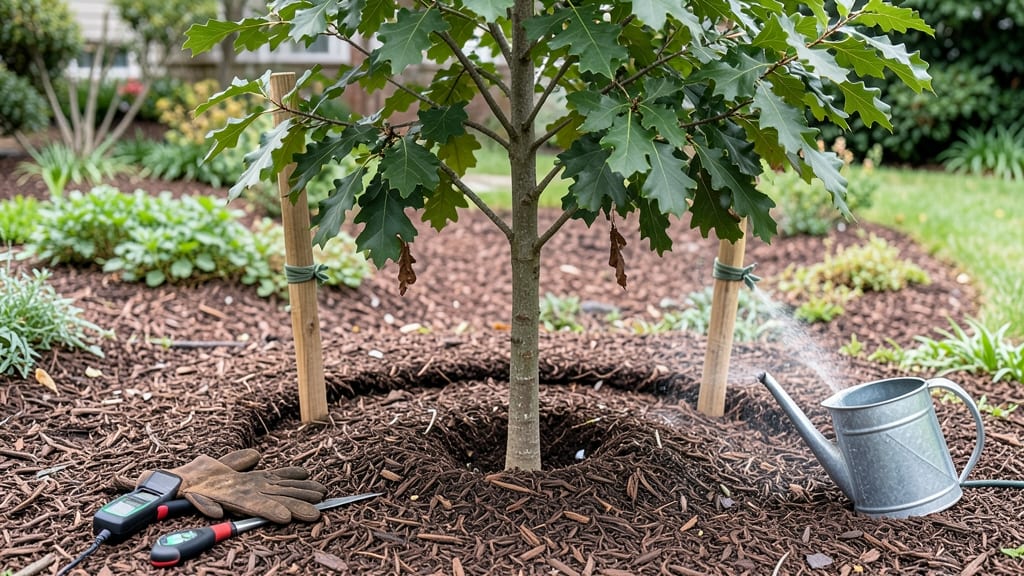
Tree transplant shock recovery time varies by species, typically ranging from 2 to 8 weeks for most deciduous trees and 3 to 12 months for large evergreens or mature specimens, depending on root ball size, weather, and post-planting care like consistent watering and mulching.
Transplant shock happens when trees struggle to adapt to their new environment, and their recovery speed depends heavily on how well their roots establish. 🌳 Deciduous trees like maples bounce back faster because their fibrous root systems spread quickly, while evergreens with deep taproots need more time to stabilize.
The transplant process itself—especially if roots are damaged during digging—can extend recovery by weeks or even months, which is why professional arborists recommend careful handling and proper aftercare.
What you can control most is the immediate care: keeping soil consistently moist but not soggy, applying a 2- to 4-inch layer of mulch, and avoiding heavy pruning during the first year.
Seasonal timing matters too—spring or fall transplants give trees the best shot at recovery before extreme weather sets in. The key is patience: even fast-recovering species may show signs of stress for a few weeks before fully stabilizing.
💡 In This Article
- How Tree Species Affect Transplant Shock Recovery Speed
- Speeding Up Tree Transplant Recovery with Proper Care
How tree species affect transplant shock recovery speed
Deciduous trees like maples and birches recover faster because their fibrous root systems spread aggressively to establish new connections in the soil. These roots grow horizontally and can regenerate quickly when transplanted, often within 4-6 weeks under ideal conditions.
The broadleaf structure also allows them to photosynthesize efficiently once established, speeding up energy recovery. In contrast, evergreens like pines or spruces have deep taproots that anchor them but make relocation more traumatic—these trees can take 6-12 months to stabilize because their root systems must rebuild from scratch.
The maturity level plays a critical role too. A young 5-year-old oak might recover in 3-4 months, while a 50-year-old mature oak could struggle for 18-24 months due to its extensive root network.
The larger the root ball, the more stress the tree experiences during transplanting—this is why arborists recommend keeping root balls intact and using burlap wraps to minimize damage. 🌿 Even with perfect care, a 10-foot-tall pine with a 3-foot-deep taproot will always take longer to recover than a 6-foot maple with a shallow fibrous system.
Evergreens face additional challenges because they maintain foliage year-round, which means continuous water loss through transpiration.
A blue spruce in hot, dry climates may show signs of shock (needle browning, stunted growth) for 6-8 months even with ideal watering, simply because it can't photosynthesize as efficiently as deciduous trees during recovery.
The needle structure itself is more prone to desiccation, requiring extra humidity protection during the first year.
Deciduous trees like red maples or sugar maples have an advantage because they can shed leaves during transplant shock, reducing water demands. Their recovery timeline often aligns with their natural growth cycles—planting in early spring allows them to leaf out and begin photosynthesizing before summer stress sets in.
In contrast, evergreens planted in summer may struggle with heat stress, extending their recovery by 2-3 months compared to spring or fall transplants.
Root structure also dictates how quickly a tree can access water and nutrients.
Trees with fibrous roots (like willows or poplars) can regenerate roots within 2-3 weeks if soil conditions are right, while taproot species (like oaks or pines) rely on lateral roots for stability, which take much longer to develop.
This is why arborists often recommend planting trees with fibrous roots in high-stress urban environments—they adapt faster to compacted soils and limited space.
Consider this comparison: A 10-foot-tall Japanese maple might show full recovery in 6-8 weeks with proper care, while a 15-foot-tall Leyland cypress could take 9-12 months due to its dense evergreen foliage and deep root system.
The difference isn't just about size—it's about how each species evolved to handle environmental stress. 🌲