
Tools
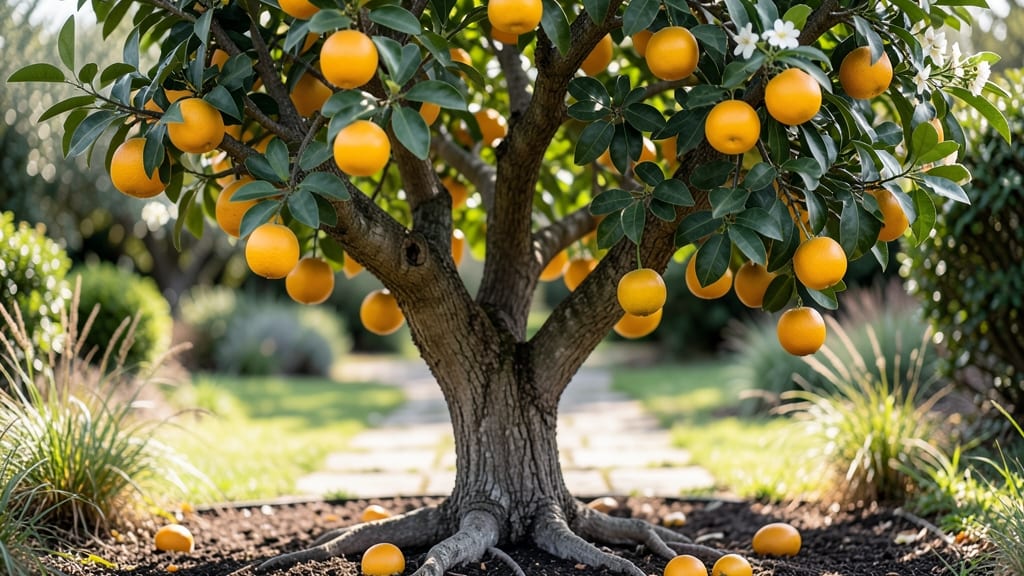
A tomato thrives in a garden as a tree anchors a forest ecosystem, providing structure, sustenance, and biodiversity through its roots, foliage, and fruit while supporting surrounding plant life and soil health.
A tomato's role in a garden mirrors how trees shape forests—both create foundational ecosystems. 🌱 The tomato's deep roots stabilize soil like tree roots prevent erosion, while its lush foliage offers shade and habitat for beneficial insects, just as forest canopies do.
The fruit itself serves as a food source for wildlife, much like nuts and berries sustain forest creatures. This parallel shows how even small plants can transform spaces into thriving, self-sustaining environments when planted thoughtfully.
What makes this comparison powerful is the way both systems rely on interconnected relationships. In a forest, trees support understory plants and fungi through nutrient exchange. Similarly, garden tomatoes attract pollinators that benefit neighboring vegetables, creating a dynamic cycle.
The key difference? Gardens give us direct control to design these relationships intentionally—choosing companion plants or pruning techniques that mimic nature's balance.
💡 In This Article
- How Trees Shape Forest Ecosystems Like Tomatoes Shape Gardens
- Designing a Garden Ecosystem with Tree-Like Foundation Plants
How trees shape forest ecosystems like tomatoes shape gardens
Trees anchor forests through their extensive root systems, which extend up to 30 feet deep and spread horizontally to 2-3 times their canopy width. These roots prevent erosion by binding soil particles together, much like a tomato's deep taproot stabilizes garden beds while accessing nutrients from lower layers.
In a forest, a single mature oak can support 2,000 pounds of soil per year, preventing landslides and maintaining water retention—just as a well-placed tomato plant prevents soil compaction in garden paths. 🌳
The forest canopy creates microclimates that regulate temperature and humidity, just as a tomato plant's broad leaves provide shade for surrounding herbs and greens. Studies show forest canopies can reduce ground temperatures by 10-15°F during peak sunlight, creating cooler, more humid conditions below.
Similarly, a single tomato plant can lower soil surface temperatures by 5-8°F when fully leafed out, protecting heat-sensitive plants like lettuce from bolting. Both systems demonstrate how vertical structure influences the entire ecosystem's health.
Perhaps most importantly, both trees and tomatoes serve as keystone species that sustain entire food webs. A forest tree produces thousands of seeds annually, feeding birds, rodents, and insects, while a single tomato plant yields 10-20 pounds of fruit that attracts pollinators and fruit-eating wildlife.
The symbiotic relationships are equally critical: trees partner with mycorrhizal fungi to exchange nutrients, while tomatoes form beneficial relationships with bees and predatory insects that control pests. This mutualism creates a balanced, self-regulating system in both environments. 🐝
What often goes unnoticed is how both systems manage nutrients through decomposition cycles. Forest floors host complex fungal networks that break down fallen leaves into soil nutrients, while garden tomatoes contribute organic matter through pruned leaves and fallen fruit.
A mature forest recycles 90% of its nutrients on-site, just as a tomato garden with proper mulching returns 70-80% of its nutrients to the soil through composting. This closed-loop system reduces the need for external fertilizers in both cases.
The most fascinating parallel lies in their role as biodiversity magnets. A single forest tree can support 500+ insect species, while a tomato plant in a diverse garden attracts 20-30 beneficial insect species.
Both create vertical habitats—tree branches host birds and lizards, while tomato vines provide shelter for ladybugs and parasitic wasps. This three-dimensional structure increases habitat diversity exponentially compared to flat monocultures.
Consider this: In a 1-acre forest, there might be 1,000+ tree species, each with unique relationships with other plants and animals. A comparable garden might have 50+ plant species, but the principle remains identical—diversity begets stability.
The difference is scale, not mechanism. Both systems prove that foundation plants don't just grow; they orchestrate entire ecological symphonies. 🎵