
Pruning
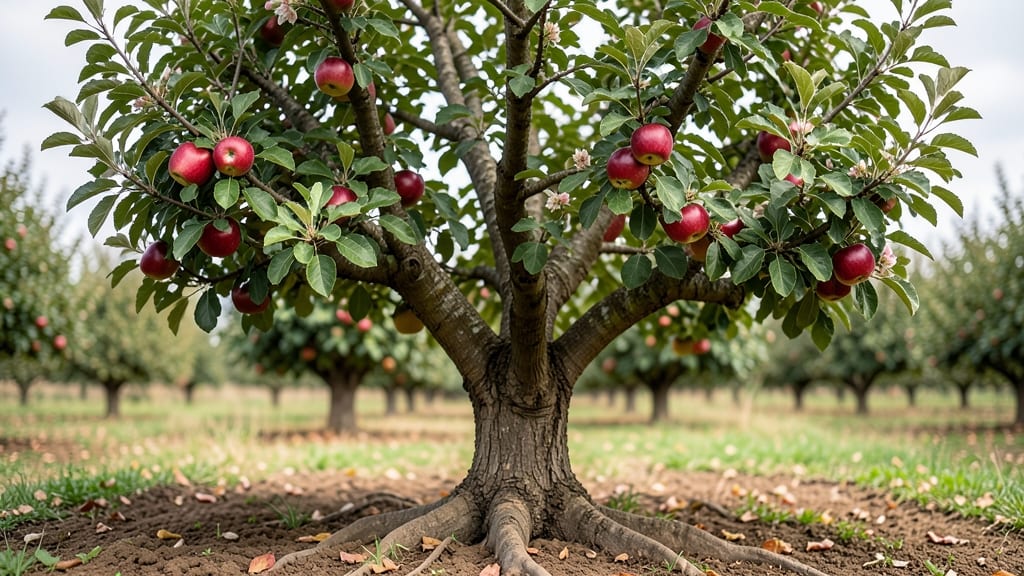
Red Delicious apple tree mature height by variety: standard vs dwarf vs semi-dwarf sizes
Choosing the right Red Delicious apple tree size can make or break your home orchard dreams. Standard varieties reach towering heights, while dwarf and semi-dwarf options fit cozy backyards perfectly.
Let's break down the mature heights and space needs for each variety so you can plan your planting strategy with confidence.
Your backyard space determines which apple tree variety you can grow. A standard Red Delicious tree can soar to 18-25 feet tall, while dwarf varieties stay compact at 8-12 feet.
Understanding these differences helps you avoid overcrowding and ensures proper sunlight access for all your trees. Let's explore the specific dimensions and spacing requirements for each type.
| Variety Type | Mature Height | Mature Spread | Root Spread | Ideal Planting Distance | Best For |
|---|---|---|---|---|---|
| Standard | 18-25 ft | 15-20 ft | 12-15 ft | 25-35 ft apart | Large properties, orchards |
| Semi-Dwarf | 12-16 ft | 10-14 ft | 8-12 ft | 15-20 ft apart | Medium yards, urban farms |
| Dwarf | 8-12 ft | 6-10 ft | 5-8 ft | 8-12 ft apart | Small backyards, containers |
📏 Note: Dwarf trees require sturdier support systems for heavy fruit loads
The standard Red Delicious tree's impressive height makes it perfect for large properties or commercial orchards. These giants need plenty of space to spread their branches and roots, typically requiring 25-35 feet between trees.
If you're working with limited space, consider the semi-dwarf variety, which offers a good balance between size and manageability.
For small backyards or container gardening, dwarf Red Delicious trees are ideal. Their compact size—8-12 feet tall—makes them perfect for patios or small gardens. Just remember that even dwarf trees need proper support to handle their fruit load.
The root spread is also critical; dwarf trees spread 5-8 feet, so avoid planting near foundations or sidewalks.
When planning your orchard, always consider the mature spread of your trees. A standard Red Delicious can spread 15-20 feet, while dwarf varieties stay within 6-10 feet. This spread affects not only sunlight access but also air circulation, which is crucial for preventing fungal diseases like apple scab.
Proper spacing ensures your trees have room to thrive without competing for resources.
If you're planting multiple trees, mix varieties to improve pollination and fruit quality. For example, pair your Red Delicious with a Granny Smith or Fuji to ensure cross-pollination. The planting distance between different varieties should follow the same guidelines as within the same variety to maintain airflow and sunlight penetration.
Don't forget about soil depth and drainage when choosing your planting location. Apple trees have extensive root systems that need at least 2-3 feet of deep, well-draining soil.
If your soil is heavy clay or compacted, consider amending it with organic matter like compost or aged manure to improve drainage and aeration for those deep roots.
For container growing, dwarf Red Delicious trees are the best choice. Use a container that's at least 18 inches wide and deep to accommodate the root system. Place your container in a sunny spot and ensure it has drainage holes.
Remember that container-grown trees may need more frequent watering and fertilization to compensate for their limited root space.
Regular pruning helps control the size of your Red Delicious tree, regardless of its variety. Prune in late winter or early spring to remove dead, diseased, or crossing branches.
For dwarf trees, you can also use espalier techniques to train branches along a fence or wall, saving even more space while improving fruit access and sunlight exposure.
Whether you choose a towering standard Red Delicious or a compact dwarf variety, understanding these size differences ensures your tree thrives. With the right spacing, soil preparation, and care, you'll enjoy a bountiful harvest of sweet, juicy apples for years to come. 🍏
How fast does a Red Delicious apple tree grow? Growth rate by age and seasonal factors
A Red Delicious apple tree starts small but grows surprisingly fast in its early years. In the first year, you can expect 3-5 feet of growth if planted in ideal conditions. The tree's rapid growth continues through its second and third years, reaching 6-10 feet and 10-15 feet respectively.
By year 5, it begins to slow, eventually reaching its mature height of 15-25 feet over 8-10 years.
Seasonal factors play a huge role in growth speed. Spring and early summer are peak growth periods when the tree focuses on developing leaves and branches. Summer heat can slow growth temporarily, while fall fertilization helps prepare the tree for winter dormancy.
Understanding these patterns helps you plan for pruning and space management.
Climate significantly impacts growth speed. In warmer USDA zones 7-9, Red Delicious trees grow faster due to longer growing seasons. However, in colder zones 4-6, growth slows during winter dormancy. Proper soil drainage and pH balance (6.0-7.0) also accelerate growth by providing essential nutrients.
Pruning plays a critical role in managing growth. Regular summer pruning encourages bushier growth, while winter pruning removes dead wood and shapes the tree. I recommend pruning in late winter (before buds swell) to promote healthy spring growth and fruit production.
For faster growth, ensure your tree gets 6-8 hours of sunlight daily and deep watering 2-3 times per week during the first two years. Mulching around the base helps retain moisture and regulates soil temperature, which further supports rapid growth.
Remember, while Red Delicious trees grow quickly in their youth, patience is key for fruit production. The first harvest typically occurs 4-6 years after planting, so plan your garden space accordingly to accommodate the tree's eventual size.