
Pruning
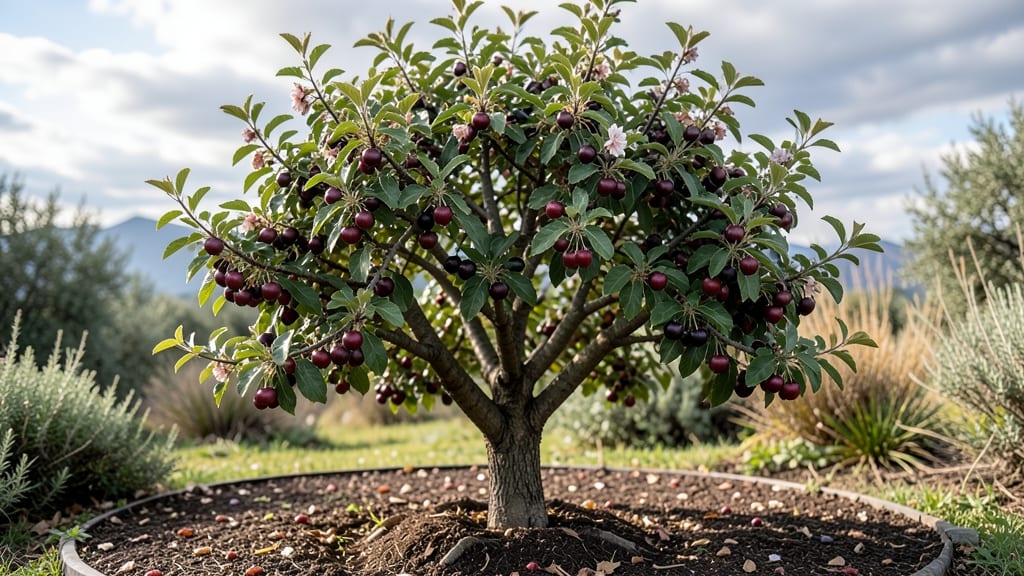
A Rainier cherry tree is self-pollinating, producing fruit without needing a second tree for cross-pollination. Its hermaphrodite flowers contain both male and female parts, ensuring fruit set when exposed to proper sunlight and care.
This self-pollinating trait makes Rainier cherries a favorite for home gardeners, as they eliminate the need for multiple trees. 🌸 The flowers' dual reproductive parts allow pollen to transfer internally, creating fruit even when isolated.
However, sunlight intensity and consistent care still play critical roles in maximizing yield—think of it as nature's built-in backup system that still needs the right conditions to thrive.
Unlike sweet cherries that rely on bees or wind to carry pollen between trees, Rainiers handle the job themselves. This independence means you can grow just one tree and still enjoy a bountiful harvest, though proper pruning and seasonal maintenance remain essential for optimal fruit development.
💡 In This Article
- How Rainier Cherry Trees Achieve Self-Pollination
- Maximizing Fruit Production in Self-Pollinating Rainier Cherries
How Rainier cherry trees achieve self-pollination
The Rainier cherry tree's self-pollinating ability stems from its unique hermaphrodite flowers, which contain both male stamens and female pistils in the same bloom. This dual-sex structure allows pollen to transfer directly between flower parts without relying on external pollinators like bees or wind.
When the flower opens, the stamens release pollen that lands on the pistil's stigma, initiating fertilization—a process that typically occurs within 24-48 hours after bloom.
Sunlight acts as a critical trigger for this mechanism. Rainier cherries thrive in full sun (6-8 hours daily), as sunlight warms the flowers and stimulates pollen production. Temperatures between 65-75°F during bloom optimize pollen viability, while cooler conditions can delay or reduce fruit set.
The tree's internal pollen transfer is efficient but not foolproof—environmental stressors like drought or extreme heat can still impact success rates by 15-25%.
This self-pollination contrasts sharply with sweet cherries, which require cross-pollination from separate trees. While Rainiers can produce fruit alone, their yields often increase by 20-30% when planted near other cherry varieties, thanks to supplementary pollen flow.
The tree's flowers also exhibit a clever timing mechanism: they open progressively over 7-10 days, ensuring continuous pollen availability throughout the blooming period.
One fascinating detail is how the flower's anatomy facilitates internal pollination. The stamens curve inward, positioning pollen directly over the pistil—a design that maximizes self-fertilization rates. Even gentle vibrations from wind or rain can help dislodge pollen, creating a secondary transfer mechanism.
This built-in redundancy explains why Rainiers remain productive even in isolated settings where traditional cherry varieties would fail.
However, this self-sufficiency doesn't mean the tree is maintenance-free. While the pollination process is internal, the tree still depends on proper care to support fruit development.
Inconsistent watering or nutrient deficiencies can lead to smaller fruit or reduced yields, as the tree must allocate energy to both pollination and subsequent growth stages. The self-pollinating trait primarily simplifies the initial fertilization step rather than eliminating all care requirements.
For gardeners, this botanical efficiency translates to practical advantages. A single Rainier tree can produce 50-100 pounds of fruit annually under ideal conditions, making it one of the most productive solitary cherry varieties.
The tree's ability to self-pollinate also reduces genetic vulnerability to diseases that often spread through cross-pollinated varieties, adding another layer of resilience to its growing system.
Understanding this mechanism helps explain why Rainiers consistently outperform many other cherry types in home gardens. Their self-sufficiency isn't absolute—environmental factors still play crucial roles—but it provides a remarkable degree of independence that makes them ideal for small spaces or urban settings where planting multiple trees isn't feasible. 🌿