
Diseases
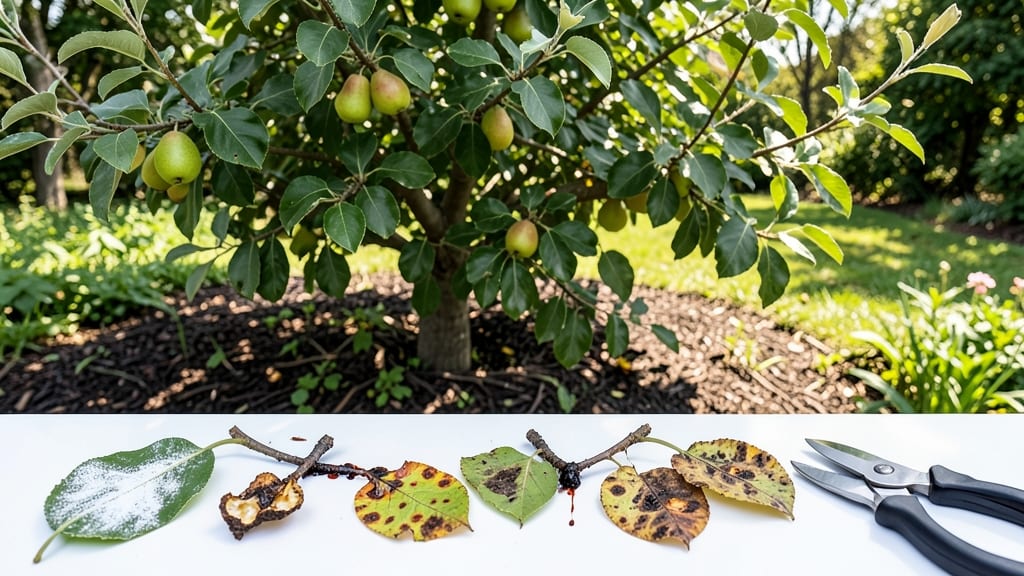
Seeing those pictures of pear tree diseases—like blackened branches or spotted leaves—can be devastating, but early action saves your orchard. Fire blight, pear scab, or black spot could turn your trees into a shadow of their former self—but with the right moves, you can stop them in their tracks.
This guide pairs real disease photos with simple fixes so you can spot trouble before it spreads.
Most diseases start with tiny signs: dark spots on leaves, oozing cankers, or curled fruit. Fire blight’s twisted, blackened branches are unmistakable, while scab shows up as fuzzy brown patches.
The good news? Pruning infected areas and using copper sprays (or organic options like neem oil) stops them in their tracks.
You’ll learn to recognize each disease by its unique patterns—no horticulture degree required. With these visual clues and prevention tips, your pear tree can bounce back stronger. The key is acting fast before symptoms spread beyond control.
Works for home orchards, backyard trees, and even container-grown pears. Let’s get your trees healthy again—starting with what to watch for this season.
Root Causes Of Pear Tree Illnesses
Pear trees, like any living organism, are susceptible to diseases when their natural defenses weaken. Understanding the why behind these issues helps you take proactive steps to protect your orchard. Below, we break down the most common triggers for pear tree diseases, backed by science and actionable insights.
Fungi thrive in moist, warm conditions and are the #1 culprit behind pear tree diseases. Here’s why they strike:
- Overhead Watering 💦 Fungi like Venturia (causal agent of scab) and Botryosphaeria (linked to dieback) spread via water splashes. When leaves stay wet for more than 6 hours, spores germinate and infect tissues.
- Actionable fix: Use drip irrigation or soaker hoses to keep foliage dry.
- Poor Air Circulation 🌬️ Dense canopies trap humidity, creating the perfect fungal buffet. Diseases like powdery mildew (Podosphaera leucotricha) flourish in stagnant air.
- Actionable fix: Prune to open the canopy and space trees 12–15 feet apart.
- Old or Damaged Bark 🌳 Cracks and wounds provide entry points for canker fungi (Neofusicoccum spp.). These pathogens block water/nutrient flow, leading to branch dieback.
- Actionable fix: Seal wounds with pruning paint and avoid excessive pruning in wet seasons.
Bacteria like Erwinia amylovora (fire blight) or Pseudomonas syringae exploit weak spots with speed and aggression. Unlike fungi, they don’t need moisture to survive—just a wound or stress signal from the tree.
- Stress from Improper Pruning ⚔️ Rough cuts or pruning during active growth (spring/summer) create open doors for bacteria. Fire blight, for example, enters through flower blossoms or pruning wounds.
- Actionable fix: Prune in late winter/early spring (dormant season) and sterilize tools with 70% isopropyl alcohol.
- Contaminated Tools or Sap 🔪 Bacteria hitchhike on pruners, saws, or even insects (like bees carrying fire blight). Once inside, they multiply rapidly, causing oozing cankers and blackened tissue.
- Actionable fix: Disinfect tools between cuts and remove infected branches 6+ inches below the lesion.
- Extreme Weather Shocks ❄️☀️ Sudden temperature swings (e.g., spring frost followed by heat) stress trees, lowering their resistance. Bacterial spot (Xanthomonas) exploits this weak state.
- Actionable fix: Use row covers in frost-prone areas and avoid nitrogen-heavy fertilizers (they promote soft, bacterial-friendly growth).
Pear trees aren’t just fighting pathogens—they’re battling environmental factors that make them vulnerable. Think of it like a person with a cold catching pneumonia.
- Nutrient Deficiencies 🌱 Magnesium or zinc deficiencies weaken cell walls, making trees more susceptible to rust diseases (Gymnosporangium). Yellowing leaves (chlorosis) are a red flag.
- Actionable fix: Test soil pH (ideal: 6.0–7.0) and amend with chelated micronutrients if needed.
- Waterlogged or Dry Soil 💧🔥 Overwatering causes root rot (Phytophthora), while drought stress attracts sap-sucking pests (e.g., pear psylla), which then spread diseases like pear decline.
- Actionable fix: Ensure well-draining soil and water deeply 1–2 times per week (adjust for climate).
- Pest Pressure 🐜 Insects like pear slugs (sawfly larvae) or scale insects create entry points for diseases. Their feeding weakens the tree’s cuticle barrier.
- Actionable fix: Introduce beneficial predators (ladybugs) or apply horticultural oil in dormant season.
Diseases don’t disappear—they overwinter in debris, soil, or infected wood. Ignoring cleanup is like leaving a buffet for pathogens.
- Infected Leaves and Fruit Mummies 🍐 Fallen leaves harbor Venturia spores, while mummified fruit (from bacterial blight) releases pathogens the next season.
- Actionable fix: Rake and remove all debris from the orchard floor by late fall.
- Infected Nursery Stock 🌱 Buying trees with hidden cankers or blight introduces diseases to your orchard. Always inspect before planting!
- Actionable fix: Purchase from certified disease-free nurseries and quarantine new trees for 30 days.
- Wildlife Vectors 🦋 Birds, deer, and even human activity (e.g., hiking boots tracking spores) spread diseases between trees.
- Actionable fix: Install bird netting and create a 5-foot buffer zone around trees with known issues.
Not all pear varieties fight diseases equally. Some, like Bartlett pears, are highly susceptible to fire blight, while Kieffer pears show resistance.
- Hybrid Vulnerabilities 🔬 Modern hybrids often prioritize fruit quality over disease resistance. If your tree’s parentage includes susceptible varieties, it’s more likely to sicken.
- Actionable fix: Choose disease-resistant cultivars like Moonglow or Seckel for your region.
- Grafting Complications 🌿 Poorly grafted trees have weak unions, making them prone to canker and decline diseases.
- Actionable fix: Work with a certified arborist for grafting and inspect unions annually.
Pro Tip: 💡 The best defense is a combination of prevention and early action. Monitor your trees weekly during growing season—catching symptoms early (e.g., black spots on leaves or oozing cankers) gives you a fighting chance!
How to Fix Your Pear Tree
Now that you’ve identified the culprit behind your pear tree’s woes, it’s time to roll up your sleeves and take action! Whether it’s fungal infections, bacterial blights, or pest invasions, each problem has a targeted solution.
Below, we’ll match common pear tree diseases to practical fixes—plus prevention tips to keep your orchard thriving for years.
Fungal infections like fire blight or powdery mildew thrive in damp conditions, but you can outsmart them with these steps:
🔥 Remove Infected Branches Immediately
- Use sterilized pruning shears (wipe with rubbing alcohol between cuts).
- Cut 6–12 inches below the infected area to ensure the fungus doesn’t spread.
- Dispose of clippings in a sealed bag—don’t compost them!
🍳 Apply Fungicidal Sprays
- Copper-based sprays (like Bordeaux mixture) work well for fire blight.
- Sulfur or neem oil sprays combat powdery mildew—apply in the early morning to avoid burning leaves.
- Repeat every 7–14 days during wet seasons.
🌡️ Improve Airflow & Drainage
- Thin out dense branches to reduce humidity buildup.
- Mulch with wood chips (not organic matter like grass clippings) to prevent soil-borne fungi.
- Water at the base (not overhead) to keep foliage dry.
💡 Pro Tip: If fire blight strikes, prune in dry weather—wet conditions can spread bacterial spores faster!
Bacteria like pear blight or canker are stubborn, but sanitation is your best defense:
👨🍳 Sterilize Tools & Wounds
- Scrub pruning tools with 10% bleach solution (1 part bleach to 9 parts water) before and after use.
- Seal pruning cuts with pruning paint (contains fungicide) to prevent bacterial entry.
🔪 Remove and Destroy Infected Wood
- Burn or bag heavily infected branches—do not leave them in the orchard.
- If canker is severe, remove the entire tree to stop spread (especially in small gardens).
🎯 Use Antibacterial Sprays (When Needed)
- Copper fungicides (like Cueva or Kocide) can help—but prevention is key.
- Avoid overhead irrigation to reduce bacterial splash.
✨ Prevention Hack: Plant resistant pear varieties (like ‘Moonglow’ or ‘Seckel’) if bacterial diseases are recurrent in your area.
Aphids, scale, and borers weaken trees—here’s how to evict them:
🍎 Blast Off Pests with Water
- Spray infested areas with a strong hose stream to dislodge aphids and scale.
- Repeat weekly during peak pest seasons (spring/early summer).
🔪 Introduce Beneficial Insects
- Ladybugs, lacewings, or parasitic wasps devour soft-bodied pests—buy them online or attract them with native plants.
- Neem oil spray (1 tsp per gallon of water) smothers eggs and young larvae.
🌳 Wrap Trunks to Trap Borers
- Apply tree wrap or aluminum foil around the trunk in early spring to trap emerging borers.
- Check wraps monthly and remove trapped pests.
💡 Pro Tip: Reflective mulch (like silver plastic) confuses pests and can reduce infestations by up to 50%!
No matter the issue, proactive care keeps pear trees healthy:
- 📊 Test soil pH (ideal: 6.0–7.0)—amend with lime (to raise pH) or sulfur (to lower it).
- 💪 Fertilize in early spring with balanced 10-10-10 or organic compost.
- 🍎 Thin fruit to improve airflow (overcrowded branches = disease hotspots).
- 🌿 Plant disease-resistant varieties if local conditions are tough.
Final Thought: The key to saving your pear tree is early action + prevention. Once you spot symptoms, act fast, sterilize tools, and keep your orchard clean—your trees will reward you with bountiful harvests for seasons to come! 🍐🌿
Frequently asked questions
How can I tell if my pear tree has fire blight?
Look for blackened, wilted branches with shepherd’s crook shapes at the tips—this is fire blight’s signature. You’ll also see oozing cankers on stems and dark spots on leaves. If you spot these in spring after blooming, act fast by pruning infected areas 6+ inches below the damage and sterilizing tools.
What do pear scab spots look like compared to other diseases?
Pear scab shows as olive-brown, velvety spots on leaves (not smooth like rust). The undersides may have black fruiting bodies in wet weather. Unlike powdery mildew (white powder), scab spots feel rough. Treat with copper fungicide every 10-14 days during rainy seasons.
Can I still harvest fruit from a diseased pear tree?
Only if the disease is contained to leaves/branches (like early powdery mildew). For bacterial blight or fire blight, remove all fruit from infected trees—it can carry pathogens. Always wash harvested pears thoroughly before eating, even from healthy-looking trees in your area.
Why do my pear tree leaves turn yellow even though it has no visible diseases?
Yellowing could signal nutrient deficiency (often magnesium or iron) or root issues like compaction. Check the leaf veins—if yellowing starts between them, it’s likely chlorosis. Test soil pH (6.0-7.0 ideal) and amend with chelated micronutrients if needed.
How often should I spray my pear tree for disease prevention?
Apply preventive sprays (copper or neem oil) every 7-14 days during bloom and wet seasons. Start sprays before symptoms appear—once diseases take hold, treatment becomes much harder. Early morning applications work best to avoid leaf burn.